



Football West mourns passing of women’s football pioneer Barbara Gibson, aged 95

Football West has acknowledged the death of Barbara Gibson, an Honorary Life Member of the organisation whose administrative career across five decades fundamentally shaped the landscape of women’s football in Western Australia. She was 95.

Gibson’s contribution belongs to a period in Australian sport when women’s participation existed largely outside formal structures and was tolerated at the margins of a game whose governing bodies were built by and for men. That she spent decades building those structures anyway, and that the game in Western Australia is materially different because she did, is the measure of her legacy.

She did not begin playing football until her 40s, turning out for Inglewood Kiev before redirecting her energy almost entirely into administration. In 1975 she became Secretary of the Western Australian Women’s Soccer Association, a role she held for a decade alongside the position of Treasurer. As long-standing Manager of the Senior State Women’s Team, she oversaw international tours to Malaysia in 1977 and India in 1980.

Gibson was elected President of the WAWSA in 1986, the same year she joined the broader administration of the game as Assistant Secretary of the Soccer Federation of WA: a dual role that positioned her as a bridge between the women’s competition and the wider governing structure at a moment when that connection was neither guaranteed nor assumed.

Her influence extended beyond Western Australia. As the WAWSA’s representative at all Australian Women’s Soccer Association delegate meetings, she helped shape national policy at a time when the decisions made in those rooms determined whether women’s football in this country had a future at all.

Gibson was inducted into the Football Hall of Fame WA in 1996 and received the Australian Sports Medal in 2000.

“She gave decades of service to our game and to female football in particular,” said Football West CEO Jamie Harnwell. “When we marvel at the incredible spectacle of over 70,000 fans turning out to cheer on the Matildas in a major international final, we should also remember the pioneers of the women’s game, such as Barbara, who helped lay the foundation stones.”

The cultural legacy Gibson leaves is one of institutional persistence. The willingness to build, advocate and administer within systems that were not designed to accommodate the work she was doing. The women currently playing in Football West competitions, coaching junior teams, sitting on club boards and representing Western Australia at national level do so within structures that people like Gibson constructed from the outside in.

Previous ArticleNext Article

Spain’s Liga F receives history-making investment into women’s football

The deal, worth AUD 91 million (€55 million) across four seasons, represents a monumental investment into Liga F and women’s football by Gasol16 Ventures and Fortified Partners.


Setting the pace

The investment comes as a hugely signficant moment in the history of women’s football not just in Spain, but across Europe.

But, given Spain’s commitment to growing the women’s game in recent years (and the world-beating teams it produces as a result), it is hardly a surprise that Liga F is at the centre of this milestone.

In the 2024-25 season, Liga F distributed AUD 28 million to its clubs, as well as doubling television audiences across two years.

The rate of growth is astounding, and shows no signs of slowing down.

“Women’s football in Spain has made a spectacular leap in recent years: audiences have almost doubled in two seasons, and stadiums are incresingly full,” explained Founder and President of Gasol16 Ventures, Pau Gasol.

“Therefore, this is not a sentimental commitment to women’s sport. It is an investment decision based on data, market trends, and the conviction that women’s football represents a growth opportunity with enormous potential for value creation.”

Thus, Gasol’s motivation reveals much about his own reasons for investing, as well as about the current status of women’s football in Spain.

The landscape does not want, or need, sentimental commitment. It is a financial and sporting powerhouse in its own right, and one which can grow to new heights year-on-year.


Securing a successful future

Furthermore, the long-term nature of the deal (set for the next four seasons from the 2026-27 campaign) shows vision and ambition for what the league can become.

“This agreement allows us to look further ahead and equip ourselves with the necessary tools to continue building an increasingly strong, more competitive league with greater capacity to generate value for our clubs,” outlined President of Liga F Beatriz Álvarez Mesa.

“What excites me most about this alliance is not just the investment it brings, but the message it sends: there are people and institutions who believe in the potential of Liga F and want to be part of its growth.”


Final thoughts

This is in stark contrast to the current situation of the A League Women in Australia, which PFA Chief Executive Beua Busch described as at a “tipping point”.

The problems remain the same as they were several years ago. Investment, player satisfaction and attendances are well below other major leagues. The key is creating a product which presents the immense value of clubs, players and commercial opportunities.

Because when intentional investment comes, the question stops being ‘who will invest?’ but ‘who wouldn’t?’ .

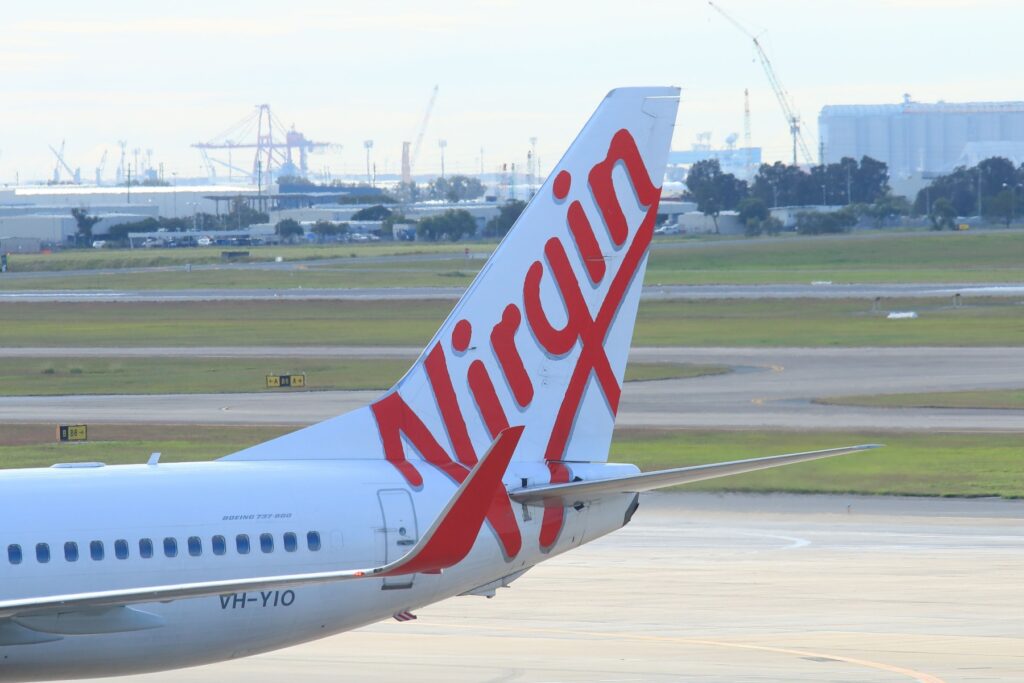
WA Government and Virgin Australia Partner to Bring Discounted Flights for Italian Football Series in Perth

The Western Australian Government has partnered with Virgin Australia to offer discounted airfares to Perth ahead of a three-match series featuring AC Milan, Inter Milan, Juventus and Palermo, in a move that reflects how state governments are increasingly using major sporting fixtures as tools of tourism and economic strategy.

Subsidising travel costs rather than simply promoting the matches signals a shift in how state governments are approaching major sporting events. WA Tourism Minister Reece Whitby positioned the series within the state’s broader Winter of Unmissable Sport strategy, framing the partnership as a way to fill hotels, support local businesses and generate visible economic activity across a single week of programming. That logic places football alongside other major events states have used to justify public investment in visitor attraction, where the return is measured in tourism spend rather than ticket revenue alone.

A bet on Australia’s appetite for European football

Touring Italian clubs is not a routine occurrence in Australia, and Sport and Recreation Minister Rita Saffioti’s comments point to an underlying assumption behind the investment: that the existing fan base for European football in Australia is substantial enough to justify a state government underwriting travel costs to fill a stadium on the other side of the country.

Australian audiences for international football have grown considerably over the past decade, driven by streaming access, diaspora communities and the rising visibility of leagues once difficult to follow locally. State governments positioning themselves to capture economic value from that growth, rather than leaving it to broadcasters and travel operators, marks a change in how football’s commercial footprint in Australia is being treated by policymakers.

It also raises a question likely to recur as more international club fixtures are scheduled in Australian cities: whether public subsidy for travel around marquee football events delivers economic value beyond the host city, or whether the benefit is concentrated narrowly within the host state’s tourism and hospitality sectors. Virgin Australia’s involvement reflects the commercial logic on the airline side, with the partnership forming part of a broader push to connect Australians with major domestic and international destinations.

For the domestic football industry, the series is a reminder that international club football is competing for the same audience attention as the A-Leagues and grassroots competitions. Whether that competition proves complementary or extractive, in terms of where football-related spending in Australia ultimately lands, is a question state and national football bodies are likely to watch closely as similar fixtures become more frequent.

Most Popular Topics

Editor Picks

Send this to a friend