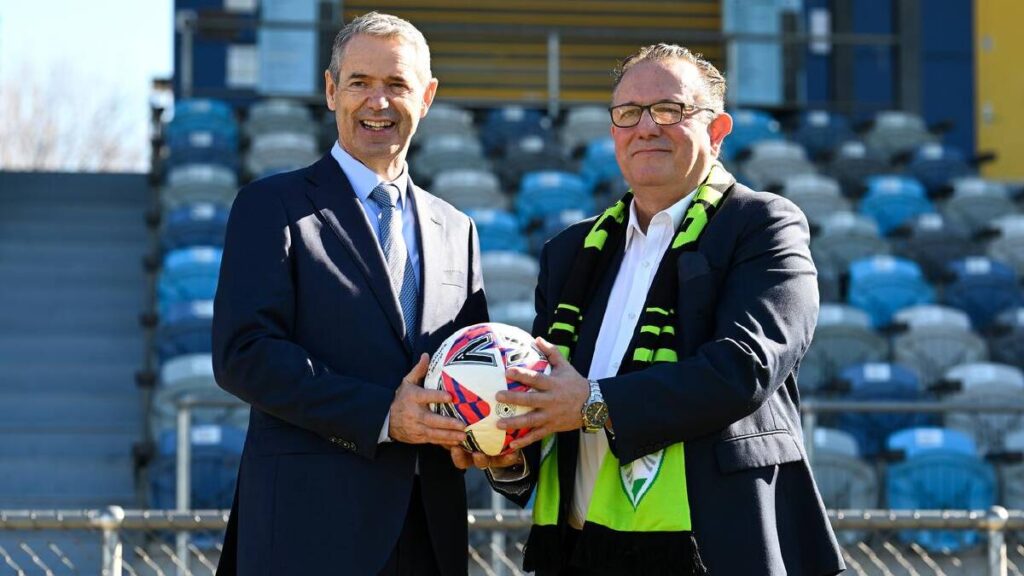
Angelo Konstantinou elected as new Capital Football Chair

Angelo Konstantinou has been elected as the new Chair of the Capital Football Board, following the 62nd Annual General Meeting held at the Hellenic Club in the City on Thursday, May 26.

Konstantinou succeeds outgoing Chair Fran Sankey, who remains on the Capital Football Board, alongside newly elected Gary Vandeburgt and current Directors Justin Webb and Georgia Briggs.

With Grace Gill not standing for a further term, there is a vacancy on the Board.

“I feel honoured to have been elected as Chair of Capital Football,” Konstantinou said to Capital Football.

“Having previously been deputy chair for the last few years I felt the time was right to step up and help guide the organisation into the future.

“I would like to personally thank Fran Sankey for the extreme amount of work she has put into the board as Chair.

“Most of the work is done behind the scenes and not noticed by our football community.”

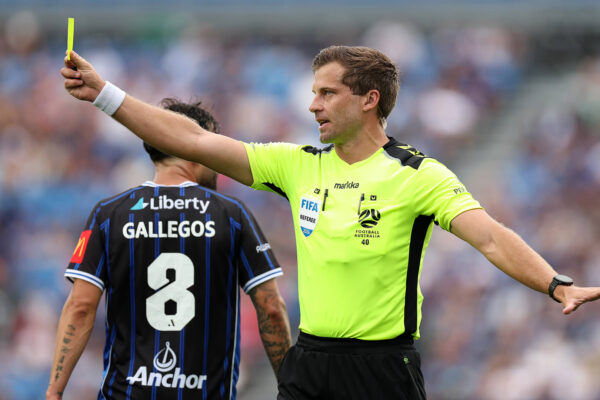
Gary Vandeburgt would be a familiar face to those who follow local National Premier League football, with the former referee having officiated at the top level of the local game during his career.

Vandeburgt was elected unopposed on the evening when the minutes of the 61st Annual General Meeting, held in 2021, were approved and the Financial Statements arising from the 2021 Annual Report were dissected and passed.

Capital Football CEO Chris Gardiner acknowledged the incoming arrival of Konstantinou and the tenures of Sankey and Gill.

“We are delighted to confirm Gary’s position on the Capital Football Board of Directors and congratulate Angelo on his appointment as Chair,” Gardiner said in a statement.

“Capital Football would also like to place on record its thanks for the work that Fran Sankey has done in that position.

“We would also like to extend our thanks to Grace Gill for her time as part of the Board and the work that she has undertaken.”

Previous ArticleNext Article

Football Has the Audience. Does It Have the Commercial Strategy?

Soccerscene has launched Survey 4: Commercial Confidence in Football, calling on clubs, sponsors, governing bodies, commercial leaders and football industry professionals to assess whether the game is making the most of its enormous commercial potential.

Football has the audience, participation base and community reach to be one of Australia’s most powerful commercial platforms. But does the industry have the commercial strategy, professionalism and infrastructure required to turn that potential into sustainable growth?

That is the question at the centre of Soccerscene’s latest industry research.

The survey examines how attractive grassroots football is to potential commercial partners, what industry professionals believe is limiting football’s commercial potential, and whether clubs are presenting themselves professionally enough to sponsors.

It also explores what sponsors value most when engaging with football – from community reach and participation scale to brand alignment, values and purpose – as well as whether improved facilities could directly contribute to stronger sponsorship outcomes.

Is football fully capitalising on its commercial opportunity?

Football continues to provide brands with access to highly engaged communities across grassroots, community and elite environments. Yet the commercial landscape remains fragmented, with clubs operating with vastly different levels of resources, capability, governance, media infrastructure and commercial expertise.

Soccerscene’s survey is designed to capture the industry’s perspective on where the opportunities exist – and where football may be leaving commercial value on the table.

The research will look specifically at four key areas:

  • Commercial attractiveness – How attractive is grassroots football as a commercial partnership?
  • Commercial barriers – What is holding football back from reaching its full commercial potential?
  • Club professionalism – Are clubs presenting themselves effectively and professionally to sponsors?
  • Sponsor value – What are sponsors really looking for when they invest in football?

The survey also asks whether better facilities would have a direct impact on sponsorship outcomes, highlighting the potential relationship between infrastructure, commercial presentation and investment.

Have your say

Soccerscene is encouraging football clubs, sponsors, commercial professionals, governing bodies, administrators, media professionals and industry stakeholders to participate.

The findings will contribute to Soccerscene’s ongoing program of industry research, designed to provide a clearer picture of the challenges and opportunities facing football and the organisations operating within it.

Take the Survey: Commercial Confidence in Football

Complete the Commercial Confidence in Football Survey here

The survey will close on 30 August 2026 at midnight, with responses received before the deadline included in the final analysis.

Football has the audience. The question is whether it has the commercial strategy to match.

Theo Fotopoulos outlines vision for Canberra United’s future

Professional football in the nation’s capital has entered a new era with Australian Sports Group (ASG) officially taking over Canberra United ahead of the 2026/27 season.

Led by Chairman Morris McAllister and CEO Theo Fotopoulos, ASG takes over a club whose future has been uncertain in recent years. Now, the focus has shifted from survival to building a sustainable future for football in Canberra.

Speaking to Soccerscene, Fotopoulos discussed why ASG chose to invest in Canberra United, the importance of preserving the club’s identity, and the roadmap for the chapter ahead for football in the nation’s capital.

Why Canberra?

The investment in Canberra United comes at an important time for the club. The beginning of the 2026/27 A-League Women season is just around the corner, and the prospect of an A-League Men side is drawing closer. Asked why ASG chose to invest in Canberra United and Canberra itself, Fotopoulos’ answer was simple.

“Canberra has stacks of football culture. It is a football city,” Fotopoulos said.

Speaking on the decision to retain the name Canberra United and not undertake a rebrand, Fotopoulos pointed to the club’s history and connection to the community.

“We retained the name, Canberra United, because of the history and the association. We felt there were more positives to retain the name,” Fotopoulos said.

The new ownership also wants supporters to play an active role in shaping the club’s future.

“The fans will be involved in making decisions,” Fotopoulos said.

Fotopoulos revealed that the club is already consulting with fans on the introduction of a nickname and is looking at developing a playing kit that is designed by the fans.

While Canberra offers a unique opportunity for professional football, Fotopoulos acknowledged the club will still compete for supporters’ attention alongside established sporting organisations such as the Canberra Raiders and ACT Brumbies.

Rather than viewing that as a disadvantage, he believes Canberra’s appetite for sport presents an opportunity to grow the club’s presence in the capital.

“It is something that allows us to accelerate the building of the brand in Canberra, Canberrans really love their sports,” Fotopoulos said.

The road ahead

The 2026/27 Ninja A-League season kicks off in October, and the priority for Fotopoulos and ASG at Canberra United is to ensure that Canberra is ready to compete not only next season, but sustainably for the years ahead.

“For us, it’s really stabilisation for the women’s. Build that and build the infrastructure around the women then translate that into an additional structure for the men’s program,” Fotopoulos said.

Infrastructure also forms a key pillar of ASG’s long-term vision. Fotopoulos said securing a long-term home at McKellar Park and improving football facilities across Canberra would play an important role in supporting future growth.

He believes better facilities will benefit not only Canberra United but football throughout the ACT and surrounding region.

Importantly, the takeover of the club included an option to introduce a team into the A-League Men’s competition from the 2028/29 season, which is something that ASG intends to pursue.

When speaking about the future of the proposed senior men’s side, Fotopoulos pointed to the quality within and around the organisation that will ensure its introduction.

“We’re quietly confident, the football department is very positive. There are a lot of quality people, both in Canberra and outside of Canberra, that have indicated interest in being part of the elite pathways academy structures that will be the foundation for a new A-League men’s team,” Fotopoulos said.

More than a football club

For Fotopoulos and ASG, this investment is about more than just owning and running a football club. The focus extends beyond results on the field to developing an integrated football structure and greater cohesion across the game.

In order to support a strong senior men’s and women’s side, Fotopoulos outlined the importance of establishing strong junior pathways for young players growing up in Canberra.

“One of the other big picture objectives is to finally get to establishing a permanent pathway,” Fotopoulos said.

Fotopoulos believes that these pathways will ensure long-term stability for Canberra United and help form the foundation of both senior playing groups for years to come.

However, it wasn’t just an investment in football in Canberra. It was a vote of confidence for women’s football in Canberra in particular.

While excitement is building around a potential expansion into the A-League Men, Fotopoulos believes that the current moment represents an even greater opportunity for the women’s game.

“If I was to look at any other time in history, this is probably the strongest time to invest in women’s football,” Fotopoulos said.

Most Popular Topics

Editor Picks

Send this to a friend