
FCA’s Belinda Wilson scores new role with FIFA

Football Coaches Australia (FCA) is pleased to congratulate Executive Member Belinda Wilson on her appointment as Senior Technical Development Manager at FIFA.

Wilson will be working with the Women’s Football Division based in Zurich and will commence her role on 28 December 2020.

“The FIFA was not a role that I was expecting and to be asked to join the team in Zurich is a great honour and privilege, one that I do not take for granted,” Wilson said.

“I have worked both on the technical and on the administration side of our game and it’s not always been easy. I am now in a position where I have an opportunity to create more access and opportunities to better pathways for players and coaches in the women’s game and this is something I truly care about as I have seen many players and coaches who have had the pathway develop into amazing people and amazing players and/or coaches. We need to always look at developing better pathways for people in our game.”

Wilson will be responsible for developing and executing football development programs linked to the objectives of the FIFA Women’s Football Strategy. Additionally, she will monitor the implementation and impact of the FIFA funded Women’s Football projects at Member Associations.

Raised in Byron Bay, Wilson became a coach at a very young age, earning her first coaching badge at sixteen. She has gone on to coach professionally in Norway, Sweden, Denmark, Australia, and Guam.

Wilson has also worked for the Asian Football Confederation and attended the FIFA Women’s World Cup 2007 in China. She has been an Executive Member of FCA since August 2019 and has since Chaired FCA’s Women’s Football Committee/

“The work that the FCA has done so far for coaches in Australia is amazing, and I am privileged to have been a member of their team. They share similar principals on developing better access to, and increasing the opportunities, to develop and coach. FCA is a small team but one which works tirelessly behind the scenes to ensure we as coaches are gaining the right support and pathways to develop our potential in the game,” Wilson said.

“I am proud of the work the Women’s Sub-Committee has done so far. The support around coaches working in the women’s game and for female coaches is growing as we continue to develop relationships and partnerships with different stakeholders around Australia and internationally.”

FCA Vice President Heather Garriock was keen to congratulate Wilson on behalf of the organisation, stating that she was an enormous asset to FCA during her time tenure.

“it is a testament to Belinda’s professionalism, work ethic and desire to want to take Women’s Football to the next level. We have been lucky at FCA to have Belinda contribute to many projects, in particular our Women’s Football PD webinars in 2020 and our female mentor program that will be established in 2021 in partnership with Football Australia. We wish Belinda the best of luck at FIFA joining one of our founder’s, James Kitching, in Zurich- we are so proud of her achievements so far, with plenty more to come. ”

Previous ArticleNext Article

Filopoulos: Football Must Move Beyond Campaigns to Win Fans for Good

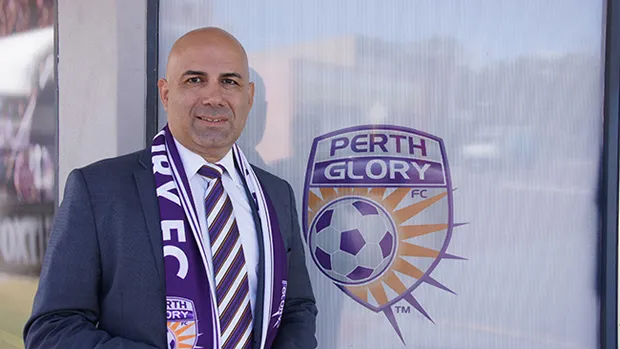
Global marketing and advisory firm Bastion has strengthened its leadership team with the appointment of Peter Filopoulos as Managing Director, Experience. This decision brings one of Australian football’s most influential administrators into a new phase of the sports business landscape.

Filopoulos, who has held senior roles across Football Australia, Football Victoria and Perth Glory, will lead Bastion’s experiential and partnerships division, applying a football-informed lens to brand engagement.

Drawing on his time in the game, Filopoulos emphasised the importance of cohesion in building meaningful fan connections.

“For me, the biggest lesson is that fans don’t see brand, content and experience as individual silos, they experience it all as one connected ecosystem,” he said.

“At Football Australia, the work resonated most when everything was aligned; the team, the narrative, the partners and the matchday experience all working together to feel cohesive and authentic. That’s when engagement moves beyond interaction and becomes something far more meaningful.”

He added that too many organisations still treat fan engagement as short-term.

“Where a lot of organisations fall short is treating fan engagement as a campaign. It’s not, it’s an always-on system.”

Filopoulos’ move reflects a broader shift within football, where commercial growth is increasingly driven by experience-led strategy.

“At Bastion, we put experience at the centre—because it’s where the brand comes to life, where partners integrate in a way that adds real value and where fans genuinely connect,” he said.

“Our focus is on building platforms that bring fans closer to the brand… Get that right, and you’re creating something people actively want to be part of.”

Pushing for First Nations representation in the game with Football Queensland’s Murri Cup

Football Queensland has announced the inaugural FQ Murri Cup, a two-day tournament celebrating First Nations cultures and showcasing Indigenous football talent from across Queensland, to be held at Nudgee Recreation Reserve on November 28 and 29.

The competition, developed in close consultation with Football Australia’s National Indigenous Advisory Group and Football Australia’s General Manager of First Nations Courtney Fewquandie, will feature a Coles MiniRoos activation, a Charles Perkins XI Talent ID session and a community stallholder zone alongside the on-field competition. Expressions of interest are open now for individuals and teams across the state.

More than a tournament

The launch arrives at a moment when the structural underrepresentation of First Nations Australians in organised sport, at the administrative, coaching, and pathway levels, is under sustained scrutiny. Football, like most codes, has historically failed to build the kind of community-embedded structures that make sustained Indigenous participation possible rather than incidental.

The FQ Murri Cup is a direct response to that gap. By centering First Nations culture within the competition itself, rather than treating it as supplementary to a standard football event, the tournament signals a shift in how the game positions Indigenous participation as a community with its own relationship to the sport that deserves its own platform.

The inclusion of a Talent ID session carries specific weight. Structured pathways into elite football have not always been accessible to players from regional and remote Indigenous communities, where geography, cost and cultural barriers compound one another. Embedding that opportunity within a culturally safe environment lowers the threshold at the point where it most frequently closes.

“The FQ Murri Cup will bring together First Nations players, families and communities for a two-day celebration, providing a wonderful opportunity to acknowledge the contributions of First Nations participants within our game,” said Football Queensland CEO Robert Cavallucci.Mu

Most Popular Topics

Editor Picks

Send this to a friend