FFA Cup returns to put local clubs back in the spotlight

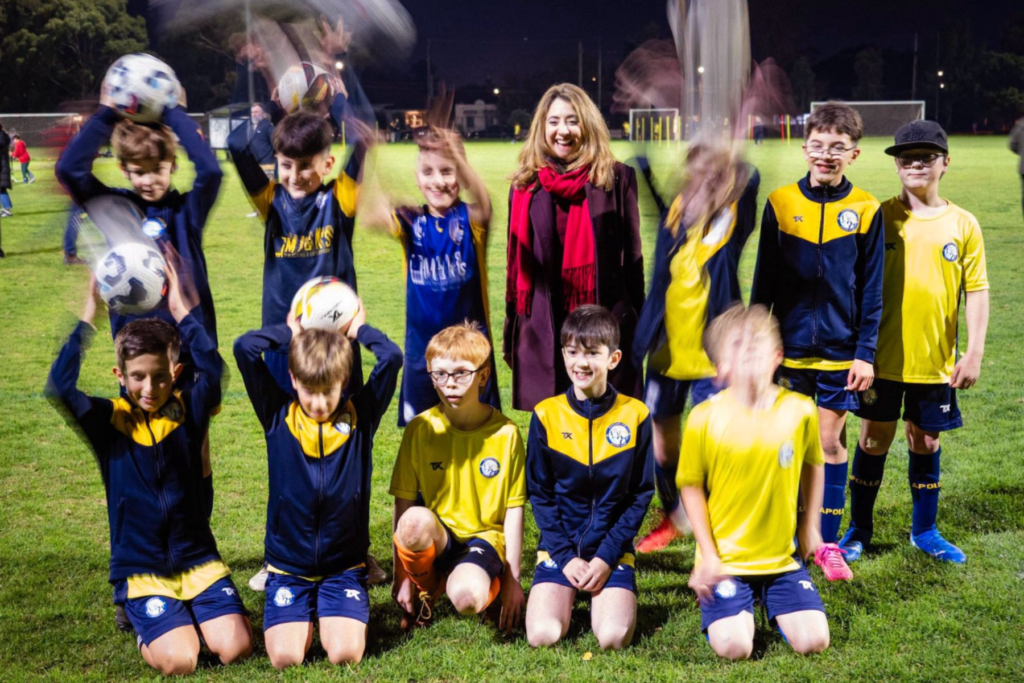
The sixth edition of the FFA Cup will again showcase some of the best talents from around Australia’s National Premier Leagues.

NPL sides have had to make it through their state’s preliminary rounds of qualifying, with those successful sides set to begin their FFA Cup venture when Matchday 1 of the Round of 32 begins tonight (Wednesday July 24).

On an opening night dominated by NPL match ups and local ties, there will be plenty of sides able to make it past to the next round and eventually test themselves against one of the A-League clubs (excluding Western United).

The FFA Cup will continue to reward NPL sides for every goal they score and allow players to express themselves and make the next step in their career. Being on the big stage is a massive incentive for any local-level club or player with the opportunity to prove their worth.

The Magic of the Cup will be in full swing, with upsets once again a realistic possibility given A-League sides are only in their pre-season.

It could even be the first year in the FFA Cup’s history that an NPL team will go all the way to the Grand Final – a moment to remember when it first transpires.

Fans will have a variety of ways to view this year’s FFA Cup if they’re unable to attend the game. All games can be found on Fox Sports, Kayo, the My Football app or via a stream from Fox Sports’ website.

Previous ArticleNext Article

Australia football needs to fix its football governance before it can fix its referees

The clearest image yet of Australian football’s refereeing crisis arrived on Wednesday night as Sydney FC and Melbourne Victory met in an Australia Cup semi-final at Jubilee Stadium.

A first ever Big Blue in the competition – and towards it’s pointy end – should have been a showcase event for Australian football but instead, the referees were in the spotlight. Not because of the quality of their officiating, but because of the dire situation the game finds itself in and it’s present need to resort to international imports.


Four Singaporean referees were in charge of the fixture, which Victory won 2-0. Australian referees had refused appointments because of their ongoing dispute with Football Australia. The issue is no longer theoretical. Australian referees are not simply threatening industrial action – their absence has already changed how major matches are delivered. That is a governance failure on the part of Football Australia and the Australian Professional League.

What are the referees fighting for?

Around 90 elite Australian match officials are currently without contracts. That includes referees, assistant referees, fourth officials and video match officials working across the A-Leagues and Australia’s national competitions. The previous contracts expired last month. Some officials are also waiting for outstanding payments from A-League trial matches.

The Professional Football Referees Association (PFRA) has set three main requirements:

  • It wants the existing contracts extended until June 30, 2027, or until a new agreement or independent refereeing structure is established. 
  • It wants all outstanding match fees and expenses paid.
  • It wants a professional refereeing structure that does not place elite officials directly under the APL, which is controlled by the clubs they officiate. A new central structure is what the referees are demanding and should get.

Evgeny Vizelman, chairman of the PFRA, believes that whilst the strike action is extreme, it is necessary to protect Australian referees.

“We do not take the decision to stop officiating matches lightly,” Vizelman told Sydney Morning Herald last week.

“Our referees are being asked to perform in one of the most scrutinised roles in Australian sport without basic certainty around their employment and, in some cases, without even being paid for work already completed. That is not acceptable.”

Football Australia and the APL have been working towards a new structure, but one in which the two organisations contract separately for Australia Cup and A-League matches. The referees believe that is the wrong model.

Their concern is simple: The APL is 67.7% owned by the A-League Club Unitholders. Essentially, the clubs are appointing their own referees. That creates a perceived conflict.

If the referees sit under Football Australia as a regulator, it ensures there is no conflict of interest and that A-League clubs have no opportunity to influence the referees they may be appointed to matches.

England shows another way

England has already built the structure Australia is struggling to create. Professional Game Referees, or Pro Ref, is the central body overseeing refereeing across the Premier League, EFL, WSL Football and FA competitions. It is funded by those aforementioned competitions.

The important distinction is those competitions do not each run their own separate professional refereeing workforce. Pro Ref manages the system. It oversees appointments, development, training and performance. For the 2026-27 season, its new Professional Referee Group will service the Premier League and EFL Championship.

Officials work within the same professional structure and can be selected across competitions. That centralisation brings consistency. It also allows referees to be treated as a professional group rather than a collection of officials contracted separately by different competitions.

Whilst it is centralised, the system is not perfect. England has also recognised the need for greater independence in assessing referee performances due to Pro Ref being owned and funded by leagues and, as a result, the clubs they represent. However, as the body is also owned in part by the English FA, the governing body can oversee practices.

Pro Ref has also implemented world-leading officiating practices. Its Key Match Incidents panel includes former players and coaches, alongside representatives from the Premier League and Pro Ref, and reviews major decisions independently each week.

Pro Ref now has dedicated development groups, specialist coaching, sports science, psychology and performance analysis. 37 Pro Ref officials are currently on the FIFA International List. That does not prove centralisation alone creates better referees. But it shows what happens when refereeing receives a professional structure, long-term investment and consistent management.

Australian football needs to collaborate

This is where the Australian dispute becomes bigger than referees. Football Australia and the APL have been unable to secure agreement over who funds the referees over a long period of time, leading to this standoff; it comes at the same time as the APL’s difficulty in negotiating a new CBA with the players’ union.

Both organisations have a role in running their respective parts of the Australian game, but again an industrial dispute has the game appearing in shambles on the eve of another domestic season.

The most frustrating part of this dispute is that everyone needs the same thing. Football Australia and the APL need referees; there is no doubt the refs deeply value their employment at the elite level. With due respect to Wednesday’s flow-in Singaporean officials – themselves from a valued partner member through our shared position in the AFC – nobody wants to see the circumstances under which they were required on Wednesday continue any longer.

The PFRA dispute should therefore be treated as more than an industrial disagreement. It is an opportunity to fix the structure. Australia should learn from the principle behind Pro Ref and the English system. Centralise, professionalise and protect the officials who manage the game.

The A-League has a visibility problem and only Network 10 can fix it

The A-Leagues are just over a month away and with the final stages of the Australia Cup in progress, attention should be firmly turning towards Australian football. Instead, there is a familiar problem. The domestic game once again is struggling to cut through.

The A-Leagues recently secured a three-year extension with Paramount+ and Network 10. The agreement keeps every A-League Men’s and Women’s match on Paramount+, while the free-to-air broadcaster will show one men’s match each week. Following on from their initial five-year deal signed in 202, it’s great that the partnership appears in it for the long haul.

But the big question remains: why is the product not being sold to audiences loudly on the eve of the season? Where is the noise?

Stan Sport and the Nine Network’s Premier League has shown what can happen when a broadcaster actively promotes its football product. The A-League has good numbers in places – one in seven Australians claim to support an A-League team – but the product lacks the exposure it deserves with less than 7% of Australians actively watching the league. It rarely feels like a major sporting product.

The A-Leagues’ current deal

Network 10 and Paramount+ have invested heavily in Australian football. The previous deal before the three-year extension (signed 2021) cost the broadcasters $40 million per year.  A-League viewing on Paramount+ reached record levels in 2025/26 – viewing was up 55 per cent compared with 2021/22. The 2025/26 season reached 4.1 million live viewers.

Those numbers should be celebrated. But those successes are dependent on viewers signing up and tuning into the streaming service of Paramount+. The competition does not receive continual exposure across the Network 10 ecosystem. One men’s match is shown free-to-air each week. That is the contractual commitment. Many of those matches are pushed onto secondary channels rather than the main network.

The Premier League, whilst being a very different product, is receiving much more attention from its Australian broadcasters. Despite being hosted as late as 2:30am, it still receives a massive marketing boost. Stan Sports’ newest campaign boasts flashy billboards in major cities with stars such as Erling Haaland and Bruno Fernandes. Meanwhile, the A-League sits in the corner.

Nine is reportedly prepared to spend up to $860 million over six years to retain the Premier League beyond its current deal, which expires at the end of the 2027/28 season. That would be roughly $145 million per year. There is a reason Nine is willing to make that investment.

Since taking over the Premier League, Stan Sport subscriptions have increased by 40 per cent. Nine very rarely puts the Premier League on free-to-air; marquee matches such as Manchester City against Tottenham Hotspur in 2025 saw a total reach of 1.1 million. That’s nearly 14% of the A-League’s total yearly viewership.

I understand the talent discrepancy, but the lack of broadcast investment to make people aware of the local competitions, and the everyday fan’s ability to access them, is significant in contrast to the Premier League. 

Competition is getting smarter

The A-Leagues are not operating in a vacuum. Australian sport is becoming increasingly aggressive about broadcast exposure. The AFL’s current seven-year broadcast agreement is worth $4.5 billion.

These top-end agreements are not realistic for the A-League, but perhaps more relevant comparisons are Australian basketball’s NBL and cricket’s Big Bash.

Basketball has a similar challenge to football, competing for attention in summer. Its clubs are concentrated in major Australian cities, and also rely on younger audiences and digital engagement to drive growth. During the 2025/26 season, average audiences on Network 10’s primary channel increased by 18 per cent and the NBL’s 2026 finals coverage increased viewership by 36 per cent.

Importantly, all NBL finals coverage was shown on the main 10 channel as opposed to regular season games on 10 Bold and 10 Peach. Then came a major strategic move. Having been with Network 10 since 2021, the NBL chose not to renew its contract and went to market.

While the NBL’s streaming rights have remained with ESPN (primarily owned by Walt Disney Co.), Channel Nine swooped to buy the free-to-air NBL rights for the upcoming 2026/27 season. They’ll show two matches each week, with marquee games to appear on Channel 9.

The deal also includes a weekly studio program, a dedicated 9Now hub and broader promotion through Wide World of Sports. This is in direct competition with the A-League. Not only will both have free-to-air matches on Saturday nights, but access to more content from beyond the sport will be available for free.

The BBL provides another useful comparison. Under Cricket Australia’s current agreement, Seven and 7plus show 33 of the 43 BBL matches, including three finals. On average, that is at  least three-to-four free games a week.

The point is not that every A-League match needs to be on a major free-to-air channel. It cannot realistically achieve that. But despite the A-League’s broadcasters investing big in Australian football, they’ve still been drowned out when compared to Stan and the Premier League. Meanwhile, the average Australian does not have the same access to the A-League as established competitions such as the AFL. 

The BBL has four games a week free, the AFL has three, the NBL two. The A-League languishes behind with a single game. Not only does it hurt diehards, but it stunts any growth from the casual fan.

What the A-Leagues need to do

The A-Leagues are now tied to Paramount+ and Network 10 for another three years. That makes the next step obvious. The league needs to make the most of the partnership. Simply, the broadcasters have to be doing more.

Accessibility is the key. Network 10 has to be actively promoting the A-League with free-to-air shows that have analysis. 10’s free app and Paramount+ must make the A-League the first thing you see.

Football Australia has done great things with the Australia Cup. Select matches are available free through Football Australia’s YouTube channel alongside coverage on Network 10 and Paramount+. That is smart and will attract casual audiences, without asking them to invest financially.

But the pressure also has to fall on Network 10. If they’ve invested in Australian football for the long term, they need to support the investment properly. Promote games days prior to kick-off; cover the game’s stories even during the off-season. If Network 10 and Paramount want a return on their investment it is in their best interest to have the sport be a consistent and routine presence. 

The A-League does not necessarily need another broadcast deal. It needs a broadcaster that invests and believes in the product it spent so much to secure. The football is there, and audiences are growing. Now the promotion needs to match the ambition.

Most Popular Topics

Editor Picks

Send this to a friend