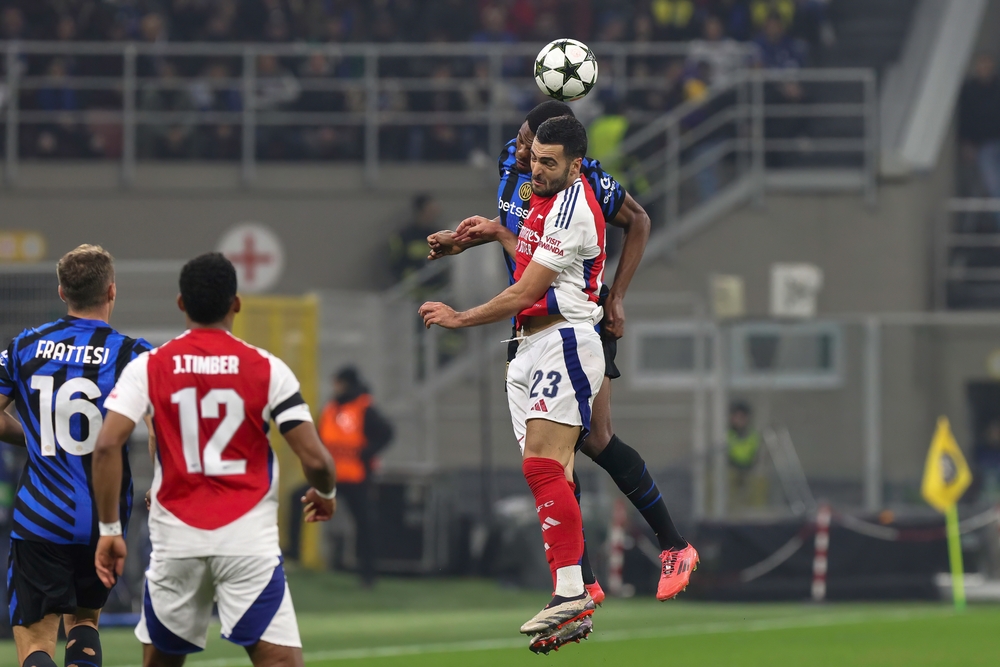
The recent coronial inquest into the death of Gordon McQueen has once again forced football to confront an uncomfortable truth.
The former Manchester United and Leeds United defender was renowned for his aerial prowess. But decades after his playing career ended, McQueen was diagnosed with dementia. The coroner has now formally linked his condition to repeated heading of a football. This is a landmark acknowledgement that many in the scientific community say has been years in the making.
For Ian Greener, Australia’s HEADSAFE representative and former State Director of Coaching at Football Victoria, the ruling should be a turning point.
“The evidence has been there since 2019,” Greener tells Soccerscene. “But the general public and much of the football community have simply not been told.”
The Research Football Can’t Ignore
Much of the modern understanding of Chronic Traumatic Encephalopathy (CTE) in football stems from the work of Professor Willie Stewart at the University of Glasgow. Commissioned by the English FA and PFA, his landmark 2019 FIELD study found former professional footballers were three-and-a-half times more likely to develop neurodegenerative disease. For defenders, that risk rose to five times more likely.
Stewart then spent years re-examining his findings through analysing lifestyle, alcohol consumption, social factors and broader health variables across tens of thousands of records.
“He looked at everything,” Greener explains. “Drugs, diet, social background. After years of further research, he came back to the same conclusion — there is no other explanation apart from repeated head impacts.”
CTE differs from concussion. Concussion is visible and immediate. It can be identified through dizziness, nausea and blurred vision. CTE is silent. The damage accumulates over decades and can only be confirmed post-mortem through examination of brain tissue.
Greener explains the science in simple terms: repeated head impacts cause the brain to move within the skull, stretching neurons. This releases tau protein, which clumps together over time and disrupts electrical messaging in the brain. The result can be memory loss, personality change, aggression, anxiety, and in some cases, suicidal behaviour.
“It’s not about frightening people,” he says. “It’s about understanding brain health.”
Not About Banning Heading
HEADSAFE, founded by the family of former Middlesbrough player Bill Gates after his battle with dementia, operates across three fronts: research support, financial assistance for affected families, and coach education.
“We are not about banning heading,” Greener stresses. “Heading is an integral part of football. What we’re saying is: minimise the repeated heading in training. Most of the damage is done there.”
In England, guidelines already exist. Children under 12 are not permitted to practise heading in training. Though monitoring is difficult, In the Premier League, players are advised to limit high-force headers to around 10 per week. In Scotland, players are not permitted to head the ball the day before or after a match.
Australia, however, has no formalised CTE-specific guidelines.
Greener says attempts to engage both Football Victoria and Football Australia have so far gained little traction. Instead, he has taken the message directly to clubs, academies and grassroots coaches through workshops and podcasts.
“We just need a module in coach education,” he says. “If we’ve embraced sports science in nutrition, recovery and match analysis, then we also have to embrace the science on repeated head impacts.”
What concerns Greener most is not just the science, but the time lag between evidence and action. “This was once considered an old person’s disease,” he says. “But the science now shows it begins much earlier. The symptoms might not appear for decades, but the damage can start in youth.” He argues that brain health should sit alongside hydration, nutrition and recovery in every coaching curriculum. “We talk about load management for muscles. Why wouldn’t we talk about load management for the brain?”
A Duty of Care
The urgency is heightened by the rapid growth of the women’s game. Emerging research suggests female players may experience head impacts differently due to chemical and physiological factors.
“It’s about duty of care,” Greener says. “My grandson has just started playing. I want to know that whether I’m there or not, he’s protected.”
McQueen’s case has placed the spotlight firmly back on football’s responsibility. With further inquests pending in the UK, including that of Bill Gates later this year, pressure is unlikely to ease.
Football has adapted before — from concussion substitutes to advanced medical protocols. The next step, Greener argues, is simple:
“Make every header count. Don’t do 30 or 40 for the sake of it. Protect the brain, protect the player, protect the future of the game.”