

LaLiga reveals end of sponsorship agreement with Banco Santander post-2022/23

LaLiga

Having entered a partnership from the 2016/2017 season, LaLiga and Banco Santander have mutually agreed to terminate the current sponsorship contract between the organisations.

The change, which will take effect from the 2023/2024 campaign onwards, is the result of a joint decision by both organisations to explore new ways of collaboration, both together and with third parties. LaLiga will announce new developments regarding the competition’s naming rights from the 2023/24 season onwards in the coming weeks.

During these six seasons of collaboration, the relationship between LaLiga and Banco Santander has transcended mere official sponsorship of the competition. It has been a period of close collaboration between the two institutions, with strong understanding and rapport that has fomented the promotion of successful joint projects such as LaLiga Promises (U12 football) in addition to main sponsorship of the LaLiga competition.

Both organisations have developed a close and fruitful relationship during the six seasons of collaboration, with great achievements that go beyond just advertising presence, involving strategic national and international development projects, in digital environments and at an observable level for football fans.

Education has been another pillar of the relationship between LaLiga and Banco Santander, joining forces to create LaLiga ProPlayer and to promote university education and in the creation of sports scholarships in the USA for players in lower categories, as well as the creation of a training programme for active professional footballers in 2021. LaLiga Business School’s Global Players Program was the first of its kind among major European leagues and was attended by 30 players in its first edition.

One of the most iconic products of this collaboration is undoubtedly LaLiga Genuine Santander, the competition for players with learning disabilities. So much so that Banco Santander, which has been one of the main driving forces behind this initiative since its inception in the 2017/18 season, and LaLiga are working together on a model to continue sponsoring this competition which has meant that LaLiga, together with its Foundation, is the first professional football league in the world to have a competition for footballers with learning disabilities.

LaLiga president Javier Tebas said in a statement released by LaLiga:

“We thank you for the trust you have placed in LaLiga over the years, and we are convinced that we will continue to collaborate on future projects with Banco Santander in order to grow and promote both brands.”

Antonio Simões, Regional Head of Europe and CEO of Santander Spain, added via LaLiga:

“We are delighted with our partnership with LaLiga over the years and are keen to explore further avenues of collaboration.”
Previous ArticleNext Article

Brazil is coming. But what is the real price of bringing football’s giants to Australia?

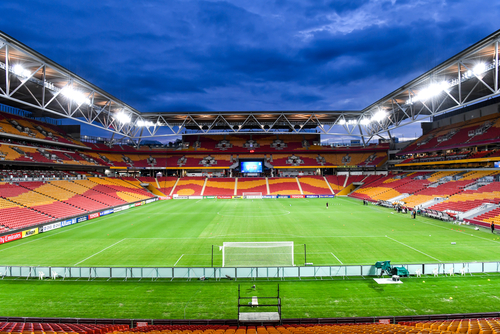
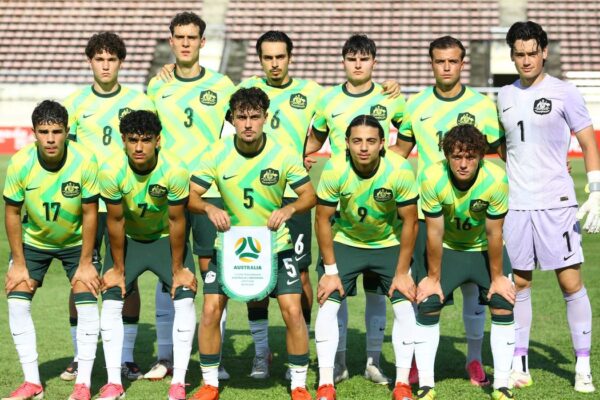
There is something undeniably exciting about Brazil coming to Australia. The five-time World Cup winners will face the Socceroos twice in Queensland from Friday, with Townsville and Brisbane set to host the blockbuster fixtures.

For Australian football, these are the kind of games that should be anticipated, celebrated and capture the public’s attention. But they also raise questions: how much should Australian football pay to bring the world’s biggest nations here, and when does the bill become too big? 

The cost of bringing the big names

Australia has always paid up to bring big names down under. Last week’s NFL game in Melbourne, at a cost of between $10 and 15 million dollars to the Victorian Government, is just the latest example.

It could cost the same amount to bring Brazil to Queensland. A report in The Sydney Morning Herald last year revealed Brazil was reportedly seeking around $7.5 million per match to play in Australia. The fee is in line with other major international events; Western Australia reportedly faced a bill of around $12 million in taxpayer funding for the recent Perth Italian Football Festival.

I’m worried Football Australia won’t get return on investment to make this particular event worthwhile. The enormous fee to bring Brazil to Australia can’t immediately be justified as an investment in our footballing future. Instead, Football Queensland and the state government could have put these funds into grassroots facilities. Part of Football Queensland’s scrapped state headquarters investment plan was to spend $8.5 million to refurbish fields, lights, drains and irrigation at Mappas and Meakin parks. Instead of these plans to invest in the state’s youth players and academies, money has been spent on two international friendlies.

So ahead of the fixtures, the question remains: will these games inspire the future generation, and will participation grow? The NFL match was impossible to ignore: a sold-out MCG and a live audience of 2.1 million on free-to-air, not even including those watching on ESPN and Netflix. Football Australia is not simply buying 90 minutes of football; it is buying the attention that comes with Brazil. So let’s see if they can maximize returns. 

Ticketing Tells a Story

Ticket sales provide insight into the interest in the fixture. Brisbane has sold much quicker than Townsville, but neither have sold out as yet. The fact these games didn’t immediately sell out may be considered surprising as there is a genuine appetite in Australia for elite international football at the moment, evidenced by SBS’ World Cup viewership numbers of 17.1 million.

Brazil is bringing some of its brightest stars: Vinicius Junior, Raphinha, Bruno Guimaraes, Marquinhos and Endrick are among the headline names in their squad. The star power is there. So why haven’t these matches sold out? There’s a chance it comes down to the competition and the visibility of the event.

The viewing problem

The timing of this fixture could raise eyebrows amongst fans. As much as Australia and Brazil will draw huge crowds, both games fall on either side of the AFL Grand Final. The 2024 AFL Grand Final, which involved Queensland’s Brisbane Lions, drew over 4 million viewers on free-to-air. Brisbane, who have won the last two premierships, will feature once again on Grand Final day. Therefore, fans who could’ve attended may instead be making the trip to Melbourne.

Then comes the strangest part: one of the fixtures Australia will play will not even be available on free-to-air television. The Townsville match will be shown free on Network 10 and 10 Streaming, as well as Paramount+. The Brisbane match, however, will be available exclusively on Paramount+. That creates a disconnect. If governments and football administrators are spending millions to bring a global sporting brand to Australia, why should a large section of the Australian public need a subscription to watch the second match?

The Brisbane game is behind a paywall, limiting the national reach of the event. Reach is surely part of the justification for spending big on Brazil, it’s not just that 50,000 people get to sit inside Suncorp Stadium. It is that millions of Australians get exposed to the spectacle and if that audience is restricted, the value of this fixture is limited.

A solution could be to spend the money on advertising the match to the public to try to generate interest across streaming and free-to-air. With less than a week until the first game I don’t believe the advertising has done enough to generate enough interest to justify a $15 million price tag for the two game series. 

The Brazil friendlies will be spectacular. They should attract big crowds, create memories and give the Socceroos an excellent test against one of football’s most recognisable nations. But for the appropriate return, attention must be measured. Does this fixture carry on the Socceroos hype and keep the eyeballs of the general public on our sport? I’m not convinced. However, if these matches bring new fans to football, strengthen the national team and create lasting investment in the sport, the enormous price tag could still be justified. But if they simply produce two nights of football before the attention disappears, then Australian football has paid a premium for a very expensive show.

Arncliffe Aurora’s Riverine Park investment creates a platform for growth

Arncliffe Aurora Football Club has started a new chapter with the launch of Riverine Park, creating a larger platform for football, community engagement and long-term growth in Sydney’s St George region. More than 2,500 people attended the community opening on 8 August, marking the club’s first matches at its new home and showcasing a significant upgrade in its operating capacity.

Riverine Park provides two full-size natural turf football fields, modern player and community amenities, and a new clubhouse. The additional capacity responds to strong growth in Arncliffe Aurora’s football programs, particularly at junior level. The club has also highlighted a $2.5 million investment in facility upgrades. Together with its existing Arncliffe Park base, Riverine Park gives Aurora two homes and a stronger physical platform for its football operations.

More capacity allows the club to accommodate more teams, players and programs, while updated facilities can support stronger member retention and recruitment. They create more opportunities for coaching, development programs, events and community activities. The new site can also strengthen the club’s commercial proposition; a modern facility gives sponsors greater visibility and provides more opportunities to activate partnerships around football and community events. It can also help the club build relationships with schools, community organisations and football bodies. That matters as grassroots clubs increasingly operate as community hubs rather than simply sporting organisations.

Riverine Park also creates opportunities for the wider football ecosystem. Football St George has identified the facility as a platform to grow participation and provide opportunities for players of different ages, abilities and backgrounds. Bayside Council’s project includes upgraded change rooms, toilets, canteen facilities, lighting, seating and solar panels, adding further functionality to the precinct.

For Arncliffe Aurora, the investment is therefore about more than adding fields. It creates infrastructure that can support participation, player development, community programs and commercial activity over the long term. The challenge now shifts from construction to utilisation. The club must maximise the new capacity, maintain the assets and convert greater participation into a sustainable operating model to benefit the community long-term.

Most Popular Topics

Editor Picks

Send this to a friend