



MLS NEXT: A lucrative development grant initiative for junior academies

MLS NEXT, a sub-sect of the Major League Soccer organisation, is reinvesting in North America’s junior academies through the MLS NEXT Development Grant program.

The program effectively compensates clubs for their role in producing MLS Academy and first-team players, and incentivises their future operations.

The grant has been actioned immediately, and is eligible to clubs under the MLS NEXT Elite Academies umbrella since 2020.

There are currently 143 clubs who operate within the system, and membership is expected to grow with the introduction of the grant.

The program operates differently to its community-driven grants, implementing meritocracy as the basis for grassroots investment.

MLS NEXT Elite Academies may receive Development Grant funds via one of the following scenarios:

  1. The player signs a professional contract as a Homegrown player with the MLS club he moved to from the eligible MLS NEXT Academy.
  2. The eligible player appears in a certain number of MLS matches.
  3. The eligible player is transferred for a fee from an MLS club to a non-MLS club outside of the United States and Canada.

MLS NEXT shared the first 10 recipients of the grant on X (formerly Twitter), representing a range of clubs across the continent.

Weston FC, based in South Florida, have provided several players to the academy of newly-formed Inter Miami. One of those players, Benjamin Cremeschi, graduated to Inter Miami’s first team in 2022, and represented the United States in 2023.

Weston FC technical director Luis Mendoza explained that the exposure of Cremeschi’s journey, and the funding the club is set to receive, will spur on its current and future players.

“This is going to create a reaction with the players. Everybody’s going to get better, and that’s what we want. We want all the clubs to improve,” he said via MLS NEXT media release.

“We want all the clubs to get better. That’s going to create better competition and with better competition, you accelerate the quality and the development of the players. Everybody’s going to benefit from that.”

First receivers of the MLS NEXT Development Grant Program. Taken from: https://www.mlssoccer.com/mlsnext/news/mls-next-development-grant-program-what-to-know-how-it-works

Speaking further about the fund, MLS NEXT General Manager Justin Bokmeyer outlined that it should positively impact the future operation of North America’s junior academies.

“This development grant should be reinvested into their player development programs, whether that’s staffing, programs – resources to ensure that they have an elite environment. Facilities, staffing, programs, training, matchday or just the access to overcome barriers to play,” he added via press release.

“This is a direct step in action to help foster those relationships and foster that trust. Elite Academies plays such an important role within MLS NEXT and within the soccer ecosystem, and we understand that.”

After failing to qualify for the 2018 FIFA Men’s World Cup, the U.S and MLS have made significant inroads into restructuring and revitalising its development leagues.

This includes the introduction of the MLS NEXT Pro competition, which acts as a gateway for MLS academy players to progress to the first-team and beyond [hyperlink to MLS Next Pro feature]. It also represents the first target for players of MLS Next Elite Academies.

Brokmeyer insists that MLS NEXT’s success, despite still in its infancy, is both flattering and exciting.

“The investment into player development is far and above where we thought we could have been four years ago, and so it just speaks to the growth of the league, the strength of it, how important it is to the countries’ soccer ecosystem,” he stated.

North America’s rapid football expansion will be expected to continue ahead of the 2026 FIFA Men’s World Cup – co-hosted by the U.S, Canada, and Mexico.

Previous ArticleNext Article

Football West opens doors for next generation of Female Footballers

Football West will host its largest junior female football event of the year on Sunday March 29. The event offers free, structured football activity for girls aged 6 to 16 at the Sam Kerr Football Centre in Queens Park. It’s part of an initiative to address the structural barriers that continue to limit female participation at the grassroots level.

The 2026 Girls Day Out will run from 9am to 12pm and include a football clinic, small-sided games, Perth Glory A-League Women player appearances and a family fun zone. Entry is free and open to players of all abilities, though registration is required with spots limited.

From the pitch to the pipeline

The event is coordinated by two former professional players now embedded within Football West’s administration. Sarah Carroll, Manager of Female Football and Advocacy, and Izzy Foletta, Female Football Development Coordinator, bring direct experience of the pathways that shape whether girls stay in the game long enough to reach senior competition.

“Girls Day Out is about opening the door to football for girls of every age and ability,” Carroll said. “Whether they’ve played before or are stepping onto the pitch for the first time, this is a fun, welcoming experience where girls can learn new skills and enjoy the game.”

Cost remains one of the most consistent barriers to junior sport participation, particularly in communities where club registration fees, equipment costs and travel represent a genuine burden. The structural logic behind the event is straightforward. A free, high-quality entry point removes that barrier at the moment it matters most—first contact with the game.

It also arrives at a moment of significant momentum for women’s football nationally, with the AFC Women’s Asian Cup driving record attendance figures on Australia’s east coast and participation numbers continuing to climb across the country. Sustaining that growth depends on whether the pipeline feeding it holds at the grassroots.

Filopoulos: Football Must Move Beyond Campaigns to Win Fans for Good

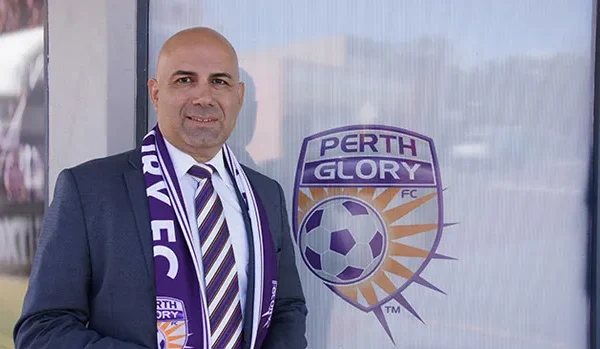
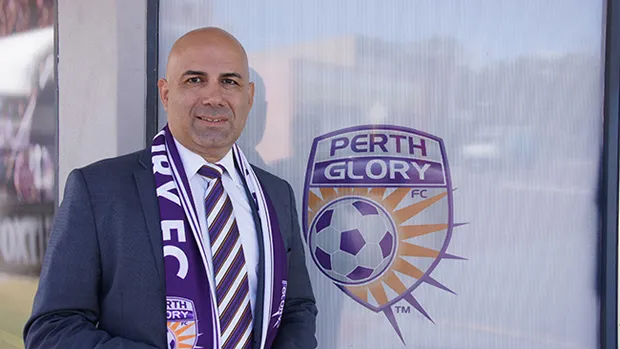
Global marketing and advisory firm Bastion has strengthened its leadership team with the appointment of Peter Filopoulos as Managing Director, Experience. This decision brings one of Australian football’s most influential administrators into a new phase of the sports business landscape.

Filopoulos, who has held senior roles across Football Australia, Football Victoria and Perth Glory, will lead Bastion’s experiential and partnerships division, applying a football-informed lens to brand engagement.

Drawing on his time in the game, Filopoulos emphasised the importance of cohesion in building meaningful fan connections.

“For me, the biggest lesson is that fans don’t see brand, content and experience as individual silos, they experience it all as one connected ecosystem,” he said.

“At Football Australia, the work resonated most when everything was aligned; the team, the narrative, the partners and the matchday experience all working together to feel cohesive and authentic. That’s when engagement moves beyond interaction and becomes something far more meaningful.”

He added that too many organisations still treat fan engagement as short-term.

“Where a lot of organisations fall short is treating fan engagement as a campaign. It’s not, it’s an always-on system.”

Filopoulos’ move reflects a broader shift within football, where commercial growth is increasingly driven by experience-led strategy.

“At Bastion, we put experience at the centre—because it’s where the brand comes to life, where partners integrate in a way that adds real value and where fans genuinely connect,” he said.

“Our focus is on building platforms that bring fans closer to the brand… Get that right, and you’re creating something people actively want to be part of.”

Most Popular Topics

Editor Picks

Send this to a friend