


PFA and La Trobe University offer women’s football scholarship

Sam Kerr Football and PARK

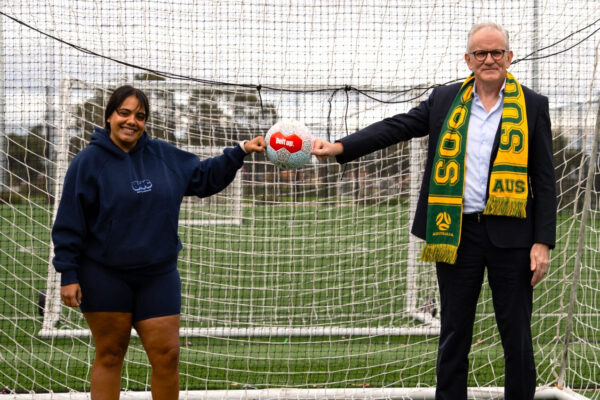
The Professional Footballers Association (PFA) and La Trobe University have confirmed a partnership that will see the University open up an amazing opportunity for students to take part in a course regarding the development of women’s football domestically.

It will be awarded to an exceptional applicant with an interest in the development and success of female footballers in Australia.

Applicants should have a passion for skill development, women’s sports, and a desire to understand the factors contributing to success in sports. The research will add value to the player members of Professional Footballers Australia.

PFA released a statement on social media about this offer:

“The unique PhD opportunity will focus on advancing the development and professionalisation of women’s football in Australia and will be based near the Home of the Matildas.”

Here are the details of the course: La Trobe Industry Research Scholarship (LTIRS): The Development and Professionalisation of Women’s Football in Australia.

Scholarship Amount: $34,000 per annum, for three and a half years. Additional fee relief included.

Opening Date: 25/09/2024

Closing Date: 21/10/2024

Who is Eligible: Future PhD candidates, Australian citizens, International students, Permanent residents and New Zealand citizens.

Location: Melbourne Campus

Payment Method: Fortnightly stipend

To be eligible for this scholarship, applicants must:

  • Meet the entrance requirements for the proposed PhD course.
  • Not be receiving another scholarship worth more than 75% of the stipend rate for the same purpose.
  • Have an academic background relevant to the project, such as sport science or performance psychology.

Preferred Qualifications:

  • Have experience working in professional or organised sports.
  • Are familiar with relevant research methods, including qualitative approaches such as interviews, focus groups, and concept mapping.
  • Will be enrolled full-time and conducting research at a La Trobe University campus.
  • Have completed a Masters by Research or have a significant body of research, such as an honours research thesis or lead authorship of a peer-reviewed publication, assessed at a La Trobe Masters by research standard of 75 or above.

Important Notes:

  • The supervisors for this project are A/Prof Clare MacMahon (LTU), Dr. Luke Wilkins (LTU), and Brett Taylor (PFA).
  • Applicants must submit a 1-page cover letter outlining their interest and suitability for the project, along with a brief CV.
  • A Working With Children Check is required before commencing the position (the applicant is responsible for the cost).

Selection Process:

  • Applications will be reviewed carefully by the University.
  • Shortlisted candidates will be invited to an interview with representatives from La Trobe University and Professional Footballers Australia.
  • Final decisions will be based on the application and interview.
  • Successful candidates will be notified in December 2024 with an offer for both candidature and scholarship.

Conclusion:

The PFA Matildas report released after the 2023 Women’s World Cup suggested that the PFA were going to aggressively push for professionalisation in the Ninja A-League following damning numbers showing most of the league is required to work a second job whilst also committing themselves to almost 30 weeks a year of training and matches.

Every single Matildas player in that World Cup squad started their career at the A-League and the lack of funding and help has led the league to be so far behind its international counterparts, with almost all top Australian talents choosing to move abroad.

This PhD course is a big first step in understanding what steps are required to take the domestic women’s first division to a suitable standard and will do so by involving more young, intelligent minds outside of the PFA to gain an outside perspective.

Previous ArticleNext Article

Northern NSW Football Launches Female Referee Mentor Program to Strengthen Officiating Pathway

Northern NSW Football has launched a Female Referee Mentor Program, backed by NSW Office of Sport funding, as the federation moves to address one of the game’s most persistent development gaps: retaining and advancing women in officiating.

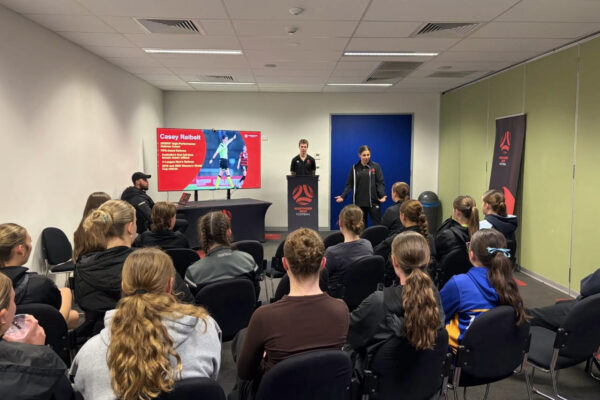
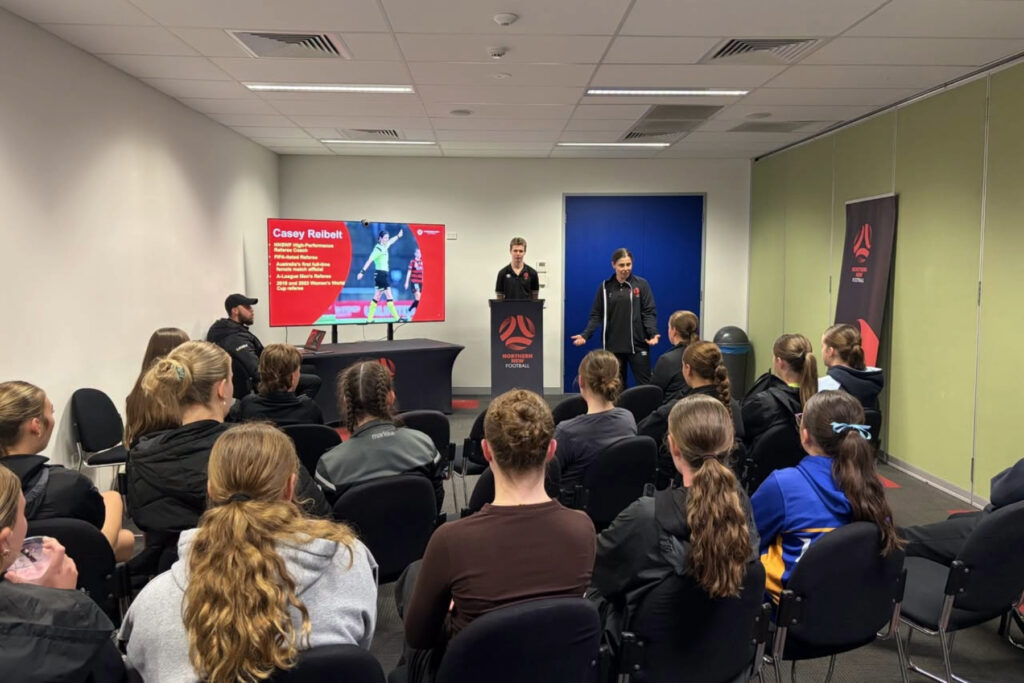
The program pairs emerging referees with experienced female officials and coaches, and has already been introduced in match conditions during the 2026 Northern NSW Women’s State Cup under the oversight of NNSWF high-performance referee coach and FIFA referee Casey Reibelt.

Northern NSW says the initiative is designed to improve progression into representative appointments and leadership roles while building the support networks often cited as critical to referee retention.

Tournament rollout offers first test of model

NNSWF said 25 female referees officiated during the Women’s State Cup as part of the program’s initial phase.

The federation also released a number of key appointments linked to the rollout. Sophie Whale and Jamie Mills-Cove were appointed assistant referees for the Community Plate final. Lilli Skaines and Kaitlyn Digby were appointed to the under-13 and under-15 Premier Youth League Girls Cup finals, with Indi Charlesworth named assistant referee for both fixtures.

Reibelt said the initiative was intended to support younger and less-experienced referees in a practical environment and to reduce the sense of isolation that can come with early officiating experience. NNSWF general manager participation and women’s football Allana Neeve said the federation viewed refereeing as a critical part of women’s football and described the funded program as a pathway investment aimed at long-term sustainability.

From participation goal to workforce strategy

Over the past years, women’s player participation has boomed, but officiating pathways have not always expanded at the same pace, particularly in regional systems where access to experienced coaching and consistent appointments can be uneven.

That has consequences beyond referee numbers. Match officials are a core workforce input for competition quality, scheduling and player development. If attrition is high in early officiating years, federations are forced into constant replacement cycles rather than building depth.

In that context, mentor programs are increasingly treated as operational infrastructure, not supplementary participation projects. What matters is not only recruitment, but conversion: whether referees remain in the system long enough to progress into advanced appointments and eventually into coaching and leadership roles.

Northern NSW’s decision to embed mentoring in live competition rather than classroom-only delivery is a practical strength. Development feedback linked to real matches is generally more actionable for emerging referees than abstract technical sessions.

The next phase, however, will determine whether the program produces structural change. Initiatives launched around major events often generate strong short-term engagement but weaken across regular-season demands, especially where travel, study and work pressures are high.

Over time, the federation will need to show progress in second- and third-season retention, advancement into higher-grade appointments, and sustained mentor participation beyond flagship tournaments. Consistency across metropolitan and regional cohorts will also be central to any claim of pathway equity.

Public funding raises reporting expectations

Office of Sport support gives the program early stability, but it also raises the bar on transparency. Publicly supported pathway programs are typically expected to report outcomes, not just participation stories.

For this initiative, that means publishing practical indicators: cohort continuity, appointment progression and evidence that mentoring remains active throughout the season cycle. Without that reporting architecture, it is difficult to distinguish between a successful event and a durable reform.

For now, Northern NSW has delivered a credible first step: a defined mentor structure, named participants and immediate implementation inside a representative competition. The next challenge is to convert that start into a repeatable officiating pipeline.

Regional carnival puts Football West’s Country Pathway in Focus

Football West’s first State Regional Carnival has done what many federation pathway initiatives promise but do not always deliver: it brought regional players into a central high-performance environment and made them visible on equal terms, at least for a weekend.

Almost 160 players from six Football West Regional Academy zones: South West, Goldfields, Great Southern, Mid West/Gascoyne, Pilbara and Kimberley, were brought to the Sam Kerr Football Centre in Queens Park for the three-day event last week. For the governing body, the carnival is now being positioned as a formal part of its talent identification and development pathway.

Football West general manager of football David Lewis said the carnival had highlighted the standard of regional football and the role country programs continue to play in the state game’s future. He described the event as an “important part” of the development pathway and thanked players, staff, volunteers and families who travelled from around WA to attend.

From event success to system performance

Western Australia’s structural constraint is distance. Regional players face layered costs that metropolitan players usually do not: long-haul travel into Perth, additional accommodation, time away from school and work, and repeated trips if selected into subsequent camps. Those costs are not incidental. They influence who can stay in the system.

That is why the next stage of this initiative matters more than the launch optics. If identified players cannot progress because the second and third steps of the pathway carry prohibitive financial or logistical burdens, then early identification becomes a limited intervention.

In governance terms, the carnival has shifted Football West’s accountability point. The federation has now demonstrated it can convene regional talent at scale. The policy obligation is to show what proportion of those players can be retained and advanced across the following 12 to 24 months, and on what support settings.

Infrastructure is in Place; Distribution as the Issue

The use of the Sam Kerr Football Centre means WA now has a purpose-built football base capable of hosting large-format pathway activity in one location. That removes one of the traditional constraints often cited in state development systems. Once infrastructure is available, attention moves to distribution: who accesses the environment, how often, and under what conditions.

If Football West wants this carnival to function as a durable pathway mechanism rather than a showcase event, several design questions become central. What are the progression criteria after carnival selection? What travel and accommodation support is available for players invited back into metro-based programs? How is regional representation balanced across age groups and cohorts? What protections exist to prevent early dropout linked to cost rather than capability?

A broader shift in Australian pathway policy

The Football West carnival also reflects a wider trend in Australian football administration. Federations are increasingly moving from ad hoc regional scouting to more formal, event-based talent aggregation tied to defined development structures. The logic is straightforward: centralised assessment improves comparability, increases selector confidence, and reduces the chance that players are missed because of location alone.

Yet national and state systems alike continue to confront the same bottleneck. Identification has improved faster than inclusion in later stages. The policy challenge is less about finding players than funding continuity for players whose families absorb higher participation burdens.

Football West does not need to prove that regional football has quality; that case has already been made repeatedly by player outcomes and now by event scale. It needs to publish evidence that regional players can convert recognition into progression at rates that are not materially depressed by geography or household income.

That means performance should be measured against more than attendance and event satisfaction. Over time, the federation will likely be judged on transition rates from regional carnival cohorts into advanced programs, retention across seasons, gender balance in progression outcomes, and the level of practical support delivered to remote participants.

For now, the inaugural carnival can be read as a constructive step with genuine strategic value. It created a focal point for regional talent and signalled administrative intent. Whether it becomes consequential policy will depend on what Football West builds around it next: transparent progression settings, repeatable support, and a funding model that does not turn distance into exclusion.

Most Popular Topics

Editor Picks

Send this to a friend