


UEFA Women’s EURO 2022 breaks viewing records

Women's EURO

UEFA Women’s EURO 2022 brought unprecedented interest in the tournament with record stadium attendances and a projected global cumulative live viewership of 365 million across TV, out-of-home viewing and streaming.

UEFA, alongside The Football Association, the Local Organising Structure and tournament stakeholders including the host cities and several partners, delivered the framework for a momentous event.

The 2022 edition of the tournament was shown worldwide via more than 60 broadcast partners and additionally via UEFA.tv in selected territories. More than 50 broadcast partners covered matches with dedicated on-site productions – more than double the 2017 edition at almost every stage of the competition.

More than double the number of live viewers tuned into the 2022 tournament when compared to the 2017 edition (178 million) and 214% more live viewers than in 2013 (116 million).

The final between England and Germany is projected to have attained a cumulative live viewership of 50 million worldwide, over three times more than for the 2017 final, when 15 million viewers tuned in

In both the UK and Germany, the final had the largest Women’s EURO audiences ever and the largest audiences since UEFA EURO 2020.

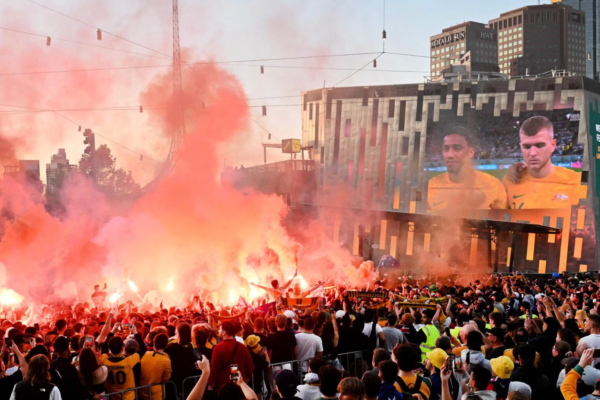
In addition, over 217,000 people attended dedicated Fan Parties in the host cities and 19,200 spectators took part in ‘Fan Walks’ to the matches. Moreover, the public investment in social impact programmes (art and heritage) amounted to $4.5 million AUD.

Over 2,300 volunteers were recruited and trained to enhance the overall fan experience. The volunteers were provided with the opportunity to be involved in a major sporting event across a variety of areas including media, hospitality, fan engagement and transport

The UEFA-supported legacy programme, which will run until 2024, aims to get more girls and women involved in football on a regular basis. It has been set up across the nine host cities by The FA, who have committed to several measures nationally.

With this programme rolled out a year ahead of the final tournament, results are already becoming visible, and its impact can be seen across the host cities:

  • 7,900 girls and women newly registered and playing in clubs
  • Over 14,600 have started playing recreationally
  • 145 new female coaches have been recruited and trained
  • The programme is on track to get 120,000 more girls playing football in school and over 416,000 new opportunities for girls and women to play football have already been created.

Globally, UEFA Women’s EURO 2022 generated 453.3 million cumulative social interactions, with TikTok (38.7%) and Twitter (21.1%) having the most.

Previous ArticleNext Article

Bordeaux face uncertain future after American investor withdrawal

Girondins de Bordeaux face their biggest crisis yet after their exclusion from France’s national competitions was upheld and proposed investor Park Bench walked away from a takeover. The club is on the brink of liquidation after poor financial management and failed ownership takeovers. The Paris Administrative Court rejected Bordeaux’s appeal in August. The court backed the decision that prevents the club from playing in national competitions for the 2026-27 season. Bordeaux will therefore this season remain in Régional 1, the sixth tier of French football.

The ruling followed a financial dispute with French football’s financial regulator, the DNCG. Bordeaux had presented additional financial guarantees after its previous hearing. The court ruled that those commitments could not be considered as part of that procedure.

The decision has now had a major impact on the club’s ownership plans. Park Bench, the US investment group working with Sparta Capital, has withdrawn from its proposed takeover. The group said its offer depended on Bordeaux remaining in the national championships. With that condition no longer possible, Park Bench decided not to proceed.

The withdrawal leaves Bordeaux in a difficult position. The club had hoped new investment would provide financial stability and help rebuild its sporting operation. Instead, the failure of the takeover leaves the future of the six-time French champions uncertain. Bordeaux has already endured several years of financial problems. The club lost its professional status in 2024 after bankruptcy proceedings and a previous administrative relegation. It then rebuilt its senior team in the second and third tiers of French football.

The latest exclusion represents another major setback. Bordeaux now needs to find a way to keep the club operating outside the national leagues. That means securing funding, meeting its financial obligations and establishing a sustainable ownership structure. The threat of judicial liquidation now hangs over the club.

In a statement issued in late August, Bordeaux said it would explore every remaining legal option after the administrative court ruling. But with Park Bench no longer backing the proposed takeover, the club has fewer options available.

The next priority will be survival. Bordeaux must find new financial backing or another solution to protect the club from liquidation. For one of France’s most historic and successful clubs, the immediate target is no longer a return to Ligue 1. It is simply making sure there is a club left to climb back.

Australia football needs to fix its football governance before it can fix its referees

The clearest image yet of Australian football’s refereeing crisis arrived on Wednesday night as Sydney FC and Melbourne Victory met in an Australia Cup semi-final at Jubilee Stadium.

A first ever Big Blue in the competition – and towards it’s pointy end – should have been a showcase event for Australian football but instead, the referees were in the spotlight. Not because of the quality of their officiating, but because of the dire situation the game finds itself in and it’s present need to resort to international imports.


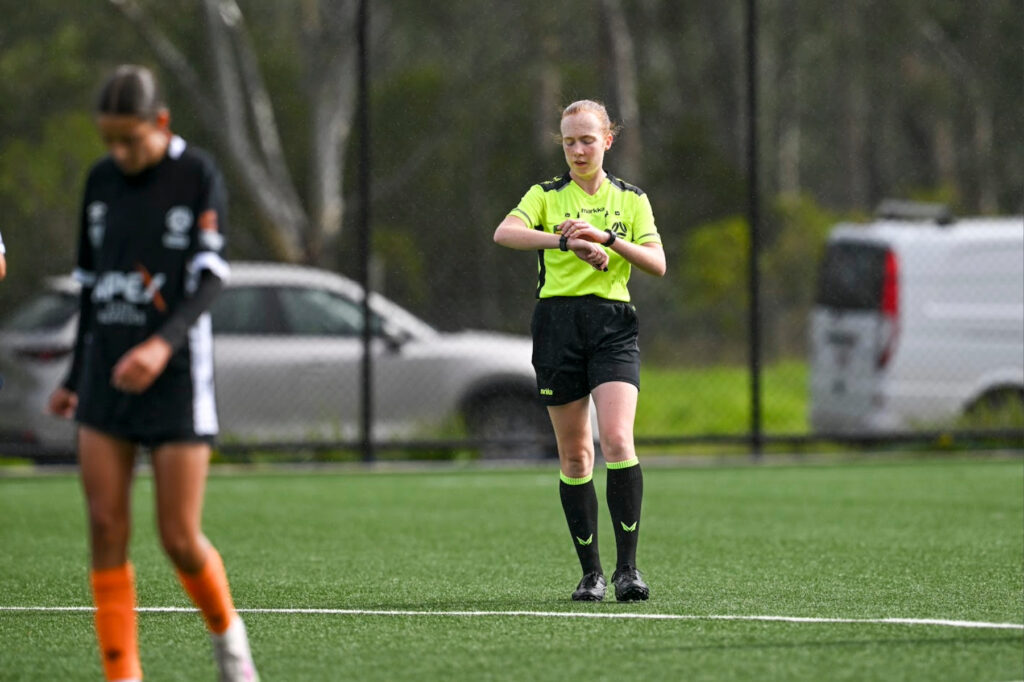
Four Singaporean referees were in charge of the fixture, which Victory won 2-0. Australian referees had refused appointments because of their ongoing dispute with Football Australia. The issue is no longer theoretical. Australian referees are not simply threatening industrial action – their absence has already changed how major matches are delivered. That is a governance failure on the part of Football Australia and the Australian Professional League.

What are the referees fighting for?

Around 90 elite Australian match officials are currently without contracts. That includes referees, assistant referees, fourth officials and video match officials working across the A-Leagues and Australia’s national competitions. The previous contracts expired last month. Some officials are also waiting for outstanding payments from A-League trial matches.

The Professional Football Referees Association (PFRA) has set three main requirements:

  • It wants the existing contracts extended until June 30, 2027, or until a new agreement or independent refereeing structure is established. 
  • It wants all outstanding match fees and expenses paid.
  • It wants a professional refereeing structure that does not place elite officials directly under the APL, which is controlled by the clubs they officiate. A new central structure is what the referees are demanding and should get.

Evgeny Vizelman, chairman of the PFRA, believes that whilst the strike action is extreme, it is necessary to protect Australian referees.

“We do not take the decision to stop officiating matches lightly,” Vizelman told Sydney Morning Herald last week.

“Our referees are being asked to perform in one of the most scrutinised roles in Australian sport without basic certainty around their employment and, in some cases, without even being paid for work already completed. That is not acceptable.”

Football Australia and the APL have been working towards a new structure, but one in which the two organisations contract separately for Australia Cup and A-League matches. The referees believe that is the wrong model.

Their concern is simple: The APL is 67.7% owned by the A-League Club Unitholders. Essentially, the clubs are appointing their own referees. That creates a perceived conflict.

If the referees sit under Football Australia as a regulator, it ensures there is no conflict of interest and that A-League clubs have no opportunity to influence the referees they may be appointed to matches.

England shows another way

England has already built the structure Australia is struggling to create. Professional Game Referees, or Pro Ref, is the central body overseeing refereeing across the Premier League, EFL, WSL Football and FA competitions. It is funded by those aforementioned competitions.

The important distinction is those competitions do not each run their own separate professional refereeing workforce. Pro Ref manages the system. It oversees appointments, development, training and performance. For the 2026-27 season, its new Professional Referee Group will service the Premier League and EFL Championship.

Officials work within the same professional structure and can be selected across competitions. That centralisation brings consistency. It also allows referees to be treated as a professional group rather than a collection of officials contracted separately by different competitions.

Whilst it is centralised, the system is not perfect. England has also recognised the need for greater independence in assessing referee performances due to Pro Ref being owned and funded by leagues and, as a result, the clubs they represent. However, as the body is also owned in part by the English FA, the governing body can oversee practices.

Pro Ref has also implemented world-leading officiating practices. Its Key Match Incidents panel includes former players and coaches, alongside representatives from the Premier League and Pro Ref, and reviews major decisions independently each week.

Pro Ref now has dedicated development groups, specialist coaching, sports science, psychology and performance analysis. 37 Pro Ref officials are currently on the FIFA International List. That does not prove centralisation alone creates better referees. But it shows what happens when refereeing receives a professional structure, long-term investment and consistent management.

Australian football needs to collaborate

This is where the Australian dispute becomes bigger than referees. Football Australia and the APL have been unable to secure agreement over who funds the referees over a long period of time, leading to this standoff; it comes at the same time as the APL’s difficulty in negotiating a new CBA with the players’ union.

Both organisations have a role in running their respective parts of the Australian game, but again an industrial dispute has the game appearing in shambles on the eve of another domestic season.

The most frustrating part of this dispute is that everyone needs the same thing. Football Australia and the APL need referees; there is no doubt the refs deeply value their employment at the elite level. With due respect to Wednesday’s flow-in Singaporean officials – themselves from a valued partner member through our shared position in the AFC – nobody wants to see the circumstances under which they were required on Wednesday continue any longer.

The PFRA dispute should therefore be treated as more than an industrial disagreement. It is an opportunity to fix the structure. Australia should learn from the principle behind Pro Ref and the English system. Centralise, professionalise and protect the officials who manage the game.

Most Popular Topics

Editor Picks

Send this to a friend