


WSC Sports and OneFootball partner to enhance the digital football fan experience

WSC Sports have this week announced that OneFootball, the world’s largest football media company, will be using WSC’s artificial intelligence (AI)-driven sports video technology to enhance its short-form video content across its various platforms.

With the addition of WSC Sports’ AI and automation tools, OneFootball will be able to develop personalised, localised and unique content for its 85 million monthly active users whilst scaling video content creation and optimising time and resources.

The partnership will provide fans with innovative live, near-live, and post-game video content, with OneFootball incorporating WSC Sports’ automated technology across its OTT offering on its Website, App, OneFootball Player and Social Media.

Both parties will also collaborate going forward on further differentiating and enriching the OneFootball experience with short-form video content across its multitude of touchpoints with football fans.

Nick von Doetinchem – VP OTT Streaming & Media Rights at OneFootball:

“With this partnership we are redefining what fans should expect from their digital football experience, using innovation to create unique short-form content and bring them closer to the action.”

“We are thrilled to be working with such a forward-looking brand that is as passionate as we are about reimagining the fan experience. We are excited about the roadmap ahead of us that caters to the changing consumption habits of a new generation of football fans.”

Itai Epstein – Head of Business Development, Central Eastern Europe, Russia & China, WSC Sports:

“OneFootball and WSC Sports are both focused on creating tools and technologies that can take fan experiences to the next level, making them as personalized and customizable as possible. We are excited about the prospect of a long-term relationship to create tools that engage fans even more.”

Previous ArticleNext Article

Football NSW builds life‑saving network as cardiac safety push expands

Football NSW has distributed 20 defibrillators to associations and regional clubs through its Every Beat Matters campaign, part of a broader push to improve cardiac emergency preparedness across the state’s football network.

Sixteen of the devices were presented to participating associations at the inaugural Football NSW Association Championships in Mudgee. A further four went to regional clubs: Cowra and District Soccer Club, Westside Panthers, Yerrinbool Bargo Soccer Club and Narooma Football Club.

The rollout builds on the Heartbeat of Sport AED Mapping Project, which is mapping defibrillator placement at sporting facilities across NSW with funding from the Minns Labor Government. Twelve football associations have joined the effort, including Eastern Suburbs, Manly Warringah, Granville, Southern Districts, Nepean, Northern Suburbs, Football Canterbury, Bankstown, Hills, Sutherland Shire, North West Sydney Football and Football South Coast.

Data collected through the mapping project is being fed into NSW Ambulance’s GoodSAM emergency response system and NSW Health’s public AED map, enabling first responders to locate nearby defibrillators in real time.

The initiative responds to a gap that had gone largely unexamined. More than 2,400 defibrillators have been deployed across NSW sports facilities through the Local Sport Defibrillator Grant Program, which offers grants of up to $3,000 to eligible organisations. But a device not registered in emergency response systems provides significantly less value than one that is accurately mapped and immediately locatable.

The urgency is not abstract. At Doyalson Wyee Football Club, a 70‑year‑old player survived a sudden on‑field cardiac arrest because an AED was available on site. Survival rates drop by about 10 per cent for every minute without defibrillation.

Football NSW is also establishing a long‑term defibrillator register to track equipment distribution, access and maintenance across all 636 clubs and 31 associations. The Every Beat Matters campaign, supported by Toyota and St John Ambulance, aims to raise about $240,000 through a raffle to fund an initial rollout of 65 defibrillators to clubs currently without access, prioritising regional and lower socio‑economic areas.

The #HeartHealthMatters Program is delivering CPR and AED familiarisation training to sporting organisations, with a particular focus on regional communities where ambulance response times are often longer and volunteer bases smaller.

The ambition, in the words of project organisers, is straightforward: that no preventable death occurs on a football ground because the right equipment was not there, or could not be found.

Northern NSW Football Launches Female Referee Mentor Program to Strengthen Officiating Pathway

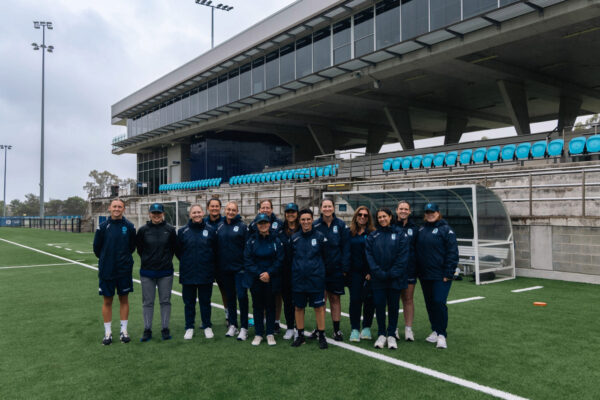
Northern NSW Football has launched a Female Referee Mentor Program, backed by NSW Office of Sport funding, as the federation moves to address one of the game’s most persistent development gaps: retaining and advancing women in officiating.

The program pairs emerging referees with experienced female officials and coaches, and has already been introduced in match conditions during the 2026 Northern NSW Women’s State Cup under the oversight of NNSWF high-performance referee coach and FIFA referee Casey Reibelt.

Northern NSW says the initiative is designed to improve progression into representative appointments and leadership roles while building the support networks often cited as critical to referee retention.

Tournament rollout offers first test of model

NNSWF said 25 female referees officiated during the Women’s State Cup as part of the program’s initial phase.

The federation also released a number of key appointments linked to the rollout. Sophie Whale and Jamie Mills-Cove were appointed assistant referees for the Community Plate final. Lilli Skaines and Kaitlyn Digby were appointed to the under-13 and under-15 Premier Youth League Girls Cup finals, with Indi Charlesworth named assistant referee for both fixtures.

Reibelt said the initiative was intended to support younger and less-experienced referees in a practical environment and to reduce the sense of isolation that can come with early officiating experience. NNSWF general manager participation and women’s football Allana Neeve said the federation viewed refereeing as a critical part of women’s football and described the funded program as a pathway investment aimed at long-term sustainability.

From participation goal to workforce strategy

Over the past years, women’s player participation has boomed, but officiating pathways have not always expanded at the same pace, particularly in regional systems where access to experienced coaching and consistent appointments can be uneven.

That has consequences beyond referee numbers. Match officials are a core workforce input for competition quality, scheduling and player development. If attrition is high in early officiating years, federations are forced into constant replacement cycles rather than building depth.

In that context, mentor programs are increasingly treated as operational infrastructure, not supplementary participation projects. What matters is not only recruitment, but conversion: whether referees remain in the system long enough to progress into advanced appointments and eventually into coaching and leadership roles.

Northern NSW’s decision to embed mentoring in live competition rather than classroom-only delivery is a practical strength. Development feedback linked to real matches is generally more actionable for emerging referees than abstract technical sessions.

The next phase, however, will determine whether the program produces structural change. Initiatives launched around major events often generate strong short-term engagement but weaken across regular-season demands, especially where travel, study and work pressures are high.

Over time, the federation will need to show progress in second- and third-season retention, advancement into higher-grade appointments, and sustained mentor participation beyond flagship tournaments. Consistency across metropolitan and regional cohorts will also be central to any claim of pathway equity.

Public funding raises reporting expectations

Office of Sport support gives the program early stability, but it also raises the bar on transparency. Publicly supported pathway programs are typically expected to report outcomes, not just participation stories.

For this initiative, that means publishing practical indicators: cohort continuity, appointment progression and evidence that mentoring remains active throughout the season cycle. Without that reporting architecture, it is difficult to distinguish between a successful event and a durable reform.

For now, Northern NSW has delivered a credible first step: a defined mentor structure, named participants and immediate implementation inside a representative competition. The next challenge is to convert that start into a repeatable officiating pipeline.

Most Popular Topics

Editor Picks

Send this to a friend