


Australian football has been historically divided, the moment of change is here

NSL

One of the fundamental and historical challenges faced by Australian football has been connectivity.

From as far back as 1880 when Wanderers, the first official Australian football club was birthed in Sydney, the game has struggled to form a unified face.

For near on 100 years, just like Australia’s more traditionally favoured pastimes of cricket, AFL and rugby league, the game existed as a predominately amateur endeavour. As that changed football lacked a cohesive and overarching structure that allowed the game to flourish in the way we still hope it can.

At the core of that division was race, culture and ethnicity. It would be nice to think that we have moved beyond that scenario in the 21st Century, yet the game still struggles to see itself as an all-encompassing beast, as opposed to a collection of individual components.

With post World War II immigration providing the driving force, the beautiful game exploded in Australia during the 1950’s and 60’s. Clubs built around the idea of community support networks became the norm and by the mid 70’s, the demand for a more formalised, organised and national competition had well and truly been born.

The Italian, Maltese, Greek, Yugoslav, Arabic and English communities longed for football to become a more significant part of their lives; just as it had been in their homelands.

That longing and demand was met casually on Saturday afternoons in amateur play before it finally began to take shape as a semi-professional league in the late 1970’s.

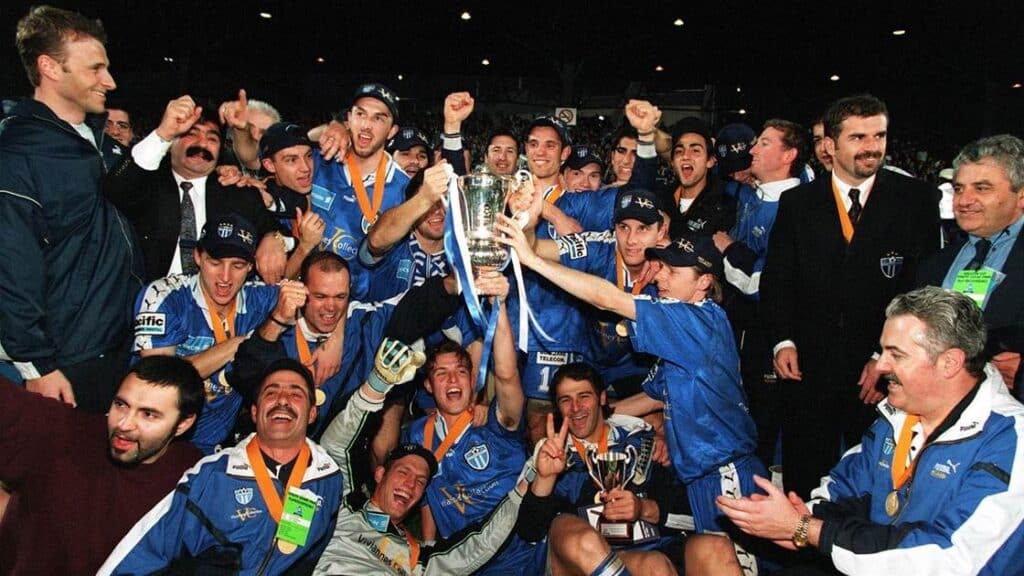
Founded in 1977, the National Soccer League gave voice and presence to the world game on Australian shores and as a five-year-old boy at the time, still remains something of a hazy and distant memory.

With a myriad of political issues existing between many of the clubs, some ethnic hostility and clear inter club tensions, division became the norm. So much so that as a little and pasty white Anglo-Saxon kid I was banned from attending NSL matches in the 1980’s.

My father felt I might get hurt and preferred to watch highlight packages of English football than risk life and limb at an NSL match. How wrong he was about so many things, including football.

We should all probably excuse him considering the negative media coverage the game received at the time; racist and inflammatory, the images and copy gave the game little chance to thrive.

Such coverage kept the game well and truly divided from the potential main stream interest of a keen and enthusiastic Australian sporting public. For nearly 30 years, football battled through re-incarnation after re-incarnation; desperately seeking acceptance that was not forthcoming thanks to internal division and external bias.

By the late 1990’s the game was hamstrung. Despite phenomenal growth in junior participation rates, division had led to stagnation. At the eleventh hour, the A-League was born. It was an attempt to bridge the divides, yet one that appears to have had little impact in drawing football together as one and may in fact have widened the chasm between the past and present.

There is no doubt that culture and community can indeed interact with professionalism, modernity and corporate football in Australia. However, the A-League has not proven to be the answer. Finding that answer is key.

Now, after 15 years of A-league play and a strengthening NPL competition that continues to highlight the lessening gap between the two, football may finally be on the cusp of morphing into one entity.

With the FFA Cup showcasing traditional and community based clubs and a newly independent A-league, the domestic game stands at the dawning of a new financial and collaborative football age.

If Perth Glory owner Tony Sage is correct and there is indeed an extra A$80 million to allocate towards the advancement of Australian football, one of the keys will be corporate connectivity. Moreover, a broad vision, driven by people with not just knowledge of football but knowledge of football in Australia and all its foibles, is paramount.

The game stands at a crucial juncture where vision and reality must combine in order to fund and develop the game at all levels. The women’s game requires investment, as do the immensely talented youth leagues from where our next generation will emerge.

Building clear connections between the traditional history of the NPL, women’s football and the now independent top tier is paramount.

The visionary decisions that need to be made require clear, corporate and unbiased minds; capable of picturing the long term future of the game, perhaps at the cost of some short term disappointment.

For decades, the game has been divided, a hodgepodge if you will. The moment has now arrived, where an independent top tier can take the lead and drive change. Change towards true promotion/relegation across the country, a transfer fee system that reflects the realities of world football and a connection to the women’s game that acknowledges the changing face of the sport.

If done well, the corporate interest in the game would increase, with the financial sector excited by a truly united and inter-connected game with immense promise and potential.

Both spiritual and financial connectivity are required. Let’s hope football has the vision to put the right people in place to achieve such a goal.

Previous ArticleNext Article

Build a home, create a culture: How do we secure the Socceroos as global competitors?

The Socceroos kicked off their World Cup campaign with a convincing 2-0 win over Turkey. It was an important win for their tournament ambitions, but also a statement about their quality on the world stage. It is time that we built a facility to ensure this quality is nurtured, not stifled.

Otherwise, we risk falling behind.


One of four…

Australia’s Men’s National Team currently sits as the 23rd-ranked team in the world in the official FIFA rankings. The Matildas, meanwhile, are the 15th highest-ranked women’s team.

This year is also the sixth consecutive FIFA Men’s World Cup featuring the Socceroos, confirming their position as a regular competitor in the most prestigious tournament in world football.

So why is it, despite these undeniably positive reflections of Australia’s growth in international football, that the Socceroos are still homeless?

At the 2022 FIFA Men’s World Cup in Qatar, Australia was one of four competing teams (a list featuring Denmark, Poland and Senegal) without a national base. In 2024, former Socceroos coach Graham Arnold described the team as “homeless” ahead of the World Cup qualifiers.

But four years on from the tournament’s last edition, the situations remains the same. And the world is taking notice.


A letter to the PM

In April this year, FIFA reportedly wrote to Australian Prime Minister, Anthony Albanese, encouraging the construction of a permanent home for football in the country.

The letter reflects concerns within the governing body that Australia, despite being so present in international football throughout the past 25 years, may fall behind the rest of the pack.

When we look at the talent in the current squad, Australia is by no means an emerging football economy. But commercial and infrastructural limitations in the landscape mean this talent is under-appreciated.

Nevertheless, it is a nation which regularly proves it can compete – and win – on the biggest stage. This we saw only a few days ago.

Which is why the players, coaches and staff representing the nation deserve a permanent facility which reflects, nurtures and inspires talent and competition. The survival of the landscape depends on it.


The investment question

Investment into football – from grassroots to professional levels – continues to be at the crux of national debate on how to secure football’s future in Australia.

In a conversation between Soccerscene and Melbourne-based community club, Sunbury United FC, infrastructure and facility-sharing challenges emphasised common grievances for many grassroots clubs.

The issue, therefore, is spread across the nation’s football pyramid. And prompts an uncomfortable question about future investments:

If even the Socceroos continue to share their current base, Leichhardt Oval, with various teams across rugby league and soccer, how can we ever expect clubs further down the pyramid to avoid similar fates?

The past few years, however, have fortunately seen improved investment into the women’s game in Australia – particularly embodied by the ‘Home of the Matildas’.

The result of a $101.1 million investment by the Victorian Government in collaboration with La Trobe University and the Federal Government, the facility boasts elite training features including premium FIFA-standard pitches, multiple changing rooms, a high-performance gym, a sports science lab and more.

This was a welcome and vital boost ahead of the 2023 FIFA Women’s World Cup which took place in Australia. Now, ever-increasing participation and pride are synonymous with women’s football, and the numbers confirm it.

In 2023, women and girls represented 190,746 participants across social, outdoor, fustal and registered football. In 2025, this increased to 231,435. It proves that, with the arrival of purposeful investment at the top, comes the spread of a football culture across the nation.


Aligning practical and cultural benefits

But what would a potential facility for the Socceroos actually look like? And what are the benefits?

When considering similar projects, we can look to both Japan and England as distinct examples of how a national base for football can unite practical, social and cultural benefits.

St George’s Park – England

Built in 2012, England’s base at St George’s Park is a masterclass in using facilities to establish a centre for industry cohesion and community impact.

As a centre of excellence, St George’s Park holds 14 outdoor pitches, a fustal arena, and hosts coaching and medical courses. It welcomes 28 teams across men’s, women’s, youth and para football, representing a place of unity and alignment for the entire football community.

Furthermore, the ‘Play Like the Pride’ program offers grassroots participants and school students the chance to experience the elite facilities for a day, showing how facilities can serve to connect young players to the world of their professional idols and foster real passion for the game.

JFA J-Village – Japan

The J-Village – beyond being a state-of-the-art football training centre – shows why a home for football can positively impact the community.

After being used as a support base for the nuclear power plant accident following the 2011 Great East Japan Earthquake, the venue now holds a deeply important place in the memory of Fukishima. As a result, upon resuming full operations in 2019, the facility – and the football development within it – represented a sense of perseverance, reconstruction and unity.

And through hotels and public transportation links, the J-Village also welcomes tourists and business travellers, encouraging more people to step into the world of football in Japan.

One venue, therefore, can give rise to an essential part of a thriving football landscape: culture. A culture for participation, community outreach, and elite development.


Final thoughts

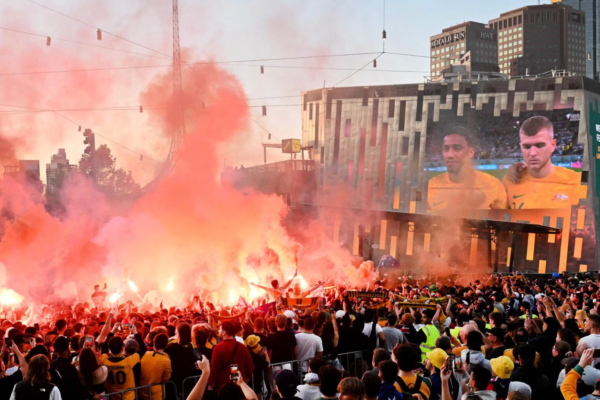
The focus of the summer will no doubt be how the Socceroos perform on the pitch. And with homes, offices, and public spaces brimming with enthusiastic support, the sense of national pride is irresistible.

But for all the positive sentiment currently taking hold of the nation, there will come a time when Australia’s World Cup run is over, at which point an all-important question must be asked:

How do we move forward?

We move forward by transforming buzz into an aligned vision, commitment to nurturing talent, and a desire to establish a real footballing culture across the nation.

The first step to building this culture? Building a home from which it can thrive.

The A-Leagues Final Series important status also a secret hinderance

The Isuzu A-League finals series is a huge event in the footballing calendar, though its contribution to stagnant attendance numbers in the league is something to be said.

If the 2025/26 finals series follows similar patterns to those before it, it will gather huge traction and strong ticket sales.

It is the largest event for the domestic league, bringing in massive amounts of viewership through media and gate receipts.

Finals series from years past have shown this, with the 2024/25 final, a Melbourne derby, being sold out within 48 hours and gathering significant viewership online.

The idea of a finals series lies within the Australian sporting ethos; the other sporting codes have had this tradition for most of their existence, especially in recent history.

Football, though, is different from the rest of the sporting codes in Australia, unique even. This has historically contributed to its inability to integrate into the same supported status as other codes.

Many in the Australian footballing community, supporter groups, players, coaches, and even the new Director of Football Australia, have voiced concerns over fan numbers in the league competition.

It wouldn’t be absurd to say that maybe, though profitable now, the finals series is actually taking away from the league itself.

Consider the media image: the league winner is called the “minor premiership,” and ticket sales and viewership figures reveal a huge disparity between the two parts of the A-League.

It must be said that an alternative that could work in unison with the league and possibly increase viewership of the league itself would be a great advantage.

It would allow the league to gain more jeopardy and drama, which could build greater interest in attending league games.

One alternative is already here.

No other sporting code in Australia has both a league competition and a cup competition. Football in Australia does.

The Hahn’s Australia Cup is our equivalent to the FA Cup in England or the Copa del Rey in Spain.

These are competitions that offer a finals option in a different competition entirely. They generate huge traction while never diminishing the importance of the league and, therefore, its popularity.

These cup competitions cannot be discussed without acknowledging some obvious differences.

They don’t face the same popularity issues that football does in Australia. It’s obvious the Hahn’s Australia Cup doesn’t yet gain the traction that the finals series does.

However, for a healthy footballing environment with increasing fan numbers, it should.

The idea of elevating the Hahn’s Australia Cup and scaling back the finals series is a complex question, one that is treated like a “no-go zone” by many in the Australian footballing community, and that is understandable.

Though big changes like this might, in the end, be credible options for the future of the sport in this country.

Larger plans must be set in motion, strategies that can be worked towards and refined along the way. It is the process by which all large organisations, business models and even national governments build their strategies.

Such a shift will be scrutinised and pushed back against.

Though with further fine-tuning and smart investment in development, not to mention the introduction of promotion and relegation and the possibility of changing the footballing calendar.

It could replicate the success that these two-competition models already enjoy in other leagues.

The added importance that the premiership would gain, the reality that every game matters, could alongside other strategies entice fans to more games, increase viewership and ticket sales, and create more dedicated fan bases. It works in other nations, very well in fact.

The possibility of two teams lifting a trophy, rather than one single event defining it all, sounds like a strategy that could deliver more engagement over longer periods of time.

Maybe Australian football doesn’t need to answer this question just yet. It is complex, difficult and it would require a great deal of work, including significant investment into the game, which is another issue entirely.

Yet as low attendance numbers persist in the A-League, even alongside increased media viewership, something needs to change for football in Australia.

The rise in popularity of this game and its dedicated community deserves bold ideas and forward thinking.

Ideas like this could eventually begin to change the landscape of the beautiful game in Australia for the better.

Most Popular Topics

Editor Picks

Send this to a friend