


Future of the sports industry discussed at LALIGA Extra Time event

LALIGA EXTRA TIME

The first edition of ‘LALIGA Extra Time’ was recently held in Melbourne at the end of last month.

The event, organised by LALIGA, looked to bring together experts from the sports and entertainment industry in a two-panel format. It also served to introduce the new identity of LALIGA.

The LALIGA Extra Time event included the participation of Villarreal CF, EA Sports, Optus Sport and Matildas international footballer Elise Kellond-Knight.

“We are proud to have been able to publicly present here in Melbourne LALIGA’s revolutionary new identity to the biggest players in the country’s sports and entertainment industry. For us it is not just a change of symbol, but the symbol of change: with a new partner like EA SPORTS, with a profound transformation in the strategy, positioning, business, technology and audio-visual broadcasts… As we all have been able to enjoy during the first exciting matchdays of LALIGA EA SPORTS and LALIGA Hypermotion in the season 2023/24 that recently started,” stated Glen Rolls via media release, LALIGA delegate for Australia and New Zealand.

The first panel focused on the digital transformation of football, and how partners, broadcasters and rights holders are working collaboratively to the grow the sport across the world.

Theresa Bray, EA Sports’ Head of Marketing and Communication ANZ & Emerging Markets, and Aaron Lea, Associate Director of Digital Media & Platforms at Optus Sport were involved in the panel discussion. Bray expanded on the recent partnership between LALIGA and EA Sports, as well as the ever-changing viewing habits of the younger generation. She claimed that the partnership between the two companies was exciting for EA Sports, as it brings together two global brands that have a strong focus on innovation and authenticity.

Lea explained that Optus Sport, who broadcasts LALIGA in Australia, have focused heavily on displaying the competitions across the company’s digital and social platforms in an effort to find new and increased audiences.

“LALIGA content is playing a key role in our shortform digital video strategy, and we’ve seen strong viral engagement across YouTube Shorts, Tiktok and Instagram Reels,” Lea added via media release.

The second panel focused on the future of football and the vital importance of having a well-constructed foundation in grassroots football, in order to be successful at the elite levels of the sport.

LALIGA clubs are well aware of this notion, as within the competition itself it gave the most playing time to youth players out of the top five major European leagues this past season (this equated to 17.2% of the minutes in 2022/23, according to a CIES study).

One of the LALIGA clubs with the best youth development structures across the world is Villarreal CF. In 2021, they became Europa League champions – becoming the smallest city ever to win a European trophy. The club have a strong presence within Australia, with Nano Márquez, Villarreal’s International Academies Coordinator, attesting to this.

“Australia is a very important market for Villarreal CF as we have three academies in Melbourne, Sydney and Brisbane all of which focus on the development and growth of the players with the hope that this contributes to the local football ecosystem as well as opening up possibilities in Spain,” he said.

The future of the women’s game was also discussed heavily through this panel section. The success of the recent World Cup in Australia and New Zealand, where Spain beat England in the final in Sydney, was huge boost to the women’s game.

Australian international player Elise Kellond-Knight shared her experiences and expectations for the future during the event.

“The Women’s World Cup was incredible as it brought everyone together here in Australia to cheer on the Matildas and celebrate football. Spanish football has always been very technical and skilful and perhaps lack what we talk about in Australia to be ‘physical’,” she said.

“However, in the World Cup we saw a very complete Spanish team with not only the skills and technical ability, but also the physicality with the likes of Salma Paralluelo, who in my opinion played a decisive role in helping Spain lift the trophy.”

This first edition of LALIGA Extra Time event in Melbourne also featured the trophy of the “LALIGA EA SPORTS” champions and the 2023/24 Puma LALIGA ball.
Previous ArticleNext Article

Northern NSW Football’s Leadership Program Reaches 98 Graduates as Sport Moves Toward 2027 Gender Parity Targets

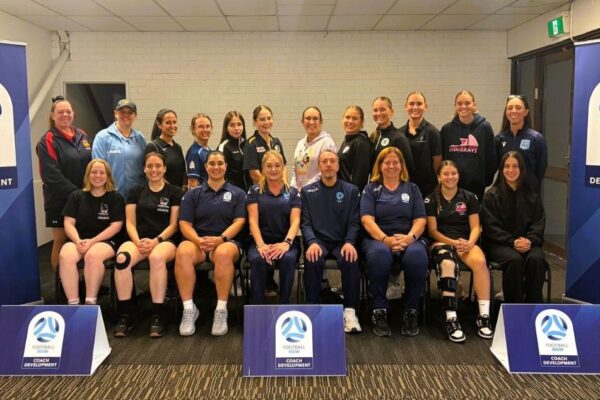
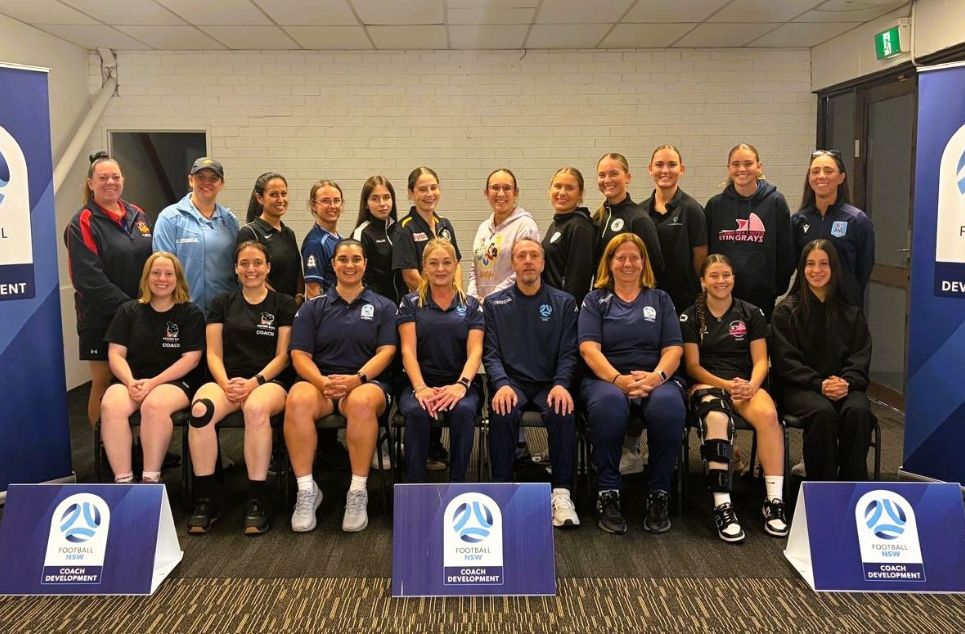
Northern NSW Football has concluded its 2026 Women’s Leadership Program, with 13 participants taking the total number of graduates to 98 women across the region since the program launched in 2023. The five-week program combined online modules with a two-day conference at Rydges Resort in the Hunter Valley, bringing together club volunteers, committee members, administrators and NNSWF staff from Newcastle, Macquarie, Northern Inland and Football Mid North Coast zones.

The program’s growth has been uneven year to year. It launched with two intakes in 2023, drew 25 scholarship recipients in 2024,then settled to 12 in 2025, which brought the cumulative total to 85 before this year’s cohort of 13.

The program was facilitated by Ann Odong, who founded The Women’s Game, Australia’s first dedicated women’s football website, in 2008,and later spent six years as Football Australia’s Media and PR Manager steering the Matildas’ program through multiple World Cups and Olympic Games,before moving into independent consulting work.

A pipeline built against a 2027 deadline

The program fits within a wider set of national targets football and the broader sport sector have committed to reaching within the next twelve months. Football Australia’s Our Game initiative, launched in 2021, set a goal of 50:50 gender parity across players, coaches, administrators and referees by 2027.Separately, the federally backed National Gender Equity in Sport Governance Policy requires all funded national and state sporting bodies to reach 50 per cent women or gender-diverse board directors by 1 July 2027, with funding to be withheld from organisations that fall short.As of the most recent Australian Sports Commission data, 22 per cent of chief executives and 25 per cent of board chairs across 65 federally funded national sporting organisations were women.

Programs built around confidence, networking and committee-level skills, the model NNSWF has run since 2023, are the mechanism most sporting bodies are relying on to close that gap, since board and executive vacancies typically draw from an organisation’s existing pool of committee members, volunteers and administrators rather than external recruitment.

This year’s cohort

University of Newcastle FC’s Charlotte Carey, one of this year’s participants, said the program had given her the confidence to pursue a career in football while developing skills applicable across other areas of her life. Fellow participants included representatives from Cooks Hill United, Westlakes Wildcats, Newcastle Olympic, Lake Macquarie City FC, Western Wolves, Gunnedah and District Soccer Association, Wauchope FC and Stockton Sharks, alongside three NNSWF staff members.

NNSWF Participation and Women’s Football Officer Jamie Bressan said the program had continued to provide women across the game with an opportunity to connect and build leadership skills, with topics covering effective communication, personality styles and team dynamics. Bressan pointed to the network the program builds among participants, drawn from clubs and committees across the region, as one of its central functions rather than the training content alone.

The 2026 cohort’s spread across four zones, Newcastle, Macquarie, Northern Inland and Football Mid North Coast, continues a pattern of the program drawing participants from outside the Hunter region’s largest population centres, consistent with its original design to make the conference and online components accessible to women in regional and remote parts of northern NSW through funded travel and accommodation.

Football SA Extends Sammy D Foundation Partnership Into Third Year for Violence Prevention Round

Football South Australia will run its fifth consecutive Violence Prevention Round in partnership with the Sammy D Foundation from 3 to 5 July, with junior teams again asked to wear blue armbands throughout the weekend.

The arrangement was formalised in March 2022, when Football SA and the Foundation signed a three-year agreement, funded by SA Power Networks, to deliver the Foundation’s Monkey See, Monkey Do program to more than 7,500 junior members across 52 clubs.The program is a 90-minute session delivered by Sammy D Foundation facilitators focused on changing players’ attitudes toward bullying and violence and educating parents and club members about the impacts of inappropriate sideline behaviours, built around the story of Sam Davis, the 17-year-old South Adelaide junior footballer whose death in a one-punch assault in 2008 led his parents to establish the Foundation.Football SA general manager George Georganas and Foundation chief executive Brigid Koenig confirmed the partnership at its 2022 launch, framing it as a mechanism for improving club culture from junior sidelines upward.

The round has run every season since, expanding in 2023 to incorporate the Federation Cup Final at ServiceFM Stadium,a weekend Football SA dedicated as the Sammy D Violence Prevention Round alongside the Federation Cup Final Day continuing through the 2024 season,when it was again scheduled as a designated round ahead of that year’s Federation Cup Final and shifting from an early blue tape design to the blue armbands used in 2025 and again this year.

A prevention model funded outside government

The Foundation’s programs, including its work with Football SA, are financed through corporate and philanthropic support rather than recurring government funding. Its rollout with Football SA was backed by SA Power Networks, and separate school-based programs in the state’s Far North have relied on grants from philanthropic trusts.Both the Perpetual Foundation’s Kevin Barnes Gift Fund Endowment and the Fred P Archer Charitable Trust have funded the Foundation’s work in that region.

The State Government’s response to the Royal Commission into Domestic, Family and Sexual Violence, released in December 2025, commits $674 million over ten years to a 136-recommendation reportstructured around themes spanning structural reform, workforce and community education, crisis response, and establishing a foundation for prevention, delivered by Commissioner Natasha Stott Despojaafter four women were killed in the state within a single week in November 2023. The Commission’s focus on domestic, family and sexual violence is distinct from the youth bullying and alcohol-related violence at the centre of Sammy D Foundation programs, but its response includesan expansion of abuse prevention programs to support behavioural change for people who use violence, alongside prevention and awareness activities aimed specifically at young people.

Separately, the Department for Education’s own violence prevention program, developed after a 2022 ministerial roundtable, has directed a $6 million Safe and Supportive Learning Environments Plan of Action toward schools, afterreported violent incidents in South Australian public schools rose 50 per cent in 2023, with more than 13,000 critical incidents recorded that year. The department has since reportedits first decline in secondary school critical incidents in 2024, a 4.5 per cent reduction from 2019 levels, along with a 7.3 per cent fall in suspensions and a 20.8 per cent fall in exclusions in 2025. It also noted thatviolence in primary schools has continued to rise since the pandemic, and that physical violence against teaching staff, the large majority involving primary-aged students, climbed from 273 incidents in 2021 to 662 in 2024.

Evidence from earlier rollouts

Sammy D Foundation programs delivered through junior sport have previously reported strong self-assessed outcomes. An earlier three-year rollout of a related program through SANFL Juniors, a separate competition to Football SA,reached up to 12,800 young players and their families, with 98 per cent reporting increased awareness of the impact of one-punch violence and 89 per cent reporting they avoided a violent situation because of the program.

A national evidence guide on preventing violence through sport, compiled by Our Watch, notes that69 per cent of Australian children and 87 per cent of adults took part in sport or physical activity over a twelve-month period, while also pointing toa lack of research assessing the effectiveness of such approaches, and the need for more robust evaluation of primary prevention programs within sport settings.

Clubs taking part in this year’s round have again been supplied with blue armbands for junior teams, with Football SA and the Foundation asking clubs to share images from the weekend under the round’s official hashtag.

Most Popular Topics

Editor Picks

Send this to a friend