

SeatGeek – The sports ticketing platform which continues to take on the world

Founded in New York in 2009, SeatGeek is a prominent mobile ticketing platform that allows consumers to buy and sell tickets across sports and other events in the US market.

The company has partnered with different organisations around the US since the platform was launched, including Yahoo! Sports and various MLS teams around the country.

The service has recently moved into other markets, including the UK, after acquiring Israeli ticketing software company TopTix in 2017 for $56 million.

SeatGeek’s acquisition opened up the service to an international market, as TopTix’s primary software application, labelled ‘SRO’, combined perfectly with SeatGeek’s mobile applications and market place ability.

SRO gives sports clubs a world class software application to manage areas such as memberships, ticketing, reporting, corporate hospitality, marketing and so forth all inside a singular web-based user interface.

“We all thought it was a very good fit – what SeatGeek would bring to the table to work alongside the SRO software platform. We felt it was a great opportunity to build a global offering that could really drive a change in the market at a significant level and we have enjoyed strong growth over the past two and half years,” SeatGeek’s managing director for Sport across Europe, Middle East and Africa (EMEA) Peter Joyce told FC Business, earlier this year.

When the acquisition of TopTix occurred in 2017, SeatGeek only had one English Premier Club partnered with the company, West Bromwich Albion. Two years later, the platform is now used by seven Premier League clubs in the 2019/2020 season, which represents a 35% market share across the league.

The clubs using the service are Manchester City, Wolverhampton Wanderers, Newcastle United, Brighton and Hove Albion, Leicester City, Aston Villa and Sheffield United.

A further seven clubs are clients from the EFL Championship. Those teams are Derby County, Stoke City, Middlesbrough, Reading, Bristol City, Charlton Athletic and West Bromwich Albion.

The UK Sport headquarters has recently doubled in staff numbers with SeatGeek now having 430 employees and eight offices in different locations around the world.

Joyce believes the company continues to improve its reputation in the UK sports market.

“Ticketing software in UK sport has tended to work in five-year cycles when it comes to the systems and software products available and I think we’ve turned heads over recent years.

“New suppliers can come and go and there can be a swing in a certain direction from time to time. SeatGeek and the SRO software solutions have certainly enjoyed excellent growth over the years and our challenge is to build on a very solid platform and client base and take it to the next level.

“Alongside winning significant new business over the past two years we have also re-signed every club (7) who have come up for re-contract in that period and this demonstrates a client base that are enjoying working with SeatGeek and the SRO software platform. Technology is changing rapidly as we all know and there’s a demand for ticketing providers to keep pace with those ever-changing requirements and continue to grow and evolve.”

Central to SeatGeek’s success is the technological superiority the company has over its competitors. Legacy ticketing systems are generally known to manually report, overwork staff and be inflexible when it comes to configuration of events.

However, SeatGeek’s SRO service provides those in charge with extensive control across their organisation. This includes the most customisable rules-based engine ever created, with clubs also given valuable services for those using a powerful Application Program Interface (API). This gives third party providers the chance to build in tools that provide analytics, CRM, data, dynamic pricing and so on.

Fans praised the SeatGeek’s SRO platform last season, when the service was in use for a series of semi-finals and finals at Wembley Stadium. Over 95% of all tickets were sold online using SeatGeek’s online applications with not one complaint received. Instead, hundreds of positive comments were left across social media regarding the ease of the sales process.

Joyce claims SeatGeek will continue to grow and adapt in the future, using the impressive technology that is accessible.

“We will continue to listen to the market’s requirements; build for the future and one club at a time grow the footprint of our SRO platform to deliver an excellent all-round ticketing experience for as many clients and fans as possible.”


Previous ArticleNext Article

South Melbourne Hellas Strengthens Its Future with Three Key Board Appointments

South Melbourne Hellas has taken another significant step in shaping its future, announcing the appointment of three highly accomplished professionals to its Board of Directors as the club continues to strengthen its leadership both on and off the field.

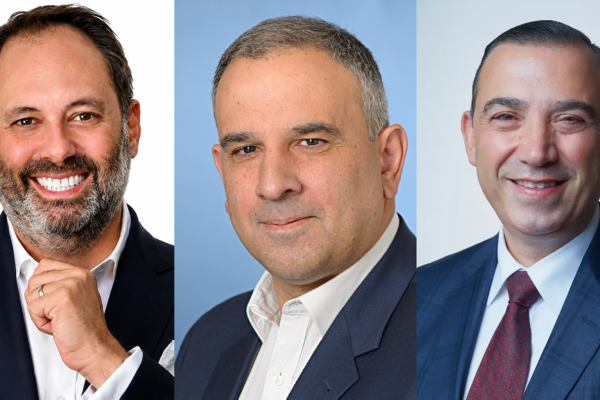
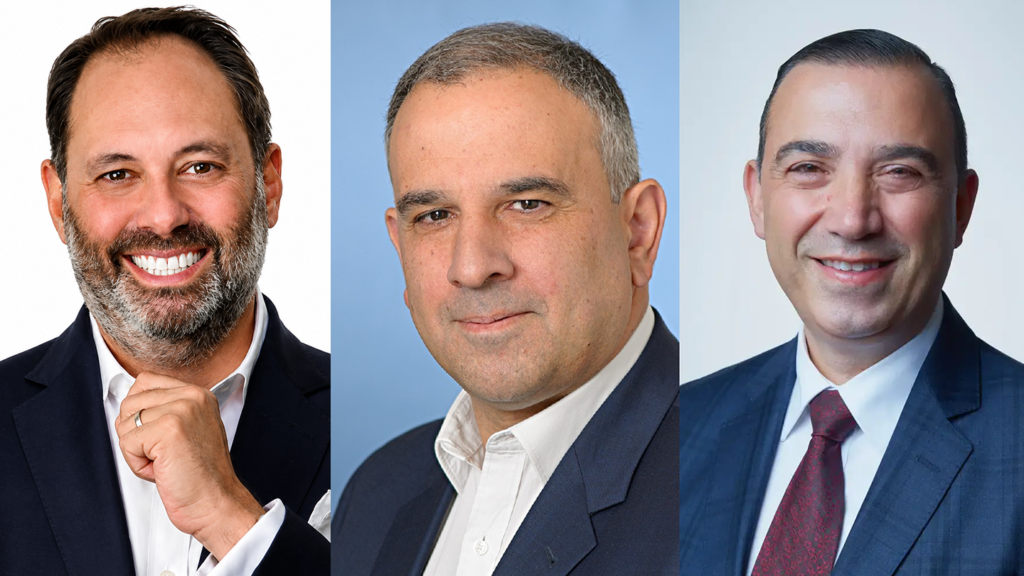
The Hon. Philip Dalidakis, John Karantzis and Associate Professor Marinis Pirpiris join the club at an important stage, bringing expertise across government, law, healthcare and corporate governance as South Melbourne continues to pursue its long-term ambitions.

Few football clubs in Australia can match South Melbourne’s proud history, but the club’s focus is firmly on the future. The latest appointments reflect a deliberate commitment to building a Board with the experience and strategic capability required to support sustained growth and success.

Dalidakis brings extensive experience across government, business and public policy. A former Victorian Cabinet Minister and C-suite executive, he is the Managing Partner of Orizontas and currently represents Australia on the APEC Business Advisory Council. He also holds board positions across the life sciences, defence and social impact sectors, and has chaired audit and risk committees across a range of organisations.

Karantzis is a Partner and Head of Personal Injury Law and Litigation at Carbone Lawyers, with more than 28 years of experience. Accredited as a Specialist in Personal Injury Law by the Law Institute of Victoria, he has also been recognised by Doyle’s Guide as one of Victoria’s leading plaintiff lawyers and litigators.

Pirpiris is an internationally recognised orthopaedic surgeon, academic and healthcare leader. A consultant surgeon at Epworth and Cabrini Hospitals, he specialises in robotic hip and knee replacement, arthritis management and sports injury care, and is a Fellow of both the Royal Australasian College of Surgeons and the Australian Orthopaedic Association.

Co-Presidents Bill Papastergiadis and Andrew Mesourouni said the appointments were about more than adding credentials to the Board.
“Philip, Marinis and John are exactly the kind of people South Melbourne Hellas needs at Board level right now,” they said.
“Each brings exceptional expertise in their respective fields, but just as importantly, they understand what this club represents. Their connection to South Melbourne’s values, history and community makes them a natural fit as we continue building for the future.”

The appointments form part of an ongoing renewal of the club’s leadership, reinforcing South Melbourne’s commitment to strong governance as it builds on its proud football tradition.

Mizuno’s Australian gamble: can a 120-year-old brand break through?

When Mizuno unveiled a mural of Socceroos captain Harry Souttar on a Richmond wall during the 2026 World Cup, the company’s name did not appear on the artwork. The artist, Rory Ledge, painted Souttar as the “Minister of Defence” behind a brick wall. Channel 7 and Channel 9 turned up. The Herald Sun ran it in their Saturday edition. Mizuno’s brand director called it “mainstream awareness” without paid media.

The mural sat within a broader push by the Osaka-based company to expand in Oceania. For the fiscal year ending March 2026, Mizuno reported sales of ¥259 billion, up 7.8 per cent year-on-year, with net income of ¥18.4 billion representing 20.5 per cent growth . Operating profit rose to ¥22.6 billion. The Asia and Oceania segment is central to the company’s medium-term plan, which targets net sales of ¥290 billion by fiscal 2027.

The growth imperative

Australian football has not historically been kind to specialist boot brands. Nike, Adidas and Puma dominate retail shelves. A-Leagues collective bargaining agreements and club deals have locked in incumbents. For a brand without the marketing budgets of its competitors, the path to relevance runs through the players.

Mizuno has grown its Australian ambassador base from one athlete to around 20 across the A-Leagues in recent seasons. Melbourne City’s Tolgay Arslan, who played in the Bundesliga and Serie A before arriving in Australia, told Front Page Football: “If I discovered these boots ten years ago, I would wear these boots overseas in my career.” Western United midfielder Angus Thurgate called them “the comfiest boots I’ve ever worn”.

The mural moment

Richmond was chosen for the mural because of its location. The suburb sits at the centre of Melbourne’s sporting precinct, five minutes’ walk from the MCG and AAMI Park. It is already home to murals of AFL players. Rowena Corner Store owner Con, who agreed to host the artwork, had previously welcomed murals of Dusty Martin and an AFLW player.

“We didn’t have access to Harry because he was in the US competing,” brand director Rishi said. “We couldn’t do a photoshoot. So we had to be clever. The best ideas come from real time, aligned with what the public discourse looks like. Once we saw his Wikipedia page updated to refer to him as the Minister of Defence, we knew we could play into this.”

Ledge incorporated an existing window into the design to create a net behind Souttar’s figure. The mural appeared the morning of the Paraguay match, when Australia’s clean sheet sent them into the knockout phase.

The World Cup provided a massive backdrop. The Socceroos’ run captivated the nation: 4.84 million Australians tuned in to the Paraguay match, making it the most-watched World Cup match in SBS history at the time, with an average audience of 3.086 million . The final reached 5.26 million viewers, and cumulative tournament reach hit 18.04 million— 64 per cent of Australia’s population. SBS director of sport Ken Shipp said: “We’ve never seen engagement at this level.” Mizuno spent comparatively little and had Channel 7 and Channel 9 on site.

The commercial question

For a brand with limited marketing firepower, organic PR coverage is the prize. The question for the company’s Oceania division, still in growth mode, is whether a mural and a handful of player endorsements can convert into sustained commercial traction. Retail partnerships with Ultra Football, which has created a dedicated Mizuno space at its Melbourne store, suggest the company is thinking beyond campaigns.

Mizuno’s European expansion has taken a different path. The company signed a five-year deal to become AS Monaco’s technical equipment partner from the 2025-26 season, its first entry into Ligue 1. It already has a presence in Germany’s Bundesliga and Italy’s Serie A. In Australia, institutional partnerships are harder to secure. The approach has been slower: build through athletes, then through community, then through culture.

The Queensland government signed a Memorandum of Understanding with Mizuno in March 2026 to explore the Japan-Australia Sports & Health Innovation Exchange (JASHIE), a two-year partnership focused on sport and health innovation . The agreement supports Queensland’s preparations for the 2032 Olympic and Paralympic Games.

The mural campaign reflected a broader trend in sporting brand marketing, where IP restrictions and athlete availability increasingly demand creative solutions. “I love what Levi’s did because they were able to lean into their brand codes and tell what I believe to be the most memorable advertising story from the World Cup,” Rishi said. “This is a different page out of fundamentally the same playbook.”

Mizuno’s boots are not cheap. The Made-in-Japan models retail well above competitors’ offerings. The brand’s pitch rests on quality and heritage, not price or volume. That is a harder sell in a country where discounting dominates and cost-of-living pressures are squeezing households.

The Souttar mural will eventually fade or be painted over. Mizuno is betting that by the time it does, enough Australian football fans will have noticed the three stripes’ quieter rival.

Most Popular Topics

Editor Picks

Send this to a friend