


What Football Queensland’s link with Green Room Futures Means as Pathway Strategy Broadens

Football Queensland has signed a multi-year extension and expansion of its partnership with Green Room Futures, formalising the private provider as the state body’s “Official US College & Tour Partner” and adding an annual United States tour for Football Queensland Academy players to the existing college-placement program.

From advisory model to integrated pathway

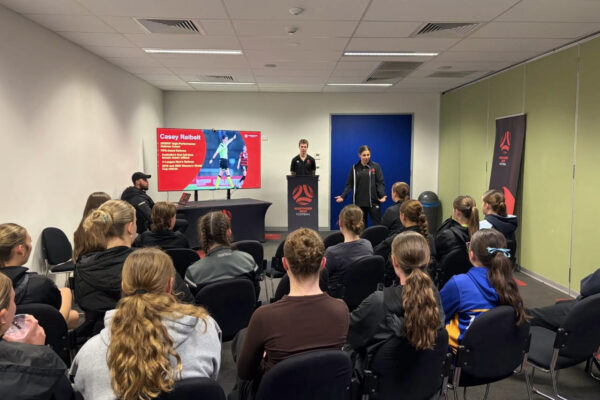
The agreement marks a substantive evolution in the governing body’s pathway architecture rather than a standalone sponsorship announcement. The two organisations have worked together since at least 2024, when Football Queensland first appointed Green Room Futures as its preferred US college partner and began rolling out athlete information sessions across metropolitan and regional centres. The new arrangement embeds that relationship more deeply into the academy ecosystem by linking advisory services with an international touring product.

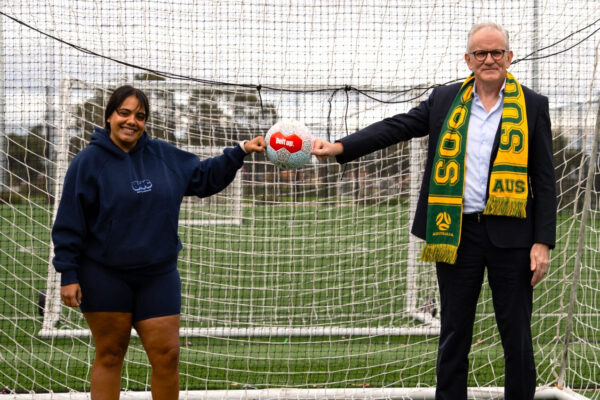
In its announcement, Football Queensland said the expanded partnership would offer academy players exposure to US college environments, international competition and broader education-and-sport decision-making support. Chief executive Robert Cavallucci said the relationship had already assisted Queensland athletes to pursue opportunities overseas and that the introduction of an annual tour would strengthen development outcomes for players across the state’s regional footprint. Green Room Futures director Matt Wade said the expansion reflected strong demand for structured US pathways and would provide athletes with more direct insight into student-athlete systems.

A constrained domestic market

For Football Queensland, the strategic rationale means a collegiate model is now an established part of the global football labour market, particularly for players seeking a dual track in education and high-performance sport. In an Australian landscape where professional opportunities remain selective and uneven, college pathways provide a parallel route with different risk settings for families. That logic has been gaining institutional acceptance across the country, and Football Queensland’s move suggests it sees formal international exposure as a competitive differentiator within domestic talent development.

The policy and governance questions are equally clear. The public announcement outlines ambition, but provides limited operational detail on affordability, cohort selection and support settings for regional participants. In practical terms, these details will determine whether the program functions as a broad-based development mechanism or as a premium pathway accessed primarily by households able to absorb compounding costs.

International youth tours involve direct and indirect expenses that typically include flights, insurance, accommodation, tournament costs, travel preparation and time-off-work burdens for families, with regional players often carrying additional domestic travel requirements before departure. Green Room Futures’ publicly available materials also indicate paid service structures within broader college-placement support. None of that is unusual in this market segment; it is, however, central to any serious assessment of access and equity outcomes.

The expanded partnership therefore sits at the intersection of football development strategy and distributional policy. If the tour becomes an informal gatekeeper to college-facing visibility, then financial design features move from administrative detail to core pathway governance. Without those mechanisms, even merit-led programs can produce systematically narrow outcomes because the input conditions are unequal.

For Football Queensland, the outcomes are likely to turn on implementation transparency over the next one to two intake cycles. A cohort profile that is geographically concentrated or socioeconomically narrow would invite predictable criticism, particularly given repeated statewide positioning in Football Queensland’s academy communications. Conversely, early publication of eligibility frameworks, financial assistance settings and regional participation targets would strengthen claims that the program is designed as a genuine statewide pipeline rather than a metropolitan premium add-on.

There is also a broader sector trend at play. Australian sporting bodies increasingly rely on specialist private partners to deliver pathway components once managed internally or left to informal networks. The model can improve expertise and execution speed, but it also shifts part of the development interface into commercial structures. In that context, governing bodies carry a heightened obligation to disclose how partner-delivered opportunities align with public-facing participation commitments, especially where youth athletes and family finances are involved.

What comes next

Well-structured US pathway programs can materially improve athlete decision quality, reduce information asymmetry, and create legitimate post-school options in a constrained professional market. Exposure to college environments can help families evaluate trade-offs around education, migration and sporting progression with greater clarity. For some players, that can be decisive.

The question for Football Queensland is whether the benefits are distributed in a way consistent with its statewide mandate. The announcement establishes intent and strategic direction; the next phase requires publication-grade detail. For a program framed around opportunity, credibility will depend less on partnership language and more on measurable participation design: who is selected, who is supported, and who is priced out.


Previous ArticleNext Article

Australia’s Sportstech Sector Surges to $7.11 Billion as Technology Reshapes the Future of Sport

Australia’s sports technology sector has reached a record $7.11 billion in annual revenue, highlighting the rapidly growing role of innovation across the country’s sporting landscape.

The latest Sports Innovation Report from the Australian Sports Technologies Network (ASTN) found the sector grew by 16 per cent in FY2026, up from 10 per cent the previous year.

The growth has been accompanied by a significant expansion in employment, with the industry now supporting 20,604 jobs across 924 sportstech companies nationwide.

For a sporting nation increasingly reliant on data, technology and digital innovation, the figures point to an industry that is moving well beyond its emerging phase and becoming an important part of Australia’s broader sporting economy.

A sector entering a new phase

The latest figures represent the fifth edition of ASTN’s annual Sports Innovation Report and show that Australia’s sportstech ecosystem is becoming increasingly mature.

While the number of companies increased by only 1.8 per cent during FY2026, revenue growth accelerated significantly, suggesting that existing businesses are scaling rather than the industry simply expanding through the creation of new startups.

The 115 largest companies now account for 89 per cent of total revenue, generating $6.30 billion, while also representing 74 per cent of total employment.

That concentration highlights the emergence of a group of Australian sportstech companies capable of competing at scale both domestically and internationally.

Companies including Catapult Sports, PMY Group, Bodd, VALD and Champion Data have been identified among the businesses driving the sector’s growth.

For football, the development of this ecosystem is particularly significant.

Technology is now embedded across almost every level of the modern game; from athlete tracking and performance analysis to injury prevention, coaching, broadcasting, stadium operations and fan engagement.

ASTN identifies nine major sportstech categories, including athlete performance and injury prevention, wearable technology, sports analytics and coaching, media and fan engagement, stadium and venue operations, and equipment and surfaces.

Football’s data revolution

The increasing sophistication of sports technology has transformed how football clubs understand performance.

Wearable technology and tracking systems can provide coaches and performance staff with detailed information about player workloads, physical output and movement, while analytics platforms allow teams to examine performance at a level that would have been impossible only a generation ago.

Australian companies have been at the forefront of that development.

Champion Data, for example, has become a major player in sports data and analytics, while companies such as Catapult have developed technology used by elite sporting organisations around the world.

The impact is not restricted to professional football.

As technology becomes more accessible, similar tools are increasingly being introduced into academies, community sport and grassroots environments, potentially allowing clubs at all levels to improve player development, coaching and administration.

The next stage of that evolution could be driven by artificial intelligence.

ASTN has identified AI in sport, esports and international trade as three of the key themes expected to drive future growth in the sector.

AI could increasingly influence everything from opposition analysis and recruitment to automated content creation, personalised fan experiences and coaching support.

Brisbane 2032 could accelerate the next wave

One of the most significant opportunities identified in the report is Australia’s upcoming hosting of the 2032 Olympic and Paralympic Games.

Queensland is already emerging as one of the country’s fastest-growing sportstech markets, with ASTN reporting a 20 per cent increase in established sportstech companies in the state.

The organisation expects Queensland to overtake New South Wales in both business numbers and employment by FY2028 if current trends continue.

The Brisbane 2032 opportunity is particularly relevant for football.

The tournament will bring major investment in sporting infrastructure, technology, venues and digital experiences, while also creating an international showcase for Australian companies looking to export their products and services.

The Queensland Government and ASTN have already established an initiative designed to strengthen the state’s sportstech ecosystem, connect local businesses with international networks and build the capabilities required ahead of Brisbane 2032.

The opportunity extends beyond the Olympic Games themselves.

With Queensland increasingly positioning itself as a major destination for international sporting events, the state’s sportstech ecosystem could benefit from sustained demand for technology across venues, broadcasting, participation, performance and fan engagement.

Melbourne remains Australia’s sportstech capital

Despite Queensland’s rapid growth, Victoria remains Australia’s leading sportstech state.

Victoria accounts for 38 per cent of Australia’s sportstech companies, followed by New South Wales at 26 per cent and Queensland at 23 per cent.

Together with the ACT, the eastern states account for 88 per cent of the country’s sportstech businesses and more than 93 per cent of sector revenue and employment.

Melbourne alone accounts for 39 per cent of total sector revenue.

The city’s existing sporting infrastructure, concentration of professional sporting organisations, universities, technology companies and major events has helped establish it as the country’s central sportstech ecosystem.

That creates opportunities across football, with Victoria home to the Australian Professional Leagues, Football Victoria, numerous professional and semi-professional clubs, academies and one of Australia’s largest grassroots football communities.

Technology moving beyond the elite game

Perhaps the most important development for football is the extent to which sportstech is no longer limited to professional clubs.

More than one in four Australian sportstech businesses now service industries outside sport, including health, defence, events, media and education.

At the same time, new technologies are increasingly being designed with participation and community sport in mind.

Recent developments across Australia’s sportstech ecosystem include AI-powered analytics for grassroots basketball, digital learning platforms for coaches and officials, and technology designed to improve club operations and participation.

For football, this could eventually mean smarter club administration, more accessible performance analysis, improved coach education and greater use of technology to identify and retain participants.

The challenge will be ensuring that innovation does not become something available only to Australia’s wealthiest clubs.

If the benefits of technology can be scaled down to the grassroots level, the potential impact could extend far beyond elite performance.

A global opportunity for Australian innovation

Australia’s sportstech sector is also increasingly looking beyond its domestic market.

The APAC region currently represents around 10 per cent of global sportstech activity, while the United States and Western Europe remain the dominant markets. ASTN has identified international trade and the ability for Australian companies to scale globally as important opportunities for the sector.

That presents an opportunity for Australian sport to become not only a consumer of new technology, but an exporter of it.

Australian companies are already operating internationally across areas including athlete performance, analytics, sports equipment and digital innovation.

The country’s strong sporting culture provides a natural testing ground for new technologies, while major events such as Brisbane 2032 can provide a platform to showcase those innovations to an international audience.

The next decade

The $7.11 billion figure demonstrates that sportstech is no longer a niche part of Australia’s sporting economy.

It is becoming an industry in its own right, employing more than 20,000 people and supporting hundreds of companies across the country.

For football, the implications could be significant.

From the way players train and recover to how coaches analyse matches, clubs recruit talent, supporters consume games and grassroots organisations operate, technology is steadily changing almost every part of the football ecosystem.

With AI, analytics, wearables and digital platforms continuing to develop — and Brisbane 2032 providing a major catalyst for investment — Australia’s position as a global sportstech hub could strengthen considerably over the next decade.

The challenge now is ensuring that the benefits of that growth reach the entire sporting pyramid.

If that happens, Australia’s $7.11 billion sportstech industry could ultimately prove to be about far more than technology.

It could help shape the way Australians play, watch, experience and understand sport.

Wyndham City Council cancels stadium deal with Western United

Following the decision this week to terminate Western United’s Club Participation Agreement – and its involvement in the A-Leagues – the proposed stadium deal now faces an uncertain future.


Terminated deal, terminated dream

The plan to build a 15,000-capacity stadium in Western Melbourne – one which has remained in development for over five years – now faces collapse after its proposed tenant will no longer play in the A-Leagues.

Although the $150 million project confirmed a location in Tarneit, as well as establishing partnerships with YourLand Developments and Johnson Controls to propel the vision into reality, building work never began.

Thus, what started as an ambitious project full of potential for Melbourne’s western suburbs, now faces its biggest obstacle yet.

“While this is not the outcome we had hoped for when we entered the agreement, we have a responsibility to make decisions that serve the best interests of our ratepayers, and the decision to terminate this agreement reflects that commitment,” said Wyndham City Council via a media statement.

In addition to being a disappointing development to all parties, the decision serves as a reminder that the football landscape can impact what happens far beyond the limits of the pitch.


Facing uncertainty

Following the Australian Professional Leagues’ (APL) decision to terminate the club’s Participation Agreement, Western United is staring into a worrying future.

Throughout the 2025/26 season, the club entered a ‘hibernation’ period, which attempted to resolve financial and legal issues following the liquidation of its owners, WMG Football Club Limited.

In the end, however, Western United’s years in ownership and governance turmoil proved too difficult to navigate, culminating in its removal from the A-League.

But despite the immense disappointment for all players, coaches and staff within the organisation, Western United is standing firm in its optimism.

“This creates an opportunity for new custodians, new investment and a fresh start,” the club said via an official statement.

“The objective must now be to preserve Western United’s identity in Melbourne’s west and work towards a return to the A-League for the 2027/28 season.”

Hope is something which Western United supporters and players have struggled to believe in in recent years, but perhaps this week’s announcement arrives with a silver lining: a chance for a complete reset, rebirth and rebuild.

Most Popular Topics

Editor Picks

Send this to a friend