

Football West’s NAIDOC ball competition turns Indigenous art into a road safety message, and a rare form of representation

Football West has opened its 2027 NAIDOC Ball Design competition, inviting members of Western Australia’s Aboriginal and Torres Strait Islander communities to submit artwork that will end up printed on 500 footballs and distributed to schools, clubs and communities across the state. It is a small competition with a modest prize, a $1,000 voucher and a set of ten footballs for the winner. But what it is actually doing sits somewhere more significant than a design contest.

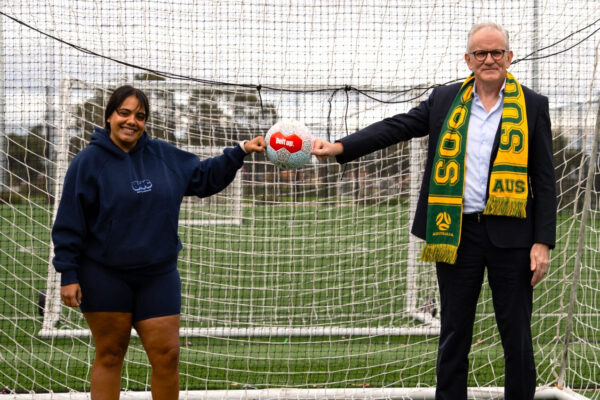
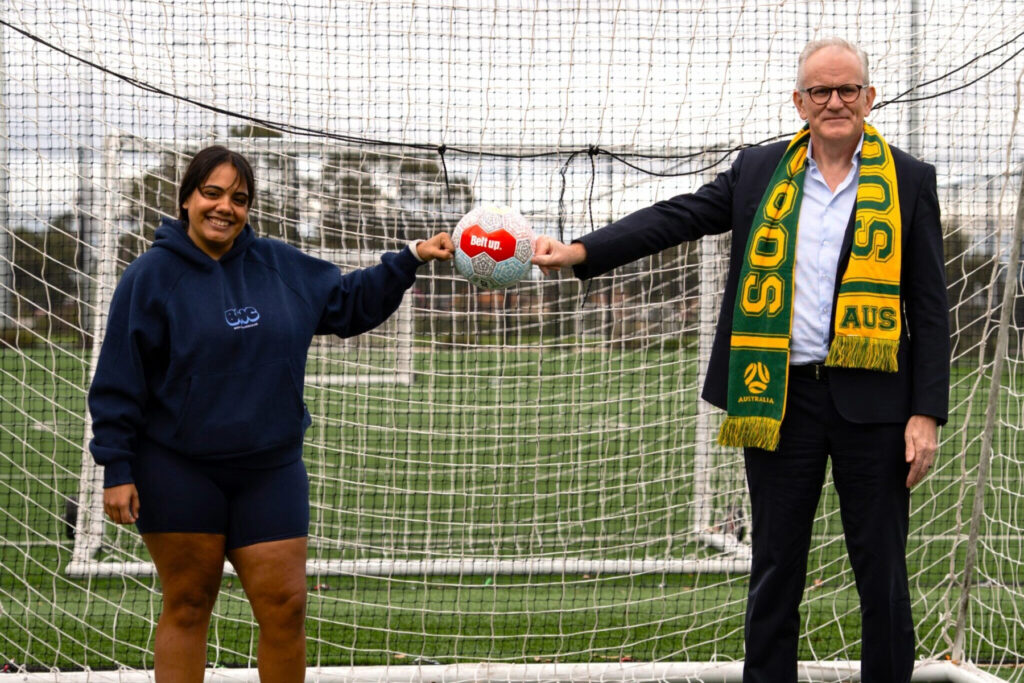
The 2027 edition is a joint initiative between Football West, the Insurance Commission of Western Australia and, for the first time, Football Futures Foundation. The winning design will carry the Insurance Commission’s Belt Up road safety message alongside the artwork, with the footballs distributed during NAIDOC Week, which runs from 4 to 11 July next year.

Football Futures Foundation CEO Michael Kerr framed the partnership as an extension of work the Foundation already runs across the state.

“Through programs such as Dreamtime Spirit and Yilkari, supported by former Matildas goalkeeper Lydia Williams, we are working alongside Aboriginal and Torres Strait Islander communities to create football opportunities that are culturally safe, community-led and built around genuine belonging,” Kerr said.

A message that travels further in a football

Road trauma in Australia isn’t evenly distributed. Indigenous Australians are consistently found in national research to be two to three times more likely to be killed in a road transport crash than non-Indigenous Australians, a disparity driven in part by higher rates of pedestrian and passenger injury and compounded by the realities of remote and regional life, longer travel distances, older vehicles, and limited access to emergency care when something goes wrong. Seatbelt non-use remains one of the most consistent contributing factors in that gap.

The Insurance Commission has invested more than 2 million dollars in the Belt Up campaign over its seven years, and its Chief Investment Officer, Steve McKenna, has been explicit about who the message is aimed at.

“About 170 people die on the road each year in Western Australia,” McKenna said. “About 60 per cent of those are male. Of that total, 17 per cent aren’t wearing seatbelts when they die.”

Generic road safety advertising struggles to reach communities where trust in government messaging is not automatic and where the delivery channel matters as much as the message itself. A football, carrying artwork made by a member of the community it is meant to reach, distributed through a sport that already has deep informal roots in many Aboriginal communities, moves in a way a billboard cannot. That is not incidental to the campaign. It is the entire design logic.

Whose stories get told

Jarnda Councillor-Barns, the Ellenbrook artist who won the 2026 competition, used the colours of the Aboriginal and Torres Strait Islander flags in her design, with circular patterns representing gatherings and connecting pathways representing the journeys, knowledge and skills each player carries.

“I really wanted to amplify the stories that are in the Football West community, whether you’re based metro or rural like I was, and how everyone in a team comes with their own stories,” Councillor-Barns said.

Her own football story reflects exactly the kind of informal, community-rooted participation the competition is built to recognise. She grew up in Broome playing social games whenever she could, and has family connections to the Jambinu team, a regional Indigenous women’s side based in Geraldton, despite never being formally registered with a club herself.

“Soccer is a sport that brings people from all walks of life together, creating a larger family built on respect, teamwork and shared passion,” she said.

Football West’s David Williams, a former Socceroo who now heads the National Indigenous Boys Under-16s program, said initiatives like this had value beyond the artwork itself.

“For the creativity of artists to be involved with sport goes a long way,” Williams said. “The more initiatives we have with this kind of stuff, the better.”

That is a modest way of describing what is, functionally, a form of representation that Indigenous communities in Australian sport have not always had. Governing bodies commission Indigenous rounds, jerseys and acknowledgements regularly. Fewer hand the creative authorship, and a public platform for it, directly to community members with no requirement that they already hold a formal position within the sport.

Insurance Commission Chief Investment Officer Steve McKenna, reflecting on the 2026 winning design at its unveiling, saw something in it that spoke to the broader purpose of the exercise.

“You see the Socceroos playing, and look across the team, and a ball like this, the designs, it reflects what Australia’s all about,” McKenna said.

In the meantime, five hundred footballs carrying a community-made design and a road safety message will reach further into regional and remote Western Australia than most government campaigns manage on their own. Whether that message changes behaviour on the roads that data suggests still needs the most attention is the harder, longer question the competition cannot answer by itself.
Previous ArticleNext Article

Football West runs Indigenous pilot program during NAIDOC Week’s 50th anniversary

Football West ran a pilot program for Indigenous children at the Sam Kerr Football Centre during NAIDOC Week’s 50th anniversary. Former Socceroo David Williams delivered the session.

This year’s national NAIDOC theme, “50 Years of Deadly,” marks five decades since the movement began. It honours the Elders, artists and communities who built it.

“Having these young indigenous kids here at the Sam Kerr Football Centre was great to see,” Williams said. “The feeling they got running around the same pitch the Socceroos and Matildas have trained on was special for them and me.”

A player turned administrator

Williams retired from professional football in November 2025 after a career-ending ACL injury. As a teenager he trained with Club Brugge and Liverpool, and coach Miron Bleiberg once described him as the “best Australian prospect since Harry Kewell.”

He went on to become the first Indigenous player to represent Melbourne City, scored in the UEFA Cup against Eintracht Frankfurt, and won the Indian Super League with ATK.

Since retiring, Williams has moved into administration at Football West. He also sits on the Indigenous Football Australia Council, which oversees the grassroots initiative John Moriarty Football.

A name with its own history

Football Australia named Williams head coach of the Charles Perkins XI last year, the governing body’s national Indigenous youth team. Football Australia renamed the side in 2025 in honour of Dr Charles Perkins AO, following endorsement from the Perkins family and the National Indigenous Advisory Group.

Perkins, an Arrernte and Kalkadoon man, played for Adelaide Croatia and Pan Hellenic in the 1950s. He went on to become the first Aboriginal Australian to graduate from university and a leader of the 1965 Freedom Rides.

Football Australia has described the renamed team as reflecting a commitment to embedding cultural identity and leadership within its high-performance pathway for Aboriginal and Torres Strait Islander youth.

What happens next

“After living out my dream as a professional player, to now being able to offer experiences like this and hopefully inspire the next generation of young Indigenous footballers is very rewarding,” Williams said. “There is also a lot of talent that we can tap into.”

He said running the session during NAIDOC Week let Football West mark two things at once. “Creating a fun session for these kids during NAIDOC Week meant we could celebrate culture and sport in one go,” he said.

Williams wants the session to become a regular fixture rather than a single event. “Going forward, I would love to put on more of these programs throughout the year and get more indigenous youngsters playing football,” he said.

Football West has not yet confirmed funding or a schedule for further sessions.

ParaMatilda to headline Frankston Pines’ new cerebral palsy program

A ParaMatilda will appear at Frankston Pines Soccer Club on Saturday as the club launches Victoria’s newest cerebral palsy football program during Football Victoria’s first dedicated Para Engagement Round.

The event, part of Round 7 of the All Abilities League Junior & Youth divisions, runs at Monterey Reserve, Monterey Boulevard, Frankston North. Children and young people with cerebral palsy, acquired brain injury or stroke-related symptoms can register for come-and-try sessions and meet current para athletes.

The ParaMatildas are the reigning world champions after winning the 2024 IFCPF Women’s World Cup. The victory made them the first Australian national football side to win a World Cup at any level. Goalkeeper and captain Katelyn Smith scored a hat-trick in the 6-2 final win over the United States.

The round coincides with Frankston Pines’ official launch of its new cerebral palsy football program. The club has organised a day including a Beyond the Limits cerebral palsy football showcase, community market stalls, face painting, a colouring competition, a jumping castle, fairy floss and a free sausage sizzle.

The event also raises awareness of Football Victoria’s upcoming Para Pathways Clinics, which will provide children and young people with neurological conditions an opportunity to explore the para football pathway. Further details about the clinics will be released soon.

The engagement round builds on the growth of Victoria’s All Abilities League, which has expanded from a single division in 2017 to 20 teams across four divisions representing 12 clubs this season.

Football Victoria launched its Disability Football Framework in December 2025, a strategic initiative to strengthen the delivery of disability football programs across the state. The Framework sets direction for FV’s work, guiding the development of new resources, guidance and minimum standards that clubs can use in the future.

FV All Abilities & Inclusion Programs Coordinator Selin Arpaci, named Administrator of the Year at the 2025 Victorian Disability Sport & Recreation Awards, said the framework marked a shift from ad hoc delivery to a structured approach.

“We’re no longer doing things just because they’ve always been done that way,” Arpaci said. “Our approach is now intentional, structured, and genuinely supportive for players, clubs and the community”.

Access remains a focus. The 2024-25 Regional All Abilities Participation Grants, funded by the Victorian Government, have supported clubs including Mitchell Rangers, Traralgon Olympians and Phillip Island Soccer Club to establish or expand all abilities programs.

Football Victoria has also partnered with Powerchair Sports Victoria to strengthen pathways for people with disabilities, while monthly women and girls cerebral palsy football sessions now run at The Home of the Matildas.

Frankston Pines has been a regular participant in the All Abilities League, with its inclusive program providing opportunities for people with physical, psychosocial or intellectual disabilities to participate in a supportive environment.

Most Popular Topics

Editor Picks

Send this to a friend