


Ticketchainer: A new look into sports ticketing management

Ticketchainer is a Paris-based tech company that is focusing on transforming the sports ticketing industry from a simple sales tool to a comprehensive e-commerce platform that is suited to the needs of its clients.

Founded in 2019, Ticketchainer has now worked with many sports clubs and organisations across France, including Ligue 2 side AC Ajaccio, offering a product that provides:

  • A personalised purchase journey with a customised user experience and interface, integrating the best e-commerce practices with a responsive design adapted to computers, tablets and smartphones.
  • A back office for ticketing management which configures events and subscriptions, while displaying real-time tracking of ticket sales and combined offers.
  • A fixed and mobile access control management through a dedicated mobile application, personal digital assistants (PDAs) with the Ticketchainer Application Programming Interface (API), or interfacing with existing fixed access control systems.

Co-founder and CEO of Ticketchainer, Sami Bouden, explains how the idea of Ticketchainer all came about in an article with ENSTA Paris:

“Sport, and football in particular, is the events sector where ticketing is the most complex to manage: numbered seats, annual or half-season subscriptions, security, there are many parameters to take into account,” he said.

“It seemed to me to be a challenge that was both captivating and within my reach. That’s how the idea of ​​Ticketchainer was born.”

In addition, Ticketchainer decided to branch out internationally becoming the ticketing platform for the 2023 African Cup of Nations, which was a massive achievement for the tech company.

“It was a huge satisfaction for the team because we won this competition ahead of all the big names in the sector, which is a strong signal for the future,” Bouden added via the article with ENSTA Paris.

During the build-up, Ticketchainer launched their online ticketing platform that covered the six stadiums used for the tournament which had a capacity ranging from 25,000 to 60,000 seats.

In addition, they also deployed 70 box offices across the Ivory Coast to sell physical tickets utilising their technology for digital payments.

In approximately three months, Ticketchainer sold over a million tickets for the 2023 African Cup of Nations. They also had to manage more than 350,000 connections per day, selling 25,000 tickets daily for several weeks.

However, the French tech company did come across some technical challenges along the way.

“Security was of course a crucial aspect, but we had anticipated the issue very well and all attempts at fraud were foiled. We worked enormously to adapt our technology to the scale of the event and make it safe and robust. And it worked perfectly,” Bouden said in an article with ENSTA Paris.

Although still relatively new in the sports ticketing industry already working with various sporting organisations in France, Ticketchainer is looking to continue to expand in Europe after the success of the African Cup of Nations.

“Our main objective remains to consolidate our expansion on the French and European market and to become the reference solution for the most prestigious competitions,” Bouden said in an article with ENSTA Paris.

“At the same time, the success of our performance at the African Cup of Nations naturally allows us to nurture ambitions on new markets, particularly in the Gulf countries, and emerging markets where the event industry is exploding. We have just proven that we have all the assets to achieve this.”

Ticketchainer could prove beneficial to most sports clubs and organisations to help them get a better grasp on handling and organising ticket purchases.

Although it may be a while to see this type of technology implemented in Australia, if Ticketchainer’s success in the sports ticketing scene continues we may see them expand into other continents as well as other big future sporting competitions.

Previous ArticleNext Article

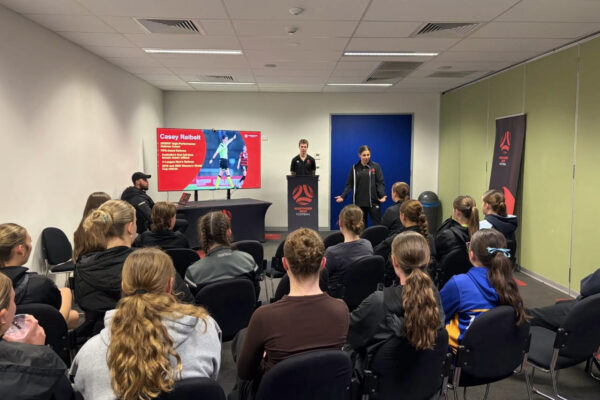
What Football Queensland’s link with Green Room Futures Means as Pathway Strategy Broadens

Football Queensland has signed a multi-year extension and expansion of its partnership with Green Room Futures, formalising the private provider as the state body’s “Official US College & Tour Partner” and adding an annual United States tour for Football Queensland Academy players to the existing college-placement program.

From advisory model to integrated pathway

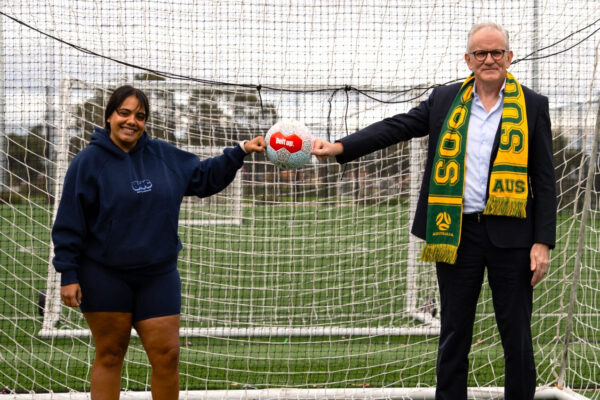
The agreement marks a substantive evolution in the governing body’s pathway architecture rather than a standalone sponsorship announcement. The two organisations have worked together since at least 2024, when Football Queensland first appointed Green Room Futures as its preferred US college partner and began rolling out athlete information sessions across metropolitan and regional centres. The new arrangement embeds that relationship more deeply into the academy ecosystem by linking advisory services with an international touring product.

In its announcement, Football Queensland said the expanded partnership would offer academy players exposure to US college environments, international competition and broader education-and-sport decision-making support. Chief executive Robert Cavallucci said the relationship had already assisted Queensland athletes to pursue opportunities overseas and that the introduction of an annual tour would strengthen development outcomes for players across the state’s regional footprint. Green Room Futures director Matt Wade said the expansion reflected strong demand for structured US pathways and would provide athletes with more direct insight into student-athlete systems.

A constrained domestic market

For Football Queensland, the strategic rationale means a collegiate model is now an established part of the global football labour market, particularly for players seeking a dual track in education and high-performance sport. In an Australian landscape where professional opportunities remain selective and uneven, college pathways provide a parallel route with different risk settings for families. That logic has been gaining institutional acceptance across the country, and Football Queensland’s move suggests it sees formal international exposure as a competitive differentiator within domestic talent development.

The policy and governance questions are equally clear. The public announcement outlines ambition, but provides limited operational detail on affordability, cohort selection and support settings for regional participants. In practical terms, these details will determine whether the program functions as a broad-based development mechanism or as a premium pathway accessed primarily by households able to absorb compounding costs.

International youth tours involve direct and indirect expenses that typically include flights, insurance, accommodation, tournament costs, travel preparation and time-off-work burdens for families, with regional players often carrying additional domestic travel requirements before departure. Green Room Futures’ publicly available materials also indicate paid service structures within broader college-placement support. None of that is unusual in this market segment; it is, however, central to any serious assessment of access and equity outcomes.

The expanded partnership therefore sits at the intersection of football development strategy and distributional policy. If the tour becomes an informal gatekeeper to college-facing visibility, then financial design features move from administrative detail to core pathway governance. Without those mechanisms, even merit-led programs can produce systematically narrow outcomes because the input conditions are unequal.

For Football Queensland, the outcomes are likely to turn on implementation transparency over the next one to two intake cycles. A cohort profile that is geographically concentrated or socioeconomically narrow would invite predictable criticism, particularly given repeated statewide positioning in Football Queensland’s academy communications. Conversely, early publication of eligibility frameworks, financial assistance settings and regional participation targets would strengthen claims that the program is designed as a genuine statewide pipeline rather than a metropolitan premium add-on.

There is also a broader sector trend at play. Australian sporting bodies increasingly rely on specialist private partners to deliver pathway components once managed internally or left to informal networks. The model can improve expertise and execution speed, but it also shifts part of the development interface into commercial structures. In that context, governing bodies carry a heightened obligation to disclose how partner-delivered opportunities align with public-facing participation commitments, especially where youth athletes and family finances are involved.

What comes next

Well-structured US pathway programs can materially improve athlete decision quality, reduce information asymmetry, and create legitimate post-school options in a constrained professional market. Exposure to college environments can help families evaluate trade-offs around education, migration and sporting progression with greater clarity. For some players, that can be decisive.

The question for Football Queensland is whether the benefits are distributed in a way consistent with its statewide mandate. The announcement establishes intent and strategic direction; the next phase requires publication-grade detail. For a program framed around opportunity, credibility will depend less on partnership language and more on measurable participation design: who is selected, who is supported, and who is priced out.

New Stewarding Academy receives backing from Premier League

It is a partnership which sees the Premier League, Capital City College and the Mayor of London, Sadiq Khan, all unite to create job opportunities and raise stewarding standards across the industry.


Football’s forgotten heroes?

Everyone who watches live football will undoubtedly – and unsurprisingly – focus on the people at the heart of the action.

Players, managers, and even other fans all tend to receive the most attention. They are the show people come to see.

But behind every great show, is a team behind the scenes bringing it together, helping when needed, ensuring everything runs smoothly.

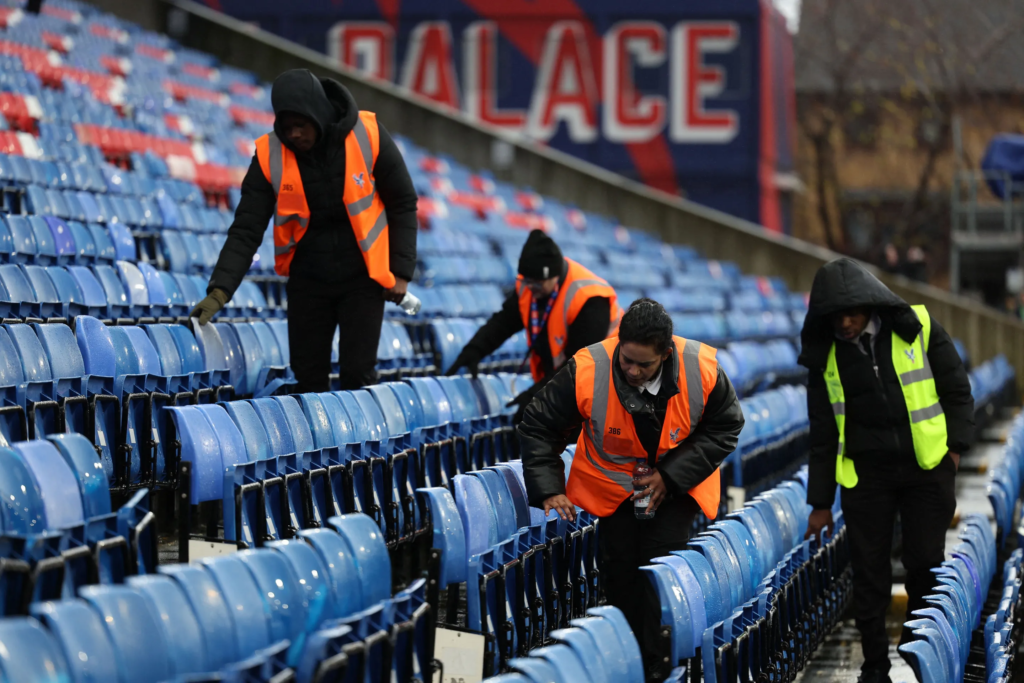
Stewards are an ever-present part of the live football experience; highly visible yet easily ignored.

And, as London’s own football industry knows all too well, a lack of stewards can spell trouble for sustaining high-quality and safe live match experiences for fans.


Securing development and safety

The partnership between the Premier League and the Mayor of London will see AUD 2.3 million (£1.2 million) invested into the game.

And as the Premier League Chief Policy and Social Impact Officer, Clare Summer outlined, the Academy is essential not only to provide future employment, but to meet current demands.

“There are more than 15 million visits to Premier League stadiums each season, and we work alongside partners and the police to deliver safe and inclusive matchdays across the country,” Summer said.

“Through this partnership, we are providing new employment and training opportunities for thousands of people, contributing to the safe and welcoming environment provided at 380 matches each season.”

Thus, the partnership functions both as a way to engage people with the football industry, while also providing core employment skills and experience.


Jobs beyond the pitch

London, much like the rest of the world, is not lacking in fans of the beautiful game.

So considering there is such demand for stewards in the city’s football industry, the Academy marks a logical step to giving people another way of connecting with football.

And the impact goes far beyond sentimental value.

For example, the Premier League strives to improve training and employment opportunities across the UK, supporting up to 104,500 full-time equivalent jobs in the 2023/24 season.

So while the Premier League may require the efforts and skills of thousands of people, it also continues to invest back into the community.

Education, opportunity and trust. All of these are essential aspects to improving the lives of young people looking for a way into football, as well as looking to improve their own lives with purpose and fulfilment.

Most Popular Topics

Editor Picks

Send this to a friend