
The next generation of Socceroos is here and we can thank the developmental A-League for it

There are few things that draw more criticism and disrespect in Australian sport than the A-League and by extension, the game of football. Some weeks back, respected journalist Will Swanton took his swipe at the competition, rather unsuccessfully I might add, and the next veiled attack will not be too far around the corner.

In essence, those yet to discover and embrace the beauty and passion of the ‘beautiful game’ and Australia’s domestic competition, still see something less than courageous and creditable about the most popular sport on the planet.

Sadly, to many Australians, the people who play football are actors, fakes and more inclined to simulation than substance, play-acting to performance and the dramatic rather than determined effort.

Thus is the challenge of educating the beer swilling, muscle brandishing and winter-code loving Australian sporting public; to enable them to see the beauty and dexterity of the round ball game.

It is a common misconception for some than football fans want Australia to succumb to its world-wide popularity, in some sort of takeover that destroys the ingrained love and passion for AFL, rugby league and the slowly declining rugby union.

Nothing could in fact be further from the truth and many writers such as I grew up watching, playing and being captivated by other codes of football in our early years. Australia is somewhat unique in the broad array of sporting endeavours available to its citizens, with football now the most popular of all according to current figures.

Logic would suggest that such interest and participation would directly correlate to international success in a sport played by around 1.8 million people on our shores. However, such logic is seriously flawed with far more than participation and enthusiasm required for a nation to even dream of grasping international trophies.

For Australian men’s football, despite the growth, development and gradual ‘street cred’ achieved over the last 50 years, international success has been fleeting and rare. Our women have fared far better in recent times, something that has made the Matildas arguably the most loved national team in the country.

The 1974 Socceroos trail blazed to the World Cup, before 32 years of alienation saw them lampooned as perennial losers. When John Aloisi’s penalty sent the men’s team to Germany for the 2006 FIFA World Cup, the tide appeared to have turned.

Despite some qualification challenges, the Socceroos have featured on the World Cup stage without fail ever since. It’s move into the AFC has played more than a minor role in that success, yet creditable the achievement is.

The A-League competition was birthed in 2005-06, devoid of the community, cultural and nationalistic ties that the powers at be had told us held the game back and restricted its appeal.

Quite the opposite in fact, as the competition proved somewhat fractious and difficult for many Australian football fans to embrace. The A-League was problematic and tough to swallow for many fans of long standing clubs.

Refreshingly and despite constant criticism around the recruitment of ageing international veterans and the recycling of local ‘B Grade’ talent, the league is actually producing a potential goldmine for Australian football.

Such contemporary talents as Aaron Mooy, Tom Rogic and Mathew Ryan have already ventured abroad to expand their skill set and become key components in Graham Arnold’s Socceroo equation.

Adelaide United’s Al Hassan Toure has declared his allegiance to the Socceroos and looks a flat out star. Team mate Nikola Mileusnic is not far behind, after overcoming injuries that hampered him early in his career. A trio of talent from the city of churches is completed by Riley McGree, potentially the most gifted player to emerge from the A-League in some time.

Daniel Arzani’s talent was so rich that his journey to Europe was expedited with a move to Celtic and Connor Metcalfe’s trajectory may well be similar, so impressive have his first six games been for Melbourne City.

Melbourne Victory’s Thomas Deng continues to loom as a long term Socceroo, Jamie Maclaren has confirmed his place in Graham Arnold’s squad and Adam Taggart’s golden boot season in Korea places the current Socceroos coach in a healthy space when it comes to weapons in front of goal.

Awer Mabil’s arc of improvement has continued abroad, Paul Izzo’s potential has begun to take a tangible shape and Central Coast Mariners star Samuel Silvera looks one of the most exciting youngsters seen on local shores for some time.

Throw in Newcastle Jets’ Angus Thurgate and Melbourne City’s Lachlan Wales and the depth of talent emerging is clear. Perth Glory’s Chris Ikonomidis might just prove to be the best of the lot, so talented is the 24-year-old Sydney born attacker.

The Socceroos have tread an oft criticised path in recent times, with many citing a lack of emerging world class talent when compared to the so-called golden generation of the early 2000’s.

However, in the new world order of truly global football, the talent being produced in Australia looks as exciting as ever. Once it matures, the Socceroos will have a wonderful team to represent us all on the world stage.

Previous ArticleNext Article

Chelsea and Tottenham Arrive in Sydney as Premier League Giants Launch Australian Pre-Season Tour

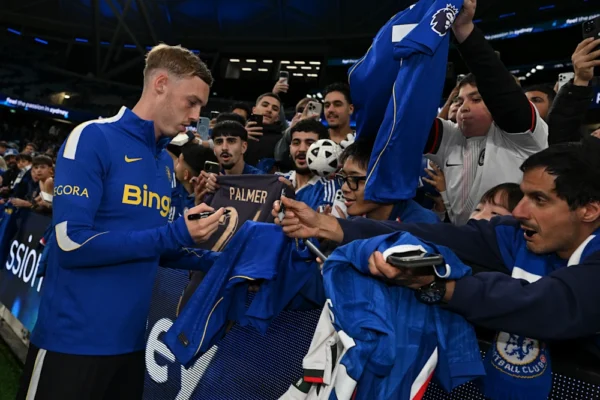
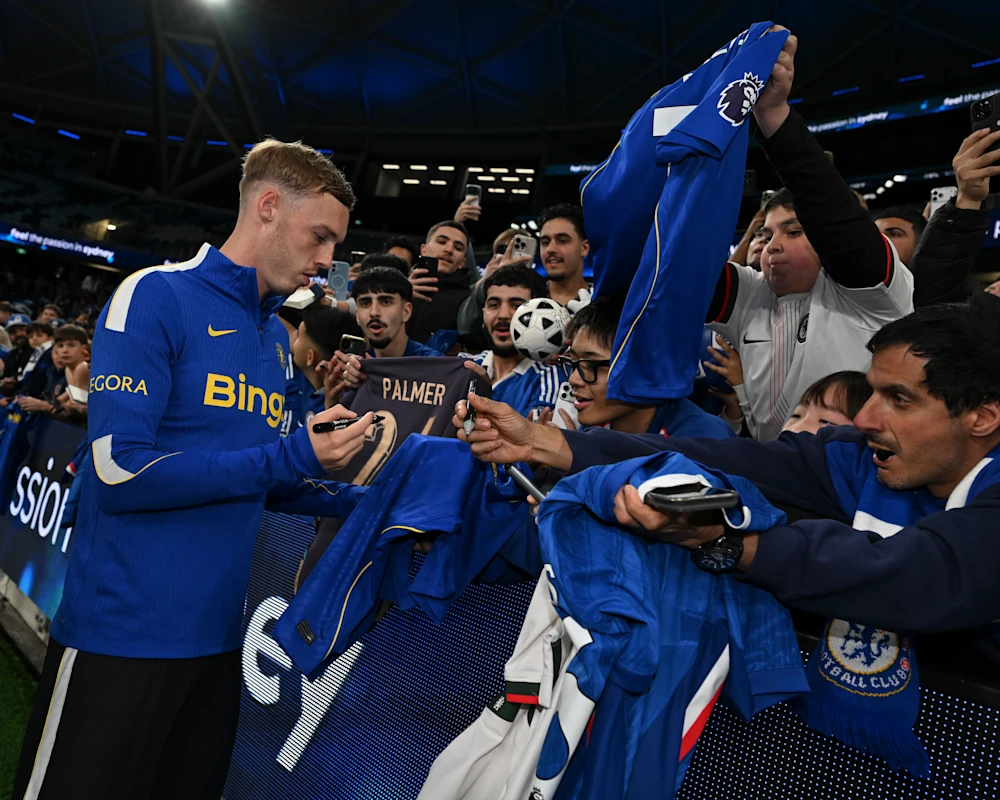
Chelsea and Tottenham Hotspur have touched down in Sydney ahead of their pre-season tour of Australia for the Sydney Super Cup. Both clubs have wasted little time settling into life in Sydney, beginning preparations for a busy week of training sessions, fan events and pre-season fixtures.

The London rivals will each face A-League opposition before meeting meeting in the marquee fixture of the tour at Accor Stadium, bringing two of England’s biggest clubs to Australian shores as they build towards the 2026-27 Premier League season.

For Chelsea, the tour represents the first opportunity for supporters to see new manager Xabi Alonso lead the Blues. Meanwhile, Spurs fans will be eager to see improvements from Roberto De Zerbi’s men following their narrow escape from relegation last season.

Chelsea will open their tour against Western Sydney Wanderers on Tuesday 28 July, while Tottenham will face Sydney FC on Wednesday 29 July, before the clubs meet in the headline fixture of the tour on Saturday 1 August.

The clash will mark the first time the London rivals have faced each other outside the UK. The tour is another sign of Australia’s growing stature as a destination for elite European clubs during the northern hemisphere off-season

With Chelsea and Tottenham among the Premier League’s biggest global brands, the fixtures are expected to attract strong crowds and give Australian football fans a rare opportunity to watch top-flight English footballers in person.

The tour will also feature the Chelsea Women’s team, which will take on the A-League Women’s All Stars in a showcase fixture on Wednesday 12 August.

Governance, guidelines and game integrity: Did the 2026 FIFA World Cup uphold all three?

The FIFA World Cup 2026 is now over. Aside from the action and drama on the pitch, it is how FIFA performed off it which will dictate its lasting legacy.


Money talks

Projections for this year’s tournament placed total revenue at an eye-watering figure of AUD 16 billion (USD 11 billion); in the end, the number reached AUD 21 billion (USD 15 billion).

The newly-introduced hydration breaks – much bemoaned by fans accustomed to a more traditional 45 minute half – generated further income. Fox Sports was expected to earn more than AUD 356 million (USD 250 million) from these breaks alone, taking global revenue upwards of AUD 1.4 billion (USD 1 billion).

Four minutes and 20 seconds per match, worth more than 1 billion dollars. For FIFA, therefore, time truly is money.

As the most profitable World Cup in history, it also raises further questions (and potential ideas) for how to continue the success. FIFA President, Gianni Infantino, is already considering ways to “unleash the commercial potential and opportunity that FIFA has” going forward.

“I think I can say that this FIFA World Cup here in particular has opened a lot of doors, a lot of opportunities, a lot of possibilities,” Infantino said.

“This will have an impact on what we can do all over the world, but the revenues and the financial economic success come only if the sporting side is right.”

Expanded participation – marking the first time a World Cup features 48 teams compared to the previous 32 – was a major factor in increasing revenue. More teams, more games, more sponsorship and advertising opportunities.

“There are discussions about whether we should increase more (from 48) to 64 (teams), but this will be debated and this will be discussed,” Infantino affirmed.

More revenue for FIFA should also mean its 211 Member Associations also benefit from further investment, although details regarding this remain unknown.

Record-breaking attendance

Going into the tournament, the issue surrounding ticket prices was widespread. Many fans accused the governing body of pricing fans out of the game they love – and the numbers justified it.

While tickets opened at AUD 85 (USD 60), the dynamic pricing led to resales worth tens of thousands of dollars. For the final between Spain and Argentina, fans seeking last-minute tickets needed closer to AUD 3 million (USD 2 million).

But despite the criticism aimed at the dynamic pricing system, FIFA’s resolve paid off. Attendances smashed previous records, with total attendance double the figure seen in Qatar 2022.

FIFA reported that 6,810,966 fans packed into stadiums across the 104 matches, reaching an average crowd of 65,490. With higher attendances also comes more revenue generated from hospitality within the stadium itself.

Clearly, the price of a ticket to the world’s biggest sporting tournament does not affect demand. If FIFA sets the price, people will pay.

Or rather, people who can afford these prices will.


Red card, rescinded

As USA and Bosnia & Herzegovina went toe-to-toe in their round-of-32 clash, few could have known the drama would continue far beyond the referee’s whistle after 90 minutes.

A red card for star-striker, Folarin Balogun, in the 64th minute prompted concerns among US fans not only for the remaining half-an-hour of play, but for the following round of the tournament: as per FIFA rules, a player who receives a red card automatically misses the subsequent match.

This was the case for Balogun, until external pressure entered the field. And for football’s global governing body, external pressure arrived in the form of the President of the United States of America.

The legality over the rescinded red card is irrelevant to the wider issue. People will dispute the various articles outlined in the FIFA Disciplinary Code, but the incident itself sets a problematic precedent for football’s global governing body: if FIFA compromises its rules and political neutrality for one nation, where does it draw the line in future tournaments?

The tournament’s integrity had already come under pressure before a match had kicked-off, following the first ever FIFA Peace Prize awarded to President Trump in December 2025. The rescinded red card ultimately added fuel to the fire.


A game of two halves

The FIFA World Cup 2026 was as entertaining on the pitch as it was controversial off it.

It featured some incredible individual performances from stars like Mbappe and Kane, as well as Cabo Verde’s Vozinha – the 40 year-old overnight sensation who became a tournament icon.

308 goals were scored, surpassing with flying colours the previous record of 172 in 2022. A goal-per-game ratio fo 2.96 was the highest in recorded history since 1970.

Celebrations like Norway’s ‘Viking Row’ took the world by storm, and several brands including Levi’s, Gillette and Under Armour (the latter being the tournament-winning boot sponsorship) enjoyed huge public attention online for their unique marketing approaches.

These are the stories which represent the World Cup at its very best and the side of football fans want to see: action-packed matches, world-class talent, inspirational underdog stories and moments which generate discussions between fans from all over the world.

Beyond the pitch, however, memories of this year’s tournament will be comprised of financial success marred by a failure to govern and uphold the game’s integrity throughout.

It is a disappointing contradiction, that the cost of the most entertaining and economically successful World Cup in history, is the growing concern whether we can believe in those delivering the game to us at all.

Most Popular Topics

Editor Picks

Send this to a friend