


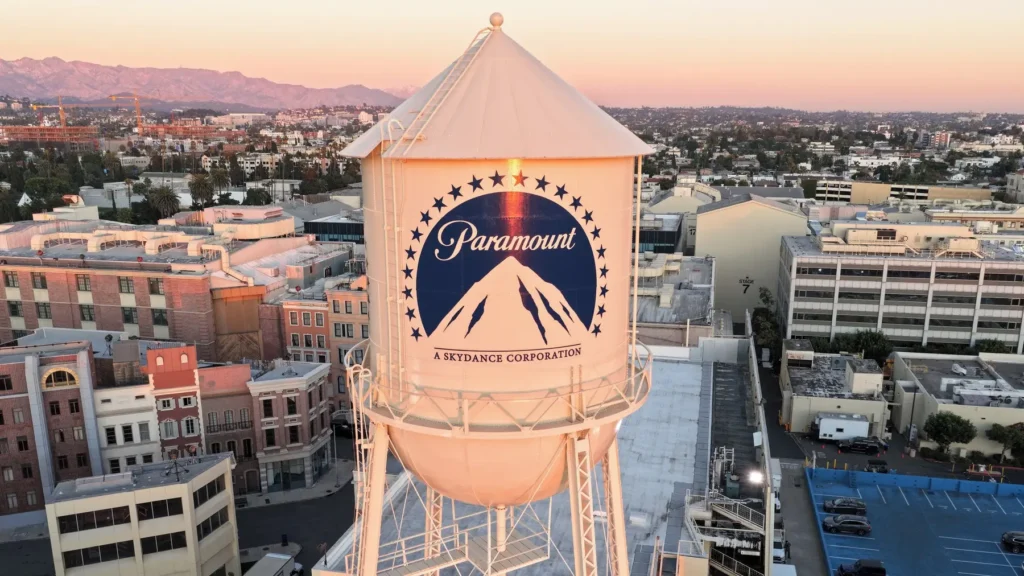
The approval of a reported $113 billion merger between Warner Bros. Discovery and Paramount Global is being framed as the creation of a “next-generation media and entertainment company.”
But beyond Hollywood headlines, the deal signals something far more consequential for sport: a global media landscape rapidly consolidating into fewer, more powerful hands.
For Australian football, particularly the A-League, this is not just background noise. It is a structural shift that could define the league’s future.
A shrinking marketplace, a growing imbalance
The merger brings together an enormous portfolio of assets, such as film studios, broadcast networks and streaming platforms, under a single corporate umbrella. It reflects a broader industry trend: scale is no longer an advantage in media, it is a necessity.
Yet with that scale comes concentration. Fewer buyers now control more platforms, more audiences, and more capital. Critics of the deal have warned that such consolidation risks reducing competition and narrowing the range of voices in global media.
For sport, the implications are immediate.
Broadcast rights are no longer negotiated in a diverse, competitive market. Instead, leagues are increasingly competing for space within vertically integrated media ecosystems. This is because decisions are driven not just by audience demand, but by global strategy, bundled content offerings and long-term platform growth.
Why the A-League is particularly exposed
This shift lands unevenly across the sporting landscape.
Leagues like the Australian Football League (AFL) and National Rugby League (NRL) remain dominant domestic products, commanding billion-dollar broadcast deals and consistent mass audiences.
The A-League, by contrast, operates from a more fragile commercial base.
Despite its global game status, the league continues to face:
- Inconsistent crowd figures
- Fluctuating visibility
- A comparatively modest broadcast deal with Paramount
In a fragmented media environment, this is manageable. In a consolidated one, it becomes a vulnerability.
Because as the number of broadcasters shrinks, so too does the margin for leagues that are not seen as “must-have” content.
From open market to closed ecosystem
The critical shift is not just economic, it is also structural.
In the past, leagues could leverage competition between broadcasters to drive rights value. Now, with fewer but larger players, the balance of power tilts toward the platforms.
Content is no longer simply acquired, it is curated.
And in that environment, only properties that deliver one (or more) of the following will thrive:
- Guaranteed audiences
- Global scalability
- Year-round engagement
- Strategic value within a broader content ecosystem
This is where the A-League faces both its greatest challenge—and its greatest opportunity.
The overlooked strength of Australian football
While often positioned as a “developing” product domestically, football offers something no other Australian code can replicate: global alignment.
As the world’s most popular sport, football operates within an international ecosystem that extends far beyond national borders. Australia’s geographic position, bridging Asian and Western markets, adds further strategic value.
For a global media entity like Paramount, this matters.
The A-League is not just local content. It is potentially exportable, scalable and aligned with global football narratives. It also taps into younger, more digitally engaged audiences, who are increasingly driving subscription-based streaming growth.
In a media environment defined by platform expansion, that is not a weakness. It is an underutilised asset.
Why consolidation should drive MORE investment
The instinct in a consolidating market is often caution by tightening budgets, focusing on proven performers and minimising risk.
But for Australian football, that approach is self-defeating.
Because without investment:
- Production quality stagnates
- Storytelling weakens
- Audience growth plateaus
- Commercial value declines
And in a system that rewards scale and engagement, stagnation is equivalent to irrelevance.
Instead, consolidation should be seen as a trigger for strategic investment:
- Elevating broadcast presentation
- Strengthening club identities and narratives
- Expanding digital and streaming integration
- Positioning the league within the broader global football conversation
In short, making the A-League indispensable, rather than optional.
The real risk: being left behind
The emergence of media giants like a merged Warner Bros. Discovery and Paramount Global signals a future where content is filtered through fewer, more powerful gatekeepers.
In that world, leagues that fail to assert their value risk being sidelined, not because they lack potential, but because they fail to meet the evolving demands of the platforms that distribute them.
For the A-League, the danger is not collapse. It is marginalisation.
A slow drift into irrelevance while larger codes capture the attention, investment, and audiences that define modern sport.
Conclusion: a defining moment
This merger is not about Hollywood. It is about power.
Power over distribution. Power over audiences. Power over what gets seen and what does not.
For Australian football, the message is clear.
In a world of media consolidation, visibility is earned through value, not assumed through presence.
And if the A-League is to secure its place in that future, investment is no longer optional.
It is existential.