



Con Boutsianis: We must fix youth development in Australian football

South Melbourne legend Con Boutsianis’ message is simple. As a nation, we are failing to produce enough players at the calibre of the Mark Vidukas and Harry Kewells of yesteryear.

In an interview with Soccerscene, the 48-year-old believes youth development across the board is suffering in Australia and the cautious approach that has been taken with talented young players is not beneficial.

“Mark Viduka at 17 played his first senior game,” Boutsianis said.

“At 17, I played my first National Soccer League game. Now, if a 17-year-old is good enough to play, we say ‘oh no we better not, he’s too young, he needs more time to develop.’

“It’s complete rubbish.”

Boutsianis concedes a national second division and connected football pyramid will be a positive for the game’s issues at a developmental level, but doesn’t think it is the panacea others in the game believe it will be.

“That’s not what the answer is,” he said.

“People are just shooting off the hip, of course it would be great to have a second division. Is it viable? We are struggling to get the A-League to be viable.

“Now, you want a second competition?

“It’s not working at the top level. We’re a mess at the moment. We don’t have any sponsorships, we don’t have any direction, we’ve spent one billion dollars in 15 years (on the A-League) and most of the teams don’t even have a home.”

In an effort to improve the youth footballing standards in Australia, after the conclusion of his playing career in the NSL, the former Socceroo has invested his time in creating a coaching business called Football First.

He uses his years of expertise and research to focus on the development of groups and individuals, coaching a range of players from beginners to professionals. Sessions are completed in person by him or online to those who are in other countries.

“Because I’m very analytical, I started to think (near the end of his career) ‘what is it that makes a soccer player? What do you actually have to do to become a professional player?’

“One thing that I realised, I was more a technical player and I was speaking about football with my friend Mickey Petersen who played for Ajax under Johan Cruyff.

“He said, ‘look, we are just born in the wrong country. They don’t value the technical players here (in Australia).’

“I said ‘yeah I know’; I can’t understand why they wouldn’t want to learn how to kick the ball properly and that technical skills are more important than physical initially.

“So, I thought to myself, ‘I’m going to teach these guys how to do it.’ I started off with a group of five kids, not getting paid a lot of money, but it wasn’t about the money.

“I said to myself ‘I’m going to start doing it’ and then from that I never realised where it’s going to go.

“20 years later and I’ve developed a really good coaching business that gives me the opportunity to travel around the world.”

With his years of experience, Boutsianis’ most important piece of advice for young players is to identify the real weaknesses and strengths they have as footballers and address them on a daily basis in a specified program.

His use of a grading system, which generates a tangible document for a player, similar to a school report, is important for the improvement of an individual.

“This is what the parents love, this is what the clubs love, this is what the kids love,” he said.

“It’s a grading system that says, here, you’re a beginner, this is your score for a beginner. You’re a semi-professional, these are your scores for a semi-professional.

“Unfortunately, in football, we generally don’t have a system that suggests this. It’s an opinion, your opinion against my opinion against that person’s opinion.

“You need something that you can physically see and understand. Is the passing good? Is it not good?”

Money should not be the overriding factor in whether a player coming through the ranks makes it as a professional, with the ex-Perth Glory player valuing commitment and hours spent instead.

“If you want to develop a player it doesn’t necessarily mean you have to spend millions and millions of dollars.

“What you need to get them to do is to start working at home on their own. Mark Viduka would be at the AIS and kick the ball against the wall for hours at night, no one told him to do it.

“Young players need to start understanding what it is they have to do to become a better footballer.”

According to Boutsianis, the perception is that to be better, we need to send youth players (who are not ready) overseas at a young age.

He believes this is a critical mistake.

“What’s the point of spending $10-50,000 on people who don’t really develop a player,” he said.

“We spend all that money to compete against the best overseas, when you haven’t done the work prior…you haven’t earned the right to go and play against the best.

“So, get your own backyard in order, make sure you are one of the best in your state, if not in the country, and then consider to go overseas. If you’re not one of the best here, how do you think you are going to be the best there?”

When quizzed on the possibility of becoming a coach of a side in the future, the man who scored the winner against Carlton in the 1998 NSL Grand Final claimed: “I will coach, no problem.

“But for me it’s not that important at the moment, I think developing people is more important than getting results and saying I won as a coach. Because, that’s not giving to the player, I’m more focused on making sure that player in the future becomes successful.”
Previous ArticleNext Article

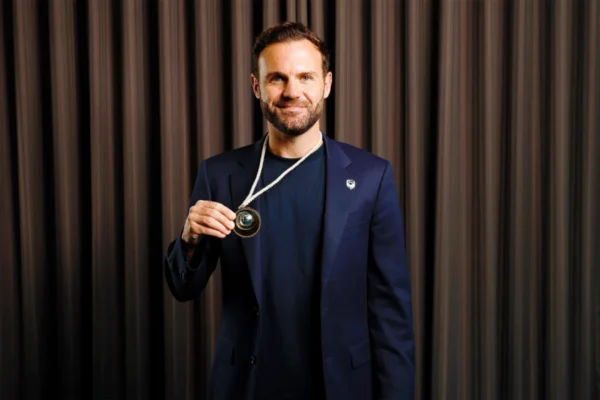
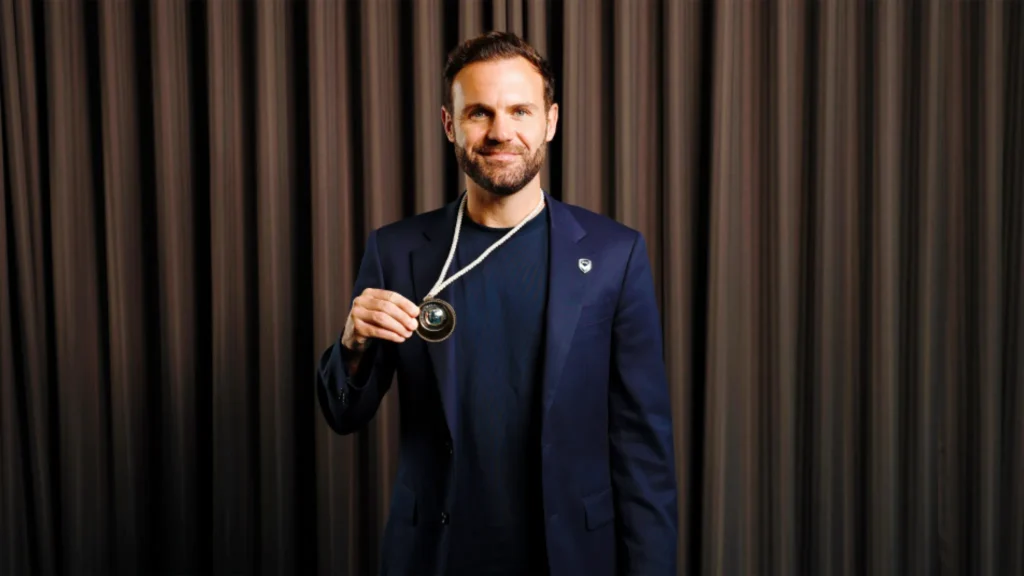
Juan Mata Commits to Melbourne Victory’s Future with Ownership Stake

Melbourne Victory has announced that Spanish football icon Juan Mata has joined the club’s ownership group, marking one of the most significant investment moves by a current international footballer in Australian football history.

The agreement sees Mata acquire an ownership stake in Victory while continuing to weigh up whether he will extend his playing career beyond the 2025/26 A-League Men’s season. The investment is separate from any future playing contract and reflects a long-term commitment to both the club and the wider Australian football landscape.

Should Mata eventually retire from professional football, he will also take on a leadership role by chairing a newly established football committee at Melbourne Victory, helping shape the club’s football operations and strategic direction.

More than another football investment

While former elite players have increasingly entered football ownership around the world, Mata’s decision stands apart because he is investing directly into the club he currently represents.

The move places Melbourne Victory among a growing list of clubs benefiting from investment by globally recognised football figures. However, unlike celebrity ownership groups where players often become passive investors after retirement, Mata is embedding himself within the club while still competing at the highest domestic level.

Commercial terms of the transaction remain confidential, although the investment has been described as a significant long-term minority stake designed to strengthen the partnership between Mata and the club well beyond his playing career.

A vote of confidence in Australian football

Perhaps the most significant aspect of the announcement is what it says about the perception of Australian football internationally.

After arriving in Australia following spells with some of Europe’s biggest clubs, including Manchester United, Chelsea and Valencia, few would have predicted that Mata would choose to invest his own capital into an A-League club.

Instead, the 2010 FIFA World Cup winner has described Australian football as a competition with genuine long-term potential.

“Australian football has a future I genuinely believe in,” Mata said.

“From the moment I arrived at Melbourne Victory, I’ve felt the passion of this club and the potential of the A-Leagues, and I want to be part of building what comes next—not just for a season, but for the long term.”

Mata added that becoming a shareholder represented “the natural next step” after enjoying his first season at Victory.

Rewarding an outstanding first season

The investment follows what has been one of the finest individual campaigns by a marquee player in recent A-League history.

The 38-year-old registered five goals and 13 assists across 25 appearances during the 2025/26 season, earning the Johnny Warren Medal as the league’s best player while also claiming Melbourne Victory’s Player of the Year honours. His performances helped guide Victory back into the Finals Series and demonstrated that his influence extends far beyond his reputation.

Rather than treating Australia as a final destination before retirement, Mata has instead become increasingly involved in shaping the game’s future.

A growing portfolio of sporting investments

Melbourne Victory is not Mata’s first venture into sports ownership.

The Spaniard already holds ownership interests in Major League Soccer expansion club San Diego FC and Formula One outfit Alpine Racing. He has also invested in Mercury/13, the multi-club ownership group focused on developing women’s football globally.

These investments reflect a broader trend among modern footballers who are leveraging their experience and networks beyond their playing careers. For Melbourne Victory, securing someone with Mata’s global football knowledge, commercial experience and international connections represents an opportunity that extends well beyond the pitch.

Landmark moment for Melbourne Victory

Victory Chairman John Dovaston described Mata’s investment as a significant endorsement of both the club and the A-Leagues.

According to Dovaston, Mata is a discerning investor with stakes in elite sporting organisations worldwide, making his decision to back Melbourne Victory a strong signal of confidence in the club’s direction and the league’s future.

Managing Director Caroline Carnegie echoed those sentiments, describing the announcement as “genuinely groundbreaking” and highlighting Mata’s combination of world-class football intelligence, investor mindset and long-term commitment.

A statement beyond Melbourne

Australian football has long sought greater international credibility. Not only through marquee signings, but through meaningful long-term investment.

Mata’s decision represents something arguably more valuable than a headline player signing. By committing financially to Melbourne Victory, he is effectively betting on the future growth of both the club and the A-Leagues.

At a time when Australian football continues to pursue increased investment, stronger governance and greater global relevance, having one of the game’s most respected figures choose to become an owner may ultimately prove to be one of the competition’s most powerful endorsements.

Football NSW workshop offers clubs rare insight into elite talent pathway as development gap comes under scrutiny

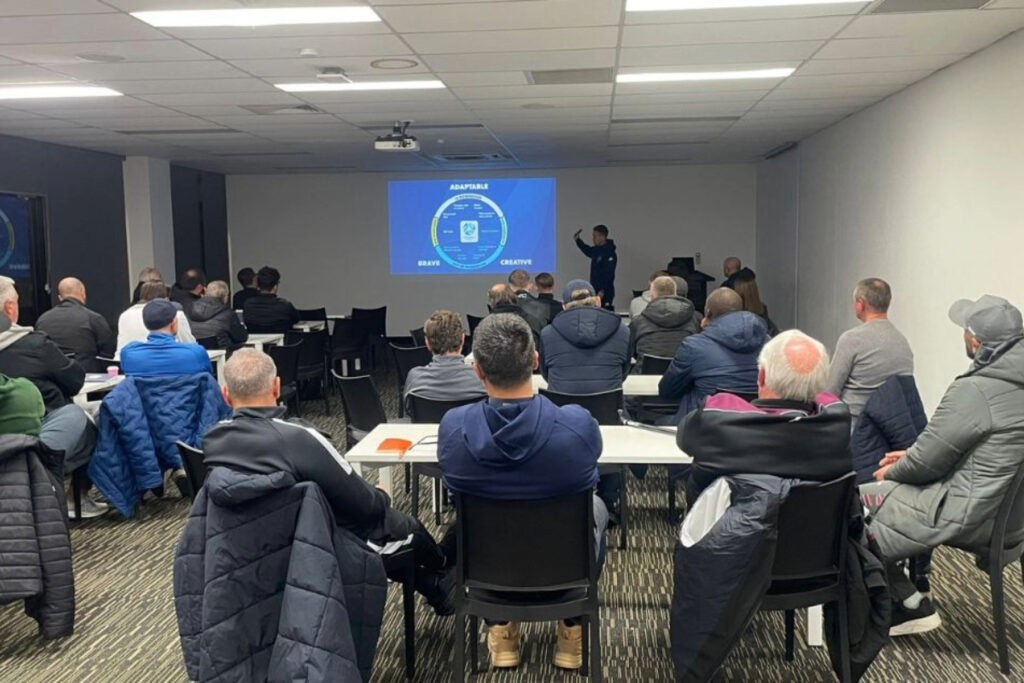
Football NSW has delivered a Club Capability Building Workshop designed to give community club coaches direct exposure to the methodology underpinning the state’s elite Talent Support Program, in an initiative that addresses one of the more persistent structural problems in Australian football development.

The workshop, led by Player Development Managers Phil Myall and Nadine Sheils, who oversee the technical direction of the Boys and Girls Talent Support Programs, combined classroom presentation with pitch-side observation of live TSP fixtures. Coaches from clubs including Rydalmere FC attended sessions covering talent identification processes, player development models, coaching methodology, Individual Development Plans and player profiling based on technical traits and competencies.

The structure of the day, moving coaches from theory into a live competitive environment, reflects an attempt to close a gap that has long shaped the relationship between community clubs and elite talent pathways in Australian football. Club coaches typically operate with limited visibility into how state-level development programs actually function in practice, relying on secondhand information, accreditation course material or assumptions about what elite environments look like. The workshop replaced that distance with direct access.

Why the gap matters

Talent Support Programs exist to identify and accelerate the state’s most promising young players, but the players who enter those programs come from community clubs first. If the coaching methodology and development philosophy applied within elite pathways is poorly understood at the community level, the two systems risk operating with misaligned expectations of what good development actually looks like.

This means a player developed in a club environment that does not share the technical language or coaching priorities of the elite pathway may find the transition into a Talent Support Program more difficult than it needs to be, not because of any deficiency in the player but because the systems around them were not speaking to each other.

Football NSW’s decision to bring club coaches into direct contact with TSP methodology, including observation of live matches rather than theoretical instruction alone, represents an attempt to narrow that gap at the level where it matters most. Rydalmere FC’s Head of MJDL, Michael Canale, said the experience offered a clear reference point for his own club’s program.

“It was great to see how the FNSW Talent Support Program operates and the level of alignment from the methodology and match environment,” Canale said. “For us at Rydalmere FC, I took away ideas that we can look to build into our own programme. It provided a really clear reference point and an opportunity to reflect on how we can continue to strengthen our environment moving forward.”

A model for industry-wide capability

The workshop also points to a broader question facing football governing bodies as participation continues to climb nationally. As more players enter community football and the demand for genuine development pathways grows, the capability of community coaches becomes a determining factor in whether that growth translates into improved player outcomes or simply more players moving through under-resourced environments.

Football NSW’s approach, embedding observation and direct engagement with technical staff alongside structured presentation, offers a model that other state federations grappling with similar capability gaps may look to replicate. The collaborative element of the day, where coaches from different clubs compared notes and aligned their understanding of TSP application, also suggests an organisation attempting to build a shared development language across its club network rather than treating elite pathway knowledge as something that remains internal to Football NSW staff.

Whether that shared language translates into measurable improvement in player outcomes at community level will depend on how consistently workshops like this one are delivered, and whether the ideas coaches take away are genuinely implemented rather than simply observed. For now, the initiative represents a concrete step toward addressing a gap that has shaped Australian football development for years, the distance between what elite pathways do and what community clubs understand about how and why they do it.

Most Popular Topics

Editor Picks

Send this to a friend