Sport Australia launches resource to assist community clubs post COVID-19

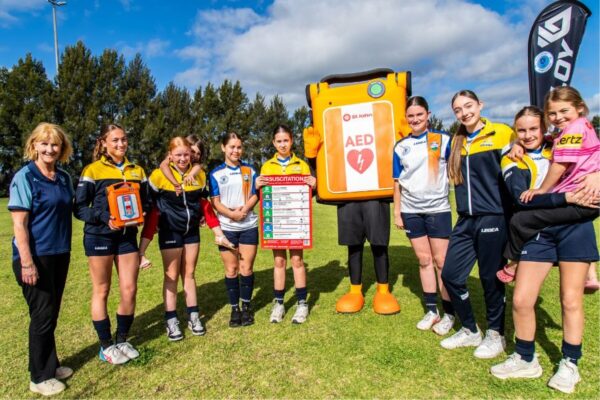
Sport Australia’s has launched Game Plan, a new diagnostic tool designed to help clubs bounce back after the effects of COVID-19.

The resource replaces the pre-existing Club Health Check and will provide administrators the means to test their clubs performance in order to identify areas of improvement.

“We know sporting clubs have had to adapt to our ‘new normal’ so sport can return and that can come with challenges,” said Rob Dalton, Sport Australia Acting CEO.

“Many sporting clubs are also run by volunteers who may be time poor or have varying levels of experience in running a club. Our Game Plan tool is designed to make life easier for these clubs by connecting them with information and resources they need to help them operate more efficiently and effectively.”

Administrators can check how their club is performing in 13 key areas including four foundation modules that underpin all club operations – Governance, Strategy, Finance and Workforce.

The modules are quick and easy to complete. Once a club has finished a module, they receive a maturity rating, information and resources to help them improve, and an action plan to assign responsibilities and timelines.

“The best part about our Game Plan is that it’s not limited to a single user – any administrator of a club can complete modules suited to their role, whether that’s coaching, sponsorship or finance. Clubs can also access the platform at any time to assist them in or outside of season,” Dalton added.

The new tool has already received positive feedback from administrators who work in a range of sports, including football.

Minister for Youth and Sport, Richard Colbeck said Sport Australia’s Game Plan is another way the Australian Government is supporting sport through COVID-19 and beyond.

“A key focus of Game Plan is assisting community level sporting clubs and volunteers as they recover from the impacts of COVID-19. Clubs and sporting organisations can access resources to help them grow their membership base as well as support the recruitment and retention of volunteers in a new sporting environment,” he said.

Sport Australia’s Game Plan can be found at gameplan.sportaus.gov.au or read more at the Club Development page.

Previous ArticleNext Article

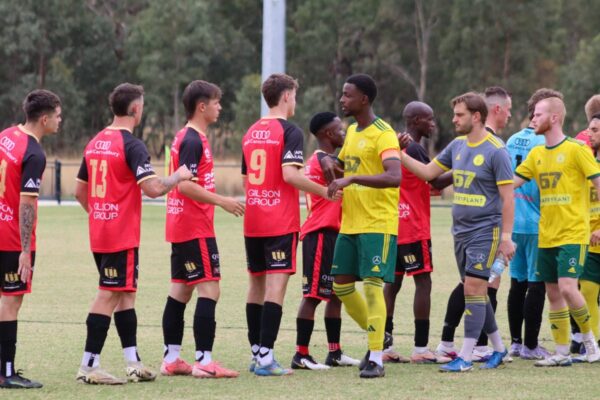
Murray United calls Football Victoria review following wave of State League forfeits

Murray United has called on Football Victoria to undertake a comprehensive review of State League football after a series of fixture forfeits left the regional club questioning the integrity of the competition and the long-term sustainability of its senior pathway.

In correspondence sent to Football Victoria, Murray United outlined concerns following what it says has been an unprecedented number of forfeited fixtures during the 2026 State League season. According to the club, its senior men’s program has been impacted by five forfeited rounds, equating to 10 matches. This includes the club’s last two fixtures, significantly disrupting competition across both senior and reserve grades.

The club and its chairman Pedro Afonso, argue the consequences extend far beyond missed fixtures, affecting player development, community engagement and confidence in the State League system.

“This is extraordinary, unacceptable, and completely inconsistent with the integrity and intent of Football Victoria’s State League competition,” Afonso said to Football Victoria.

“This impact extends well beyond lost fixtures. It has damaged player morale, member engagement, volunteer morale, sponsorship and club revenue, and the reputation of the sport and competition itself.”

Located at the club’s $20 million facility in Wodonga, Murray United has invested heavily in creating a regional football pathway. However, repeated forfeits have limited opportunities for players, coaches and supporters to participate in home State League fixtures.

The club has hosted just three home rounds this season despite the significant investment made into facilities and matchday operations.

“Our players, coaches, members, supporters, sponsors and the sport expect a legitimate State League competition, not one regularly disrupted by forfeits,” Afonso said.

“Our confidence must be restored by Football Victoria.”

While the immediate concern centres on this season, Murray United believes the issue reflects broader structural challenges facing regional football within Victoria’s State League system. Between the north-west and south-east competitions, there are 14 divisions of State League football in Victoria.

Among its recommendations, the club has called for Football Victoria and its Football Development Committee to undertake a formal review of the State League Seven North West competition, including club compliance and the frequency of forfeits.

Murray United also questioned whether the current competition structure provides an appropriate development environment for ambitious regional clubs. The club could be promoted to division six due to a large proportion of fixture forfeits. But fearing further cancellations, the club is requesting a review to be placed in an even higher division where clubs are willing to travel to Wodonga.

“We believe we should be sensibly placed in a competition that reflects our playing standard, facilities, player and coach pathways and our ambitions,” Afonso said.

The club has requested that Football Victoria assess its senior program using grading principles similar to those recently applied within senior women’s competitions, with consideration given to placement in a competition more suited to its football program and long-term objectives.

Alongside competition grading, Murray United has proposed stronger penalties for clubs that repeatedly forfeit fixtures. Recommendations include increased financial sanctions to $2,100 for senior teams alongside a three-point deduction per forfeit and compensation for host clubs to offset matchday operating costs.

The submission also encourages Football Victoria to review minimum participation standards across State League clubs, strengthen accountability measures and examine whether the existing league structure adequately supports regional football.

Afonso believes reform is necessary to ensure regional clubs are not disadvantaged within a statewide competition.

“We remain fully committed to providing quality football opportunities for our regional members and community and have heavily invested in facilities, player and coach development and volunteers,” he said.

The club has requested that Football Victoria provide clarity on the actions it intends to take before the commencement of the 2027 season, arguing that restoring confidence in competition integrity will be critical for the continued growth of regional football.


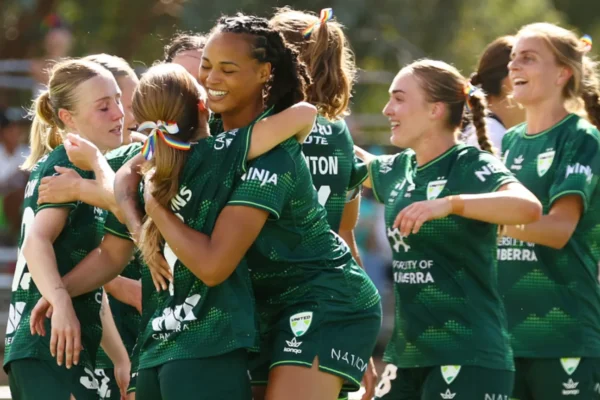
Australian Sports Group unveiled as new owners of Canberra United

The Australian Professional Leagues (APL) has confirmed Canberra United’s new owners will be the Australian Sports Group (ASG), securing the future of the A-League Women’s side with the potential for an A-League men’s team to be introduced for the 2028/2029 season.

The announcement marks a significant milestone for football in the nation’s capital, ending a prolonged period of uncertainty surrounding Canberra United’s future in the Ninja A-League Women competition.

Beyond ensuring the club’s ongoing participation in Australia’s premier women’s domestic league, the acquisition provides a pathway towards the potential introduction of an A-League Men club in Canberra, subject to the completion of regulatory requirements; the club could exercise an exclusive licence agreement in the Australian Capital Territory.

Australian Sports Group has outlined an ambitious vision centred on strengthening football throughout the ACT, with plans to invest in player development pathways, community engagement and football infrastructure while working alongside key stakeholders across the region.

The ownership transition has been welcomed by the Australian Professional Leagues, which described the outcome as an important step in expanding the game’s footprint in Canberra and reinforcing the long-term sustainability of professional football in the region.

Canberra United has long been regarded as one of Australia’s most successful and respected women’s clubs, playing a pivotal role in developing elite players and contributing to the growth of women’s football nationally. The confirmation of new ownership provides greater certainty for players, staff, supporters and commercial partners ahead of the upcoming season.

The licence transfer will continue through Football Australia’s regulatory processes, including the required fit and proper persons assessment, while operational planning for the 2026-27 campaign is already underway with support from both the APL and Capital Football.


Most Popular Topics

Editor Picks

Send this to a friend