


Riding Shotgun – The Andrew Bernal Story

I first witnessed the football talent of Andrew Bernal at St.George Stadium when he captained the Young Socceroos in a friendly back in 1985.

The young man was so technically competent in his role as a libero that I believed he possessed the qualities of a young Australian Beckenbauer.

Unfortunately, Australian football lost Bernal’s contribution for the 1985 World Youth Cup Finals because he decided to ply his trade in his parent’s native Spain which for bureaucratic complications denied him the opportunity to lead his country in that tournament.

As many players who ventured overseas will testify, it’s hard to combat the obstacles which are presented in trying to make the grade in a foreign country but just like Craig Johnston, David Mitchell , Eddie Krncevic and Alan Davidson before him, Bernal overcame these and spent four years in the professional game in Spain.

When you’re riding shotgun, one thing is for sure – you have to take the initiative and Bernal succeeded in this endeavour when he miraculously managed to escape the clutches of the Spanish authorities before he arrived in England in 1988.

His account of the meeting with Brian Clough, the Nottingham Forest Manager, is pulsating and largely explains how Bernal was able to survive the cut-throat world of professional football and carve a career for himself when his playing days had ended.

The book reads like a Who’s Who of British football talent as he was able to mix it with household names on and off the pitch at his time with Ipswich Town and Reading.

Perhaps his biggest playing disappointment was Reading’s failure to win promotion to the Premier League when they were defeated narrowly by Bolton in the 1995 play off at Wembley Stadium.

However, a sterling career for the Royals until 2000 when he often played through the pain barrier was sufficient compensation for all those years he had devoted to a career in professional football.

Life after football can be a rude awakening for some but Andrew Bernal applied all his tenacity and contacts to acquire a position with SFX Management and ultimately be awarded the prize responsibility of looking after the welfare of David Beckham when he signed for Real Madrid.

To mix in the company of Zidane, Roberto Carlos, Ronaldo, Raul and Figo was a dream come true and a lifestyle the average fan could only dream as Bernal met some of the biggest celebrities and influential people from all walks of life attached to Real Madrid and the Spanish game.

He became part of an inner sanctum while rubbing shoulders with the rich and famous.

Nevertheless, Beckham’s star status didn’t come without its challenges as the paparazzi would demand every piece of the England captain and there are some harrowing experiences recorded in the book where Bernal was lucky to stay alive.

Life was surreal, and for Bernal it seemed the party would never end until Beckham changed management companies and Bernal’s world came tumbling down

Bernal was no longer riding shot gun and his unfortunate resort to drug reliance took him on a never-ending downward spiral.

This part of the story is something many high-profile people would not divulge but Bernal’s honesty in recognizing his human frailities is one of the features of his story.

Andrew Bernal’s story should be read by all football and sporting fans, and particularly by the football hierarchy in Australia who should finally realise there has to be a pathway created for professional footballers when they retire from the game.
Previous ArticleNext Article

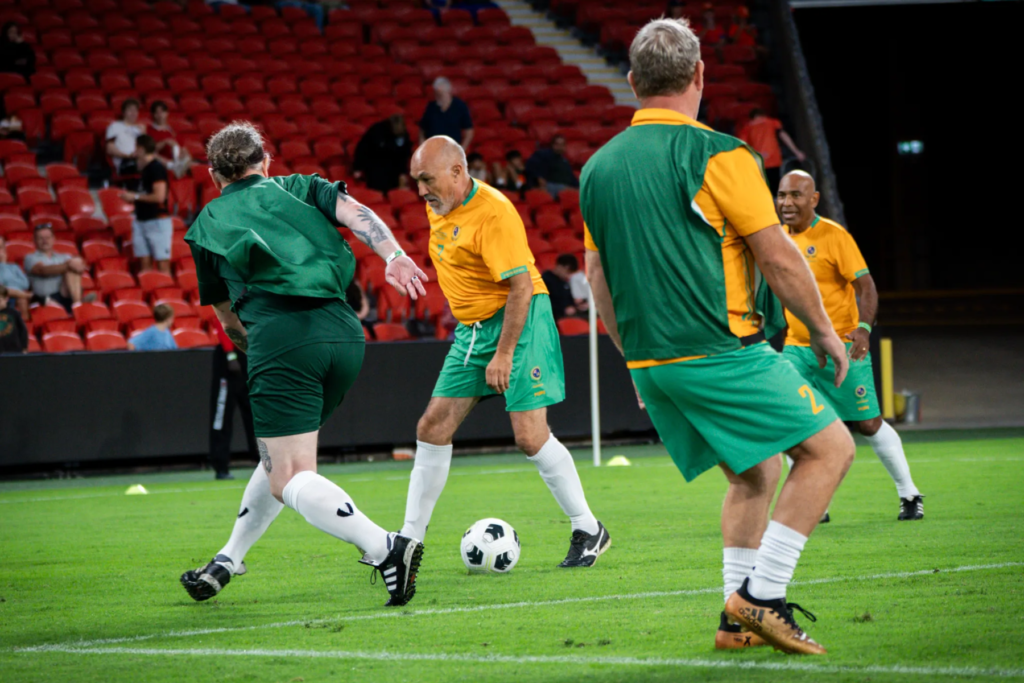
Inaugural 2026 UEFA Walking Football EURO Cup begins

On 25 June, senior players from across Europe will take part in the first UEFA Walking Football EURO Cup at UEFA HQ in Lyon, Switzerland.


It’s everyone’s game

When thinking about football, fans tend to imagine the fast-paced, adrenaline-pumping action of the professional game. That is where excitement and drama is, usually, at its highest.

But growing within the wider football landscape is a version of the game which, rather than focusing on speed, instead champions enjoyment, health and participation for senior participants.

Walking football is proof that football truly belongs to everyone. UEFA’s commitment to staging the inaugral tournament on 25 June reflects the organisation’s understanding that a love for the beautiful game stays despite age, injury, or mobility issues.

Alongside the 2026 UEFA Walking Football Euro Cup is the release of the UEFA Walking Football Toolkit. This aims to provide more information about the game, benefitting associations, leagues and clubs and encompasses contributions from national associations of England, the Faroe Islands, France, Gibraltar, Portugal, Poland and Sweden.


A brief history of walking football – and its importance

From its beginnings in the UK in 2011, walking football has since expanded across Europe and the world to give senior players a chance to be socially and physically active – all within a safe, minimal-impact environment.

And the game – despite its more steady nature – is gathering real pace here in Australia.

In October 2021, Football Australia introduced the first ever Seniors Football Week. Also, just last month, Brisbane Roar hosted the 2026 IWFF Walking Football World Championships at Perry Park – the first time the tournament has taken place in the entire Southern Hemisphere.

The implication, therefore, is that walking football will continue to grow and welcome more members of the community with a desire to dust off their old boots and join a team.

From youth teams to walking football, everyone in the pyramid shares the same love for the game. And there is no reason why, when speaking about the cohesive football development, that walking football shouldn’t be included in future planning and strategic visions.

Build a home, create a culture: How do we secure the Socceroos as global competitors?

The Socceroos kicked off their World Cup campaign with a convincing 2-0 win over Turkey. It was an important win for their tournament ambitions, but also a statement about their quality on the world stage. It is time that we built a facility to ensure this quality is nurtured, not stifled.

Otherwise, we risk falling behind.


One of four…

Australia’s Men’s National Team currently sits as the 23rd-ranked team in the world in the official FIFA rankings. The Matildas, meanwhile, are the 15th highest-ranked women’s team.

This year is also the sixth consecutive FIFA Men’s World Cup featuring the Socceroos, confirming their position as a regular competitor in the most prestigious tournament in world football.

So why is it, despite these undeniably positive reflections of Australia’s growth in international football, that the Socceroos are still homeless?

At the 2022 FIFA Men’s World Cup in Qatar, Australia was one of four competing teams (a list featuring Denmark, Poland and Senegal) without a national base. In 2024, former Socceroos coach Graham Arnold described the team as “homeless” ahead of the World Cup qualifiers.

But four years on from the tournament’s last edition, the situations remains the same. And the world is taking notice.


A letter to the PM

In April this year, FIFA reportedly wrote to Australian Prime Minister, Anthony Albanese, encouraging the construction of a permanent home for football in the country.

The letter reflects concerns within the governing body that Australia, despite being so present in international football throughout the past 25 years, may fall behind the rest of the pack.

When we look at the talent in the current squad, Australia is by no means an emerging football economy. But commercial and infrastructural limitations in the landscape mean this talent is under-appreciated.

Nevertheless, it is a nation which regularly proves it can compete – and win – on the biggest stage. This we saw only a few days ago.

Which is why the players, coaches and staff representing the nation deserve a permanent facility which reflects, nurtures and inspires talent and competition. The survival of the landscape depends on it.


The investment question

Investment into football – from grassroots to professional levels – continues to be at the crux of national debate on how to secure football’s future in Australia.

In a conversation between Soccerscene and Melbourne-based community club, Sunbury United FC, infrastructure and facility-sharing challenges emphasised common grievances for many grassroots clubs.

The issue, therefore, is spread across the nation’s football pyramid. And prompts an uncomfortable question about future investments:

If even the Socceroos continue to share their current base, Leichhardt Oval, with various teams across rugby league and soccer, how can we ever expect clubs further down the pyramid to avoid similar fates?

The past few years, however, have fortunately seen improved investment into the women’s game in Australia – particularly embodied by the ‘Home of the Matildas’.

The result of a $101.1 million investment by the Victorian Government in collaboration with La Trobe University and the Federal Government, the facility boasts elite training features including premium FIFA-standard pitches, multiple changing rooms, a high-performance gym, a sports science lab and more.

This was a welcome and vital boost ahead of the 2023 FIFA Women’s World Cup which took place in Australia. Now, ever-increasing participation and pride are synonymous with women’s football, and the numbers confirm it.

In 2023, women and girls represented 190,746 participants across social, outdoor, fustal and registered football. In 2025, this increased to 231,435. It proves that, with the arrival of purposeful investment at the top, comes the spread of a football culture across the nation.


Aligning practical and cultural benefits

But what would a potential facility for the Socceroos actually look like? And what are the benefits?

When considering similar projects, we can look to both Japan and England as distinct examples of how a national base for football can unite practical, social and cultural benefits.

St George’s Park – England

Built in 2012, England’s base at St George’s Park is a masterclass in using facilities to establish a centre for industry cohesion and community impact.

As a centre of excellence, St George’s Park holds 14 outdoor pitches, a fustal arena, and hosts coaching and medical courses. It welcomes 28 teams across men’s, women’s, youth and para football, representing a place of unity and alignment for the entire football community.

Furthermore, the ‘Play Like the Pride’ program offers grassroots participants and school students the chance to experience the elite facilities for a day, showing how facilities can serve to connect young players to the world of their professional idols and foster real passion for the game.

JFA J-Village – Japan

The J-Village – beyond being a state-of-the-art football training centre – shows why a home for football can positively impact the community.

After being used as a support base for the nuclear power plant accident following the 2011 Great East Japan Earthquake, the venue now holds a deeply important place in the memory of Fukishima. As a result, upon resuming full operations in 2019, the facility – and the football development within it – represented a sense of perseverance, reconstruction and unity.

And through hotels and public transportation links, the J-Village also welcomes tourists and business travellers, encouraging more people to step into the world of football in Japan.

One venue, therefore, can give rise to an essential part of a thriving football landscape: culture. A culture for participation, community outreach, and elite development.


Final thoughts

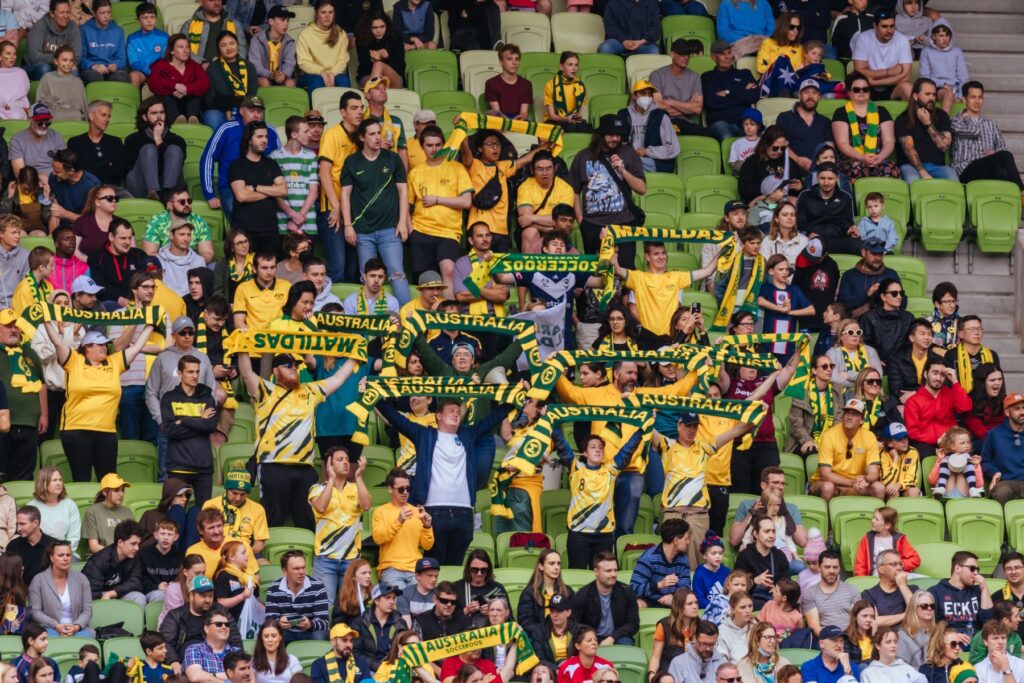
The focus of the summer will no doubt be how the Socceroos perform on the pitch. And with homes, offices, and public spaces brimming with enthusiastic support, the sense of national pride is irresistible.

But for all the positive sentiment currently taking hold of the nation, there will come a time when Australia’s World Cup run is over, at which point an all-important question must be asked:

How do we move forward?

We move forward by transforming buzz into an aligned vision, commitment to nurturing talent, and a desire to establish a real footballing culture across the nation.

The first step to building this culture? Building a home from which it can thrive.

Most Popular Topics

Editor Picks

Send this to a friend