

Hills Football plans submission for Caddies Creek – Stage 2

Hills Football Association, in conjunction with its representative arm, Hills United FC, intend on providing an extensive submission to The Hills Shire Council regarding the masterplan for Caddies Creek Sports Complex – Stage 2.

With the support and endorsement of Football NSW and Football Australia, Hills Football endeavours to satisfy the growing interest in football within the Hills Shire.

A true community organisation, HFI provides football for all players of all ages and all abilities. Despite the recent challenges with COVID-19, the association still registered 13,000 winter participants.

Key highlights in 2021 included reaching the association’s highest ever participation numbers, female teams doubling from 2020 to 2021, the inclusion of a Women’s Premier League and Over-50s Walking Football League.

However, the facilitation of the area’s most participated sport is at the strategic forefront of the association, catering for not only participation and population growth but also providing the football community with its long overdue ‘Home of Football’.

HFI annually caters for over 20,000 members – inclusive of summer & winter participants, coaches, referees, as well as their hard-working volunteers and club officials. Notably, Hills remains the only Sydney-metro association without a defined ‘Home of Football’ for its vastly growing community.

“Hills Football significantly exceeded the state average player-to-pitch ratio of 189, with 224 players per pitch. This is only expected to increase following significant population growth and the legacy of the 2023 FIFA Women’s World Cup,” General Manager Matt Rippon said.

“The proposed masterplan allows the Association to accommodate all levels of football, coach and referee education, player development and pathway programs as well as key community fixtures and events. A long-term legacy to the people of The Hills and its most participated sport.”

Football NSW CEO Stuart Hodge added: “Football NSW completely supports Hills Football’s aspiration to have a ’home of football’ at Caddies Creek Sports Complex.

“The location is ideal to support the continued significant growth in participation that the region is enjoying and will provide a high-performance environment to assist in nurturing the next generation of Matildas and Socceroos.”

Facilities such as the Caddies Creek Sports Complex – Stage 2 not only enable growth in the game, but they also enable help community development. This ensures the Hills Football community has adequate spaces to actively and safely engage in the world game.

This was reiterated by Hills United FC Senior Football Manager and former Socceroo and Head of National Teams, Luke Casserly.

“Football is a unique sport, it is an enabler for people of all abilities, ages & cultures to come together and speak the one language whilst connecting us to the broader community,” he said.

The football community can get involved and support Hills Football’s submission by completing the form available here.
Previous ArticleNext Article

Filopoulos: Football Must Move Beyond Campaigns to Win Fans for Good

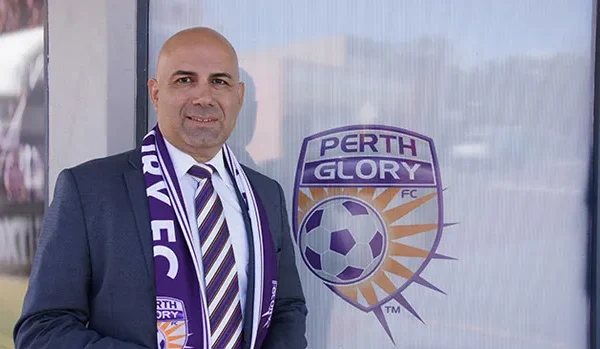
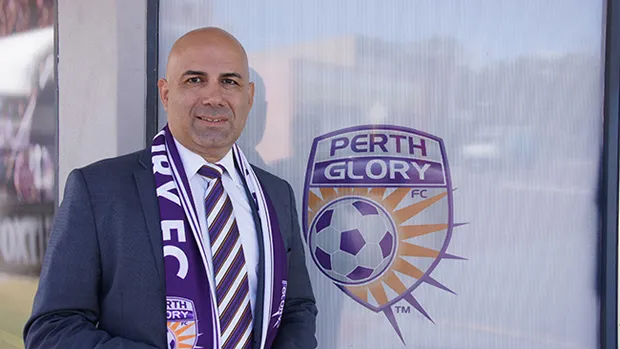
Global marketing and advisory firm Bastion has strengthened its leadership team with the appointment of Peter Filopoulos as Managing Director, Experience. This decision brings one of Australian football’s most influential administrators into a new phase of the sports business landscape.

Filopoulos, who has held senior roles across Football Australia, Football Victoria and Perth Glory, will lead Bastion’s experiential and partnerships division, applying a football-informed lens to brand engagement.

Drawing on his time in the game, Filopoulos emphasised the importance of cohesion in building meaningful fan connections.

“For me, the biggest lesson is that fans don’t see brand, content and experience as individual silos, they experience it all as one connected ecosystem,” he said.

“At Football Australia, the work resonated most when everything was aligned; the team, the narrative, the partners and the matchday experience all working together to feel cohesive and authentic. That’s when engagement moves beyond interaction and becomes something far more meaningful.”

He added that too many organisations still treat fan engagement as short-term.

“Where a lot of organisations fall short is treating fan engagement as a campaign. It’s not, it’s an always-on system.”

Filopoulos’ move reflects a broader shift within football, where commercial growth is increasingly driven by experience-led strategy.

“At Bastion, we put experience at the centre—because it’s where the brand comes to life, where partners integrate in a way that adds real value and where fans genuinely connect,” he said.

“Our focus is on building platforms that bring fans closer to the brand… Get that right, and you’re creating something people actively want to be part of.”

Pushing for First Nations representation in the game with Football Queensland’s Murri Cup

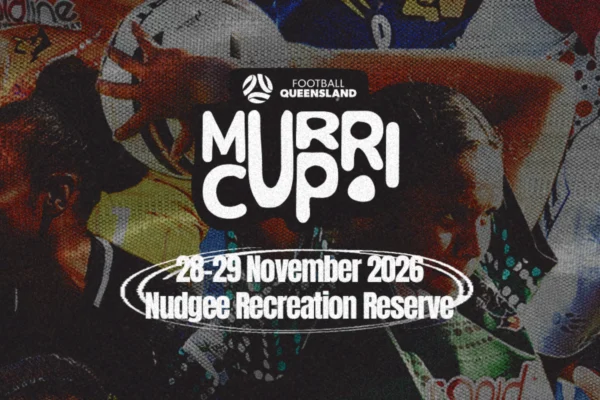
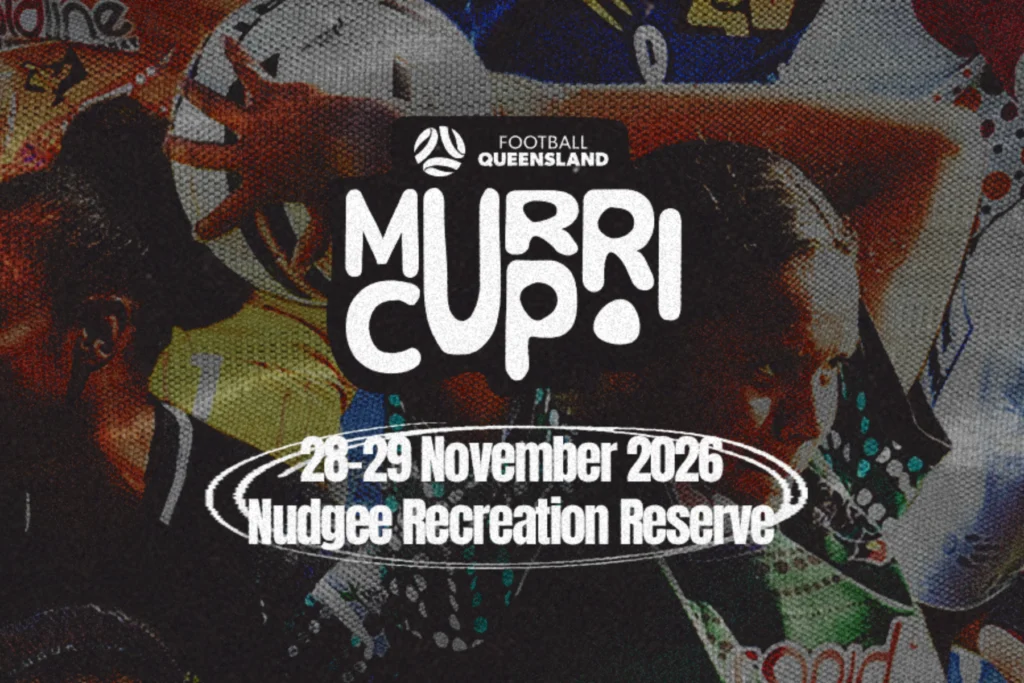
Football Queensland has announced the inaugural FQ Murri Cup, a two-day tournament celebrating First Nations cultures and showcasing Indigenous football talent from across Queensland, to be held at Nudgee Recreation Reserve on November 28 and 29.

The competition, developed in close consultation with Football Australia’s National Indigenous Advisory Group and Football Australia’s General Manager of First Nations Courtney Fewquandie, will feature a Coles MiniRoos activation, a Charles Perkins XI Talent ID session and a community stallholder zone alongside the on-field competition. Expressions of interest are open now for individuals and teams across the state.

More than a tournament

The launch arrives at a moment when the structural underrepresentation of First Nations Australians in organised sport, at the administrative, coaching, and pathway levels, is under sustained scrutiny. Football, like most codes, has historically failed to build the kind of community-embedded structures that make sustained Indigenous participation possible rather than incidental.

The FQ Murri Cup is a direct response to that gap. By centering First Nations culture within the competition itself, rather than treating it as supplementary to a standard football event, the tournament signals a shift in how the game positions Indigenous participation as a community with its own relationship to the sport that deserves its own platform.

The inclusion of a Talent ID session carries specific weight. Structured pathways into elite football have not always been accessible to players from regional and remote Indigenous communities, where geography, cost and cultural barriers compound one another. Embedding that opportunity within a culturally safe environment lowers the threshold at the point where it most frequently closes.

“The FQ Murri Cup will bring together First Nations players, families and communities for a two-day celebration, providing a wonderful opportunity to acknowledge the contributions of First Nations participants within our game,” said Football Queensland CEO Robert Cavallucci.Mu

Most Popular Topics

Editor Picks

Send this to a friend