




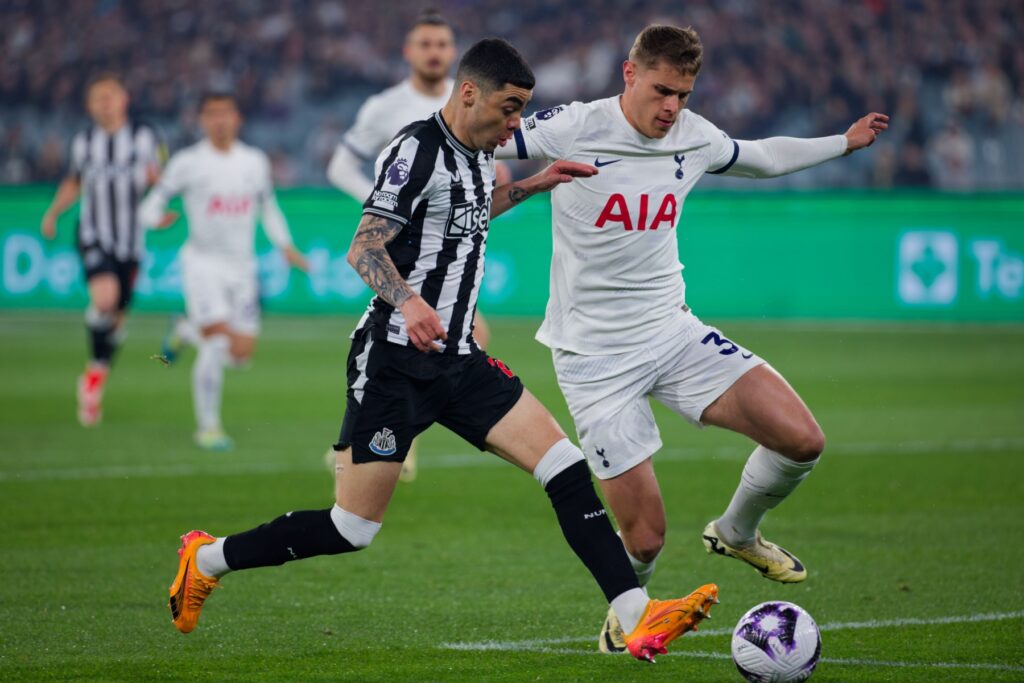
Tottenham Hotspur Announces New Collaboration with 24/7 Software

Tottenham Hotspur has announced a new partnership with 24/7 Software, a global leader in operations management technology.

The collaboration sees Spurs implement the EliteOps platform, the only system in the industry designed to seamlessly integrate safety, facilities management, guest experience, and event operations into one unified solution.

By adopting EliteOps, Tottenham continues to push the boundaries of how elite clubs run their venues. The platform consolidates communication across all operational departments, allowing for real-time decision-making during events. 

From handling incidents to coordinating staff and optimising guest experience, the system ensures every matchday and live event at the Tottenham Hotspur Stadium is delivered with precision and efficiency.

Justin King, Executive Vice President of Sales and Marketing at 24/7 Software spoke about the importance of their technology for stakeholders. 

“Our interoperable platform is uniquely equipped to unify diverse operational teams, enabling venues to streamline their processes and enhance overall event execution,” King said in a press release

 “By bringing together safety, security, facilities and guest services, we empower organisations like Tottenham Hotspur to deliver an unparalleled experience for fans and stakeholders alike.”

Ben Selkirk, the Head of Facilities at Tottenham Hotspur expressed a similar sentiment about its importance to fans.  “This integration allows us to focus on delivering extraordinary experiences for our fans while also enhancing our internal efficiency.” Selkirk said in a press release. 

The partnership isn’t confined to match-days alone. At the club’s world-class training centre, 24/7 Software’s Advanced Analytics tools are being used to track performance metrics, manage work orders, and prioritise tasks based on live data. 

This data-driven approach enables the Spurs to maintain the highest standards across every part of their operations, both on and off the pitch.

For Tottenham, the collaboration marks more than just a technology upgrade, it represents a continued commitment to excellence in every aspect of the club’s infrastructure. 

The integration of analytics and real-time operations management ensures that Tottenham remains at the forefront of innovation in stadium and facility management.

Through its work with 24/7 Software, Tottenham Hotspur is setting a new benchmark for operational performance in global sport. By blending smart technology with a culture of excellence, the club is redefining what it means to deliver world-class experiences, whether for players, staff, or supporters. 

It’s another example of how Spurs’ forward-thinking approach continues to influence not just the Premier League, but the wider sports and entertainment industry.

Previous ArticleNext Article

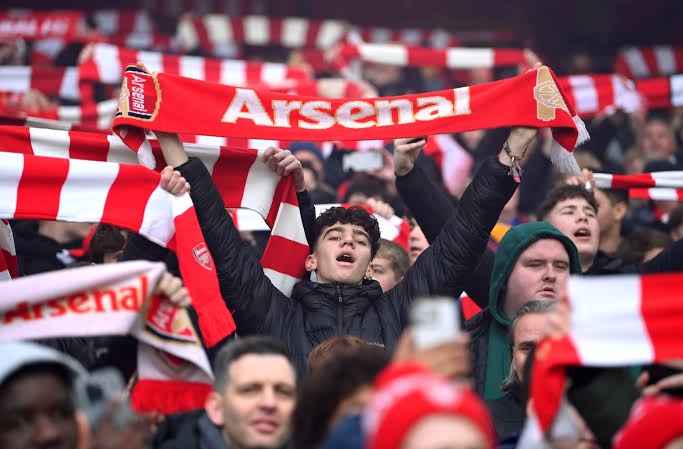
Arsenal x Meta: The Tech-Driven Fan Revolution You Didn’t See Coming

The current Premier League leaders announced last week the start of a new partnership with Meta, which will see WhatsApp and Facebook unite fans across the world.

A global partnership

The partnership between Arsenal and Meta will aim to bring fans together from across the world in digital spaces.

While WhatsApp and Facebook are already popular platforms for football fans to talk, review and connect over the course of a season, the new initiative will build on this existing engagement.

Head of Marketing for Meta Consumer Apps, Vivian Odior, outlined why a partnership with Meta contributes to the overall fan experience.

“We know that being an Arsenal supporter doesn’t start at kick-off and end at the final whistle,” Odior said via Arsenal’s Official Website.

“WhatsApp and Facebook are where that year-round passion lives – the transfer speculation, the tactical debates, the shared memories and hopes for next season.”

Indeed, as Arsenal looks to clinch a first league title since 2004, there will be plenty of discourse and conversation between fans in the coming weeks.


What can fans expect?

The digital space presents endless opportunities for football supporters to connect across continents.

Arsenal fans will be able to access an extensive range of new digital experiences, as well as activations at the Emirates Stadium throughout April.

But beyond the unique offers and experiences the partnership provides, there is a fundamental sense of community and family driving the project. Chief Commercial Officer at Arsenal, Juliet Slot, explained the importance of having digital spaces to allow fans to feel a part of the Arsenal family.

“Our partnership with Meta builds on how our supporters already come together, wherever they are in the world, and will create more ways to feel closer and more connected to our club,” Slot said via Arsenal’s Official Website.

“As we continue to compete to win major trophies, partnerships like this play an important role in supporting that ambition and strengthening our connection with supporters.”


The modern game

Furthermore, the expansion of digital spaces for Arsenal fans highlights a new era for the game as a whole.

As social media grows, the game must keep pace. And with so many fans across the world engaging with digital spaces, establishing a partnership with Meta is a step into the future where football and social media intersect more than ever.

A Coroner’s Call: Why Football Can No Longer Ignore the Science on CTE

The recent coronial inquest into the death of Gordon McQueen has once again forced football to confront an uncomfortable truth.

The former Manchester United and Leeds United defender was renowned for his aerial prowess. But decades after his playing career ended, McQueen was diagnosed with dementia. The coroner has now formally linked his condition to repeated heading of a football. This is a landmark acknowledgement that many in the scientific community say has been years in the making.

For Ian Greener, Australia’s HEADSAFE representative and former State Director of Coaching at Football Victoria, the ruling should be a turning point.

“The evidence has been there since 2019,” Greener tells Soccerscene. “But the general public and much of the football community have simply not been told.”

The Research Football Can’t Ignore

Much of the modern understanding of Chronic Traumatic Encephalopathy (CTE) in football stems from the work of Professor Willie Stewart at the University of Glasgow. Commissioned by the English FA and PFA, his landmark 2019 FIELD study found former professional footballers were three-and-a-half times more likely to develop neurodegenerative disease. For defenders, that risk rose to five times more likely.

Stewart then spent years re-examining his findings through analysing lifestyle, alcohol consumption, social factors and broader health variables across tens of thousands of records.

“He looked at everything,” Greener explains. “Drugs, diet, social background. After years of further research, he came back to the same conclusion — there is no other explanation apart from repeated head impacts.”

CTE differs from concussion. Concussion is visible and immediate. It can be identified through dizziness, nausea and blurred vision. CTE is silent. The damage accumulates over decades and can only be confirmed post-mortem through examination of brain tissue.

Greener explains the science in simple terms: repeated head impacts cause the brain to move within the skull, stretching neurons. This releases tau protein, which clumps together over time and disrupts electrical messaging in the brain. The result can be memory loss, personality change, aggression, anxiety, and in some cases, suicidal behaviour.

“It’s not about frightening people,” he says. “It’s about understanding brain health.”

Not About Banning Heading

HEADSAFE, founded by the family of former Middlesbrough player Bill Gates after his battle with dementia, operates across three fronts: research support, financial assistance for affected families, and coach education.

“We are not about banning heading,” Greener stresses. “Heading is an integral part of football. What we’re saying is: minimise the repeated heading in training. Most of the damage is done there.”

In England, guidelines already exist. Children under 12 are not permitted to practise heading in training. Though monitoring is difficult, In the Premier League, players are advised to limit high-force headers to around 10 per week. In Scotland, players are not permitted to head the ball the day before or after a match.

Australia, however, has no formalised CTE-specific guidelines.

Greener says attempts to engage both Football Victoria and Football Australia have so far gained little traction. Instead, he has taken the message directly to clubs, academies and grassroots coaches through workshops and podcasts.

“We just need a module in coach education,” he says. “If we’ve embraced sports science in nutrition, recovery and match analysis, then we also have to embrace the science on repeated head impacts.”

What concerns Greener most is not just the science, but the time lag between evidence and action. “This was once considered an old person’s disease,” he says. “But the science now shows it begins much earlier. The symptoms might not appear for decades, but the damage can start in youth.” He argues that brain health should sit alongside hydration, nutrition and recovery in every coaching curriculum. “We talk about load management for muscles. Why wouldn’t we talk about load management for the brain?”

A Duty of Care

The urgency is heightened by the rapid growth of the women’s game. Emerging research suggests female players may experience head impacts differently due to chemical and physiological factors.

“It’s about duty of care,” Greener says. “My grandson has just started playing. I want to know that whether I’m there or not, he’s protected.”

McQueen’s case has placed the spotlight firmly back on football’s responsibility. With further inquests pending in the UK, including that of Bill Gates later this year, pressure is unlikely to ease.

Football has adapted before — from concussion substitutes to advanced medical protocols. The next step, Greener argues, is simple:

“Make every header count. Don’t do 30 or 40 for the sake of it. Protect the brain, protect the player, protect the future of the game.”

Most Popular Topics

Editor Picks

Send this to a friend