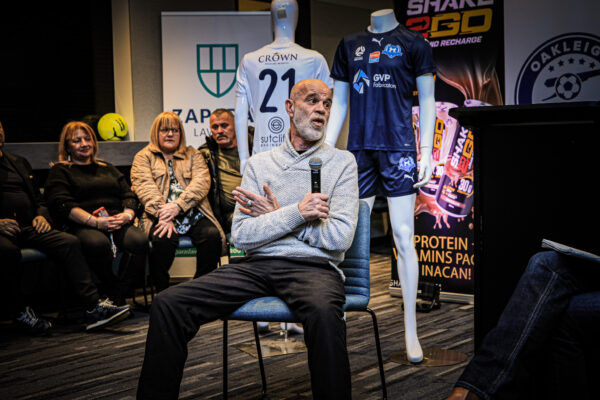
Is grassroots soccer more important than the elite level?

It’s easy to live in the present, to enjoy the moment, the times that you live in. It’s even easier to keep your concentration solely on your priorities in the present. 

But what the great businesses and organisations do differently is what sets them apart from everyone else. Their ability to adapt and look forward to the future, to those who will define their business/organisation when they’re long gone. 

In the case of soccer clubs and the FFA, to keep a sustained and vested interest in grassroots is what is going to hold them in good stead in the next 20-30 years. Planning for the long term, strategically, is critical to the success of anything. 

And it all starts at that level, grassroots. Junior soccer participation numbers are at optimum levels and soccer, as a sport, has never been more popular. The A-League, for all its divisiveness, has grown exponentially and has begun attracting attention from across the world. The NPL, the second division of Australian soccer, has grown in recent years and has risen from the ashes of the NSL. 

Combine this with the fact that the Socceroos haven’t missed a World Cup since 2006, Australian soccer is in a perfect position to capitalise on youth. To motivate them to want to play soccer in the future. To try and turn Australia into a soccer powerhouse. 

It all begins at the grassroots level. Why? First impressions. It’s always about the first impressions, especially with children. The soccer ability of children needs to be nurtured at a young age, in a way that helps develop them as a player, but more importantly as a person. If done successfully and in a way that doesn’t demotivate them, the sky is the limit. 

Take for example, Paris-Saint Germain wonderkid Kylian Mbappe. At 19 years old, he won the FIFA World Cup with France, had played Champions League football, became one of the world’s most expensive players and had comparisons to the great Thierry Henry. How many 19 year old boys can say that they had a net worth of seven plus figures at the same age?  

I certainly can’t say that. And I’m 367 days older than Kylian. But what most likely differentiates him from everyone else is that he had the talent as a junior. That talent was then nurtured correctly, allowing him to unlock his potential as a soccer player. His career would be nothing without the hard work he puts in, obviously. But at a young age, his ability was recognised and then allowed the blossom under the guidance of the right people. 

And sure, meeting Thierry Henry at a young age would’ve motived him to no end. It would motivate anyone, really. But all that motivation would culminate in him understanding how hard he needed to work to get to the top. Nothing comes without hard work, that’s a fact. But through his upbringing, coaching and talent, he has been able to do what very few can. 

On the flip side of all that, we have those who had the talent, but not the work ethic. Casual fans refer to these players as ‘flops’. It’s a very harsh word to use, but they’re on the right track. 

Take Ravel Morrison. I’m sure Manchester United fans know this name all too well. Once described by Rio Ferdinand and Sir Alex Ferguson as the next big thing, Morrison always had the talent. Plus, playing for Manchester United and under Ferguson would’ve been the dream for a young player wanting to make a name for themselves. 

But Morrison, as the soccer world has come to know, didn’t have the desire to work hard. Loaned out more times than we could count, sold off to different clubs, Morrison saw his career go from hero to zero. 

After being sent out on loan by Italian club Lazio to Mexican club Atlas, Morrison decided to permanently move closer to home, signing a contract with Swedish club Ostersunds. But to say it’s a huge fall from grace would be the understatement of the year. And it’s barely March. 

Morrison could’ve been anything. An England great, a United great, a Champions League winner. He had the soccer world at his feet. But he lacked the one thing he needed most to attain all those accolades. 

The desire to work hard. 

And here we are. He’s 26, supposed to be in the prime of his career. Yet, he couldn’t be further from it. And for how much people will say he’s the definition of a ‘flop’, it’s actually quite sad. He would’ve had dreams, wanting to be the next superstar, just like any other young star. But it hasn’t come to fruition. He still has time to turn it around, but we’ve been saying it for so long now, it’s almost like beating a dead horse. One can hope. 

But he does show one thing, if nothing else. The grassroots level is critical to the development of soccer players, mentally and physically. If a player has the talent, it needs to be nurtured. If nurtured properly, it becomes a case of wanting to do the hard yards all day, every day. Some will turn out to be Mbappes, some will turn out to be Morrisons.  

But everything has a beginning. And the beginning is the most integral part of the entire process. 

Previous ArticleNext Article

Eastern Suburbs Football Association Announces First All-Female Referee Course and Expanded Women’s Competition

The Eastern Suburbs Football Association has opened its 2026 season with three structural investments that reflect the growing ambition of community football associations to address participation, representation and development gaps simultaneously, beginning with the delivery of its first all-female Football Match Official Course.

The course, held at Matraville Sports High School and led by female liaison committee member Michelle Hilton and 2025 Referee of the Year Ariella Richards, brought 25 new female referees into the association ahead of Round 1. The initiative targets one of the most persistent imbalances in community sport, with women remaining significantly underrepresented in officiating roles at every level of the game, by creating a dedicated entry point separate from the mixed course environment that many women find unwelcoming.

The Women’s Premier League has also expanded, now featuring eleven teams and introducing a WPL1 and WPL2 structure following the first ten rounds of the season. The tiered format creates more competition opportunities for clubs across the region while providing a clearer development pathway for teams at different stages of growth. Returning clubs Randwick City, Glebe Wanderers, Easts FC and Sydney University join established sides in what the association describes as one of its most competitive women’s seasons. ESFA clubs have continued to perform strongly in state-wide competitions including the Football NSW Sapphire Cup, State Cup and Champion of Champions.

Building the next generation

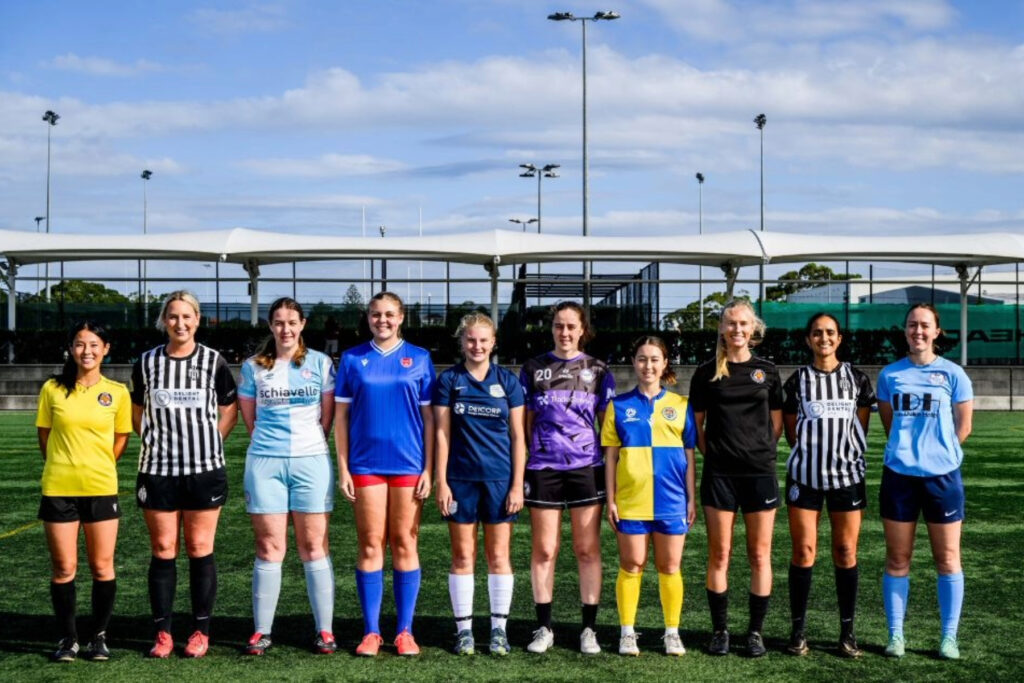
The season opened with an inaugural Development League Gala Day for Under-9 to Under-12 boys and girls, bringing eight clubs together in a structured development environment ahead of Round 1. Sydney FC A-League Women’s players attended the event and engaged directly with young participants, a deliberate effort to connect grassroots players with visible examples of where the pathway leads.

“We are committed to creating more opportunities for clubs, players, coaches and referees to thrive, with a strong focus on participation opportunities to suit participants of all abilities and aspirations,” said ESFA CEO John Boulous.

The three initiatives, a new referee entry point for women, an expanded women’s competition structure, and a development-focused junior gala day with elite role models present, together reflect an association responding to the participation pressures the AFC Women’s Asian Cup has brought into sharp relief across Australian football.

Blacktown District Soccer Football Association Launches Youth League and Poaching Program

Blacktown District Soccer Football Association has outlined a package of initiatives for the 2026 season centred on youth development, coach education and the celebration of female participation, as the Western Sydney association moves to raise standards across community football and strengthen pathways into state-level competition.

The centrepiece of the association’s development agenda is the Blacktown Youth Development League, a new competition structure spanning all youth Division One competitions in the Under-13 to Under-18 age groups, including Phoenix League female competitions involving both BDSFA and GDSFA clubs. The league applies a benchmarking framework adapted from Football NSW‘s junior competition standards, with clubs encouraged to implement structured training environments including a minimum of two sessions per week where possible.

BDSFA General Manager Owen Liiv said the initiative responded to clear demand from within the football community for more substantive development environments.

“It is pretty clear that people want more and better football experiences,” Liiv said. “The measure for us is high-quality youth football competitions within Blacktown and ultimately, stronger performances in state-wide competitions such as the Football NSW State Cup or Football NSW Champion of Champions.”

The referees branch will support the league by prioritising Division One fixtures and providing three-person match control where available, an operational commitment that acknowledges the role officiating quality plays in the overall development environment.

The Managerial Infrastructure

Running alongside the youth competition is a free coach education program, with Foundation of Football courses delivered across BDSFA’s 24 member clubs by permanent association staff. With more than 1,000 registered coaches across the district, BDSFA has set a target of 85 percent achieving Foundation of Football accreditation within three years. Removing cost as a barrier to accreditation is a deliberate structural choice, reflecting growing recognition across Australian football that coaching quality at community level is inseparable from participation outcomes.

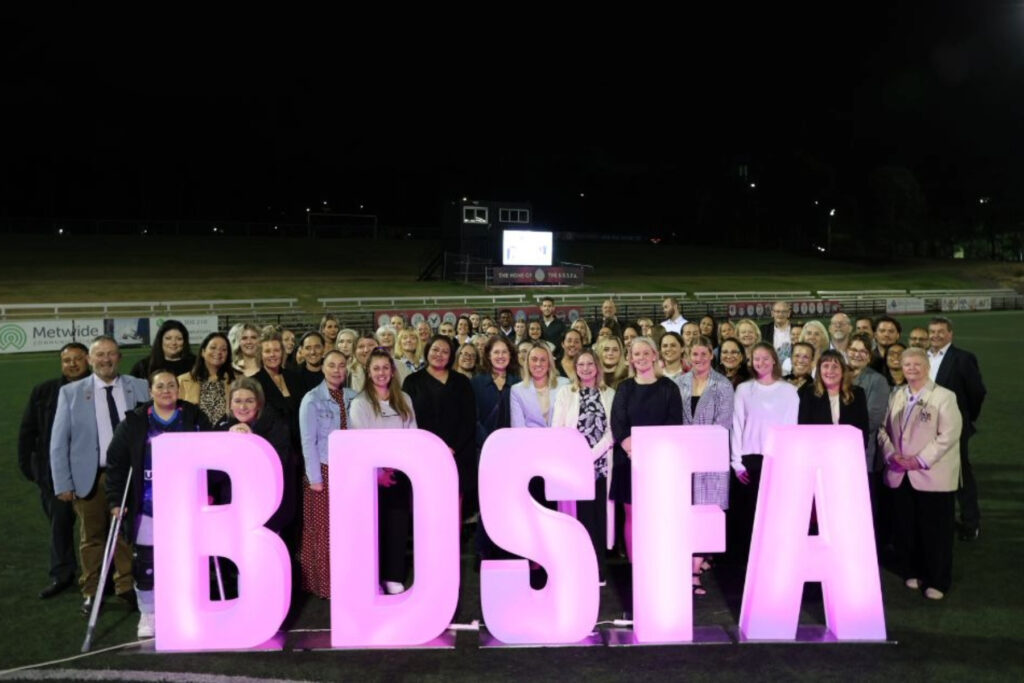
The association also launched Female Football Week with a “Cocktails on the Pitch” event at Blacktown Football Park, attended by close to 100 players, coaches, referees, administrators and volunteers. Former Matilda Leah Blayney addressed the gathering, speaking about her pathway from Wentworth Falls to international football. BDSFA has indicated the event is likely to become an annual fixture on the association calendar.

Taken together, the initiatives reflect an association investing deliberately in the structural conditions that determine whether community football grows sustainably rather than opportunistically.

Most Popular Topics

Editor Picks

Send this to a friend