



Football stakeholders focus on strengthening women’s football, competitiveness and governance

UEFA

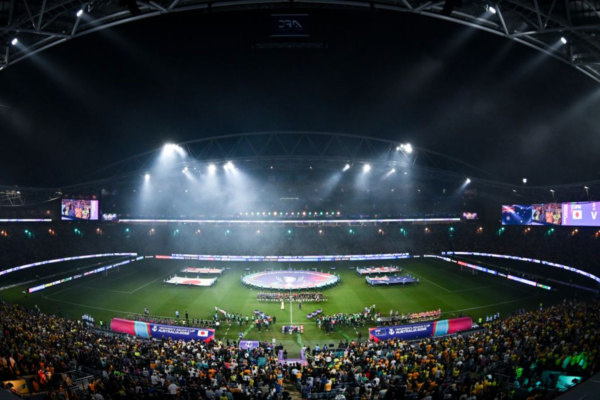
The governing body of European Football, UEFA – the Union of European Football Associations – hosted the latest Convention on the Future of European Football in Nyon, with stakeholders across the entire football community to hold successful talks by bringing attention to boost women’s football, competitiveness and governance.

The meeting is an open dialogue process bringing together European football to work on the long-term policy as well as the governance reforms necessary to improve a sustainable future for football that is mutually beneficial for everyone.

UEFA President Aleksander Ceferin said at the conference:

“Football dialogue can only exist where unity, inclusion, solidarity and sporting merit are the common denominators of any constructive and good intent negotiations only in that case. We all have a role, we all have a function that is vital for the European sports model and for the governance of European football, without our collective efforts at the different levels of the pyramid, football in Europe would not be the success that it is today and it’s a super success.”

European Club Association Chairman Nasser Al-Khelaifi added at the conference:

“The future of European football need to consider the interest of all stakeholders, all leagues, all clubs, all associations and all fans that’s what we need to look at and protect, whatever the differences between all the stakeholders, we showed we are together as one and as a result the future of European football is very bright.”

There were many positives takes from the sessions and exchanges amongst experts with which some of the following points were agreed:

  • UEFA will dedicate itself by creating more stakeholder-centred and action-oriented platforms of engagement to allow more contributions from stakeholders.
  • Competitive trends were evaluated both at the domestic and European level, along with the increasing polarisation, crucial topics such as financial retribution, solidarity, quality youth players’ training, the regulation and the smooth process of transfers and agents as well as the multi-club investment were heavily discussed, putting it into the top end of the list.
  • The process to develop UEFA’s women’s football blueprint from 2024 onwards.

Along with the major European football stakeholders, UEFA are committed to cementing the foundations of football in the continent for the present and the future.

Previous ArticleNext Article

Pushing for First Nations representation in the game with Football Queensland’s Murri Cup

Football Queensland has announced the inaugural FQ Murri Cup, a two-day tournament celebrating First Nations cultures and showcasing Indigenous football talent from across Queensland, to be held at Nudgee Recreation Reserve on November 28 and 29.

The competition, developed in close consultation with Football Australia’s National Indigenous Advisory Group and Football Australia’s General Manager of First Nations Courtney Fewquandie, will feature a Coles MiniRoos activation, a Charles Perkins XI Talent ID session and a community stallholder zone alongside the on-field competition. Expressions of interest are open now for individuals and teams across the state.

More than a tournament

The launch arrives at a moment when the structural underrepresentation of First Nations Australians in organised sport, at the administrative, coaching, and pathway levels, is under sustained scrutiny. Football, like most codes, has historically failed to build the kind of community-embedded structures that make sustained Indigenous participation possible rather than incidental.

The FQ Murri Cup is a direct response to that gap. By centering First Nations culture within the competition itself, rather than treating it as supplementary to a standard football event, the tournament signals a shift in how the game positions Indigenous participation as a community with its own relationship to the sport that deserves its own platform.

The inclusion of a Talent ID session carries specific weight. Structured pathways into elite football have not always been accessible to players from regional and remote Indigenous communities, where geography, cost and cultural barriers compound one another. Embedding that opportunity within a culturally safe environment lowers the threshold at the point where it most frequently closes.

“The FQ Murri Cup will bring together First Nations players, families and communities for a two-day celebration, providing a wonderful opportunity to acknowledge the contributions of First Nations participants within our game,” said Football Queensland CEO Robert Cavallucci.Mu

PlayHER Tournament returns as Football Victoria Doubles Down on Women’s Participation

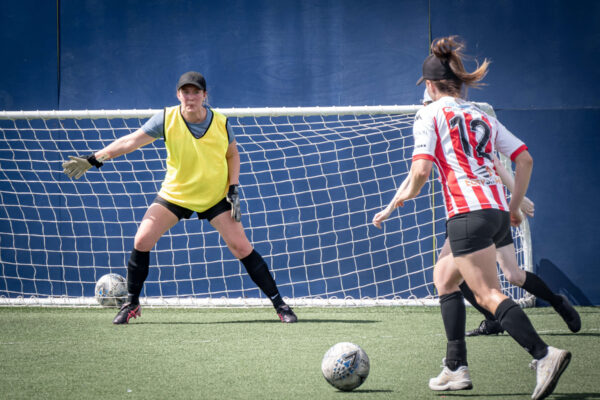
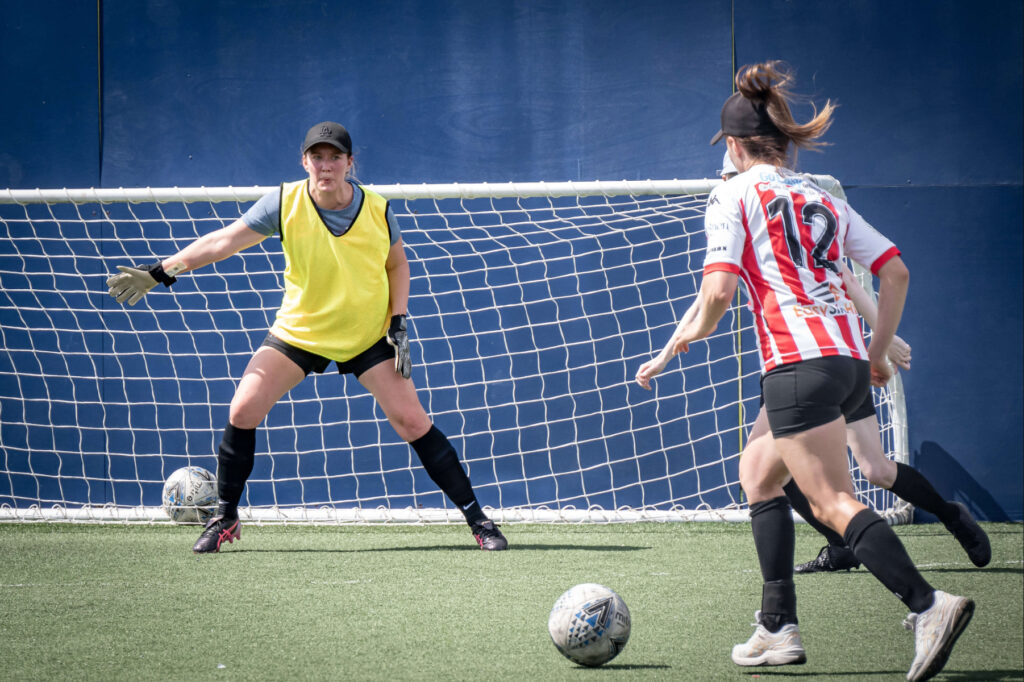
Football Victoria‘s PlayHER Tournament returns to the Knox Regional Football Centre in Wantirna South this May, offering women across Victoria the chance to play football in a structured, social and welcoming environment.

Now in its fifth year, the tournament has grown considerably from its origins as the GO Soccer Mums Cup, which was recognised as Community Sporting Event of the Year at the 2023 Victorian Sport Awards. The rebranding to PlayHER reflects a deliberate broadening of the event’s ambition, from a competition aimed at a specific demographic to one designed to lower the barriers to entry for any woman who wants to play.

That ambition is visible in the structure of the day itself. Matches are played in a five-a-side format with short halves, keeping the format accessible for players who may not have competed in years, or those who are stepping onto the pitch for the first time. New for 2026, participants will compete across two categories: an Open and 35 years and over. It’s an addition that acknowledges the different pathways women take into sport, and the importance of ensuring the game remains available at every stage of life.

More than a matchday

The tournament comes at a strategically critical time. Women’s football in Australia is in the middle of a period of unprecedented growth, with record crowds at the AFC Women’s Asian Cup and a growing pipeline of players coming through at club level. Translating that momentum into lasting participation growth depends on events like PlayHER- low-cost, community-driven, and explicitly designed for women who might not see themselves reflected in elite competition.

At $20 per participant, the tournament remains one of the most accessible organised football experiences available in Victoria. The message is straightforward: the game is for everyone, and the door is open.

Most Popular Topics

Editor Picks

Send this to a friend