

LIGR: Providing live graphics solutions and a broadcast management platform benefitting Australian football 

Since 2016, Australian company LIGR have provided a range of football organisations, and the production companies that aid them, with live graphics solutions and a broadcast management platform which is simple and efficient to use.

Luke McCoy, co-founder of LIGR, explained to Soccerscene that his previous experience of owning a live production business, which broadcasted lower-tier sporting matches, inspired him to establish LIGR LIVE due to a lack of sophisticated graphics he encountered at that level.

“Previously I founded a company called Virtual Performance Analysis that turned into VPA Productions. During that process we ended up with a contract to stream the Football NSW Grand Finals,” he said. 

“The problem with any of the live broadcasts in second-tier and grassroots competitions was always how to improve match data integration into broadcast graphics. What we found was once you can achieve that, the main question and opportunity was the ability to then attach sponsors into those broadcasts, so the sports organisations who own the rights to their content could have the chance to commercialise their audience with in-game sponsorship. 

“So around four years ago we began developing the product that is now LIGR Live; an operating and broadcast management platform for live sports broadcasts. I co-founded it with my friend Adam Burke (CTO of LIGR), and we found immediate success amongst the major sports in Australia across Rugby League, Football, Aussie Rules and Cricket. 

Co-founders of LIGR – Adam Burke (left) and Luke McCoy

“The big features of that system include graphics, automation, sponsorship, fixtures, live scoring and team collaboration workflows all built around helping sports organisations produce a professional live stream that can be commercialised through in-game sponsorship display and the analytics around that.”

Since development, the company has now partnered with seven of the nine football member federations in Australia.

Most of the FFA Cup streams that happen around Australia use LIGR in some form, whether through a sports organisation account like Football NSW or a host of production companies who have a LIGR account and act independently servicing clubs directly.

LIGR play a pivotal role in a huge selection of State League, NPL and NPLW games across the country, including 550-600 games a season in Victoria, for example.

“We’re contracted to the member federations, from Football Victoria, Football NSW, Football West, Football SA etc…and it’s a combination, from their state league games up to their NPL competitions and obviously the women’s NPL as well,” McCoy said.

“LIGR Live connects external live data sources to live broadcasts including being a data supplier ourselves where external data does not exist. Most of the NPL matches have an external live data source available through Stats Perform, a global provider of live data to the sports industry, who we have a direct partnership with.

“We pull in the live data feed in real time and connect it automatically to LIGR Live and populate graphics templates that are then triggered based on real time events from the data, completely automatically removing any requirement for a graphics operator or data live scorer.”

For the NPL, LIGR have built a specific template which is only shown on broadcasts of that competition.

All of the member federations have access to this theme and the governing bodies can log in to LIGR’S cloud-based operating system and manually upload team logos, colours and ad sets, which they can flexibly incorporate at their will into their live streams.

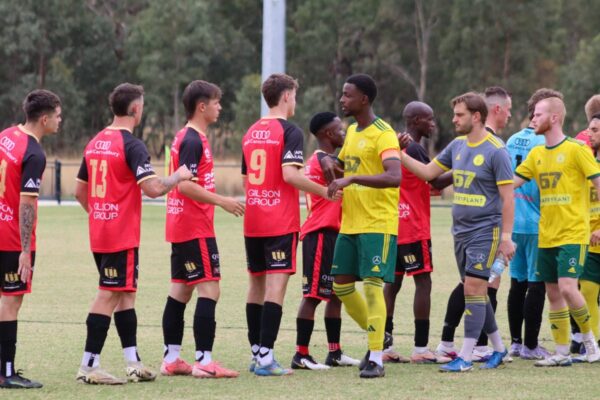
An example of LIGR’s graphics in a Bulleen Lions match.

This aspect of commercialising the live streams through integrated advertisement placements through graphics, has helped bodies like Football NSW generate additional revenue and sponsorship opportunities.

The whole idea of streaming our competitions was to provide greater commercial opportunities for the league and our clubs,” Brian Meinrath, Head of Commercial at Football NSW, told the LIGR website.

“Using LIGR has helped us shape how we approach the market with our sponsorship offerings. To be able to work with a group that continually looks and asks how they can make their product better makes a big difference.”

Football NSW are not the only governing body to benefit commercially through the use of the LIGR service, as they, alongside Football West, Football SA, Football NT, Football Tasmania, Football Victoria and Football Queensland were the beneficiaries of a sponsorship deal with Pilot Health late last year.

Pilot Health, a male telehealth brand, purchased advertising space across all Men’s NPL live broadcasts for part of the 2020 season, in the listed state and territory federations.

“It is really exciting to be able to partner with the Australian Football Federations utilising LIGR Live’s platform to deliver this first of its kind advertising,” Pilot Health Co-Founder, Tim Doyle, said at the time of the deal.

“At Pilot we are always looking for new ways to reach our audience and the LIGR platform allows that, while also supporting the second tier of football across the country in a seamless, fast, aggregated process.”

Through the use of LIGR Live’s platform to standardise the broadcast quality, the state federations sold specific percentages of advertising time through the course of a match, including particular events such as goals, cards and team lists.

McCoy believes deals such as this showcase the true worth of his company.

“It is maybe the most encouraging sign of LIGR’s value as a company moving forward, to be able to provide a distribution network for brands to access live grassroots sports,” he said at the announcement of the deal.

“It is naturally hard for brands to do multiple small deals across multiple sports organisations. Being able to have a single, white labelled platform that aggregates those opportunities simplifies the process for brands that show a keen interest in live amateur sport, but have no way to enter the playing field effectively. 

“Pilot’s interest in the Australian football’s audience has put money directly back into the member federations which is the ultimate goal of LIGR.”

LIGR do have an eye to the future, recently partnering with Pixellot – a leader in global AI camera technologies, understanding that broadcasts at some point are going to be completely automated productions.

LIGR announced a deal with Pixellot earlier this month.

Despite this global push, McCoy is proud of the strides LIGR has already made since its creation. 

“It’s been an exciting journey so far, particularly in football, which is where we started,” he said.

“We went from one game a week, a match of the round, to 30 games a week for Football NSW, and that  spread across the member federations to help maintain quality across a large scale of content and many production suppliers.

“Now, the amount of content they are producing would almost be the most in Australia for sports organisations, in regards to their live content.

“It’s been pretty cool to see within the past few years how quickly that’s changed, so it’s definitely rewarding and exciting.”

 

Previous ArticleNext Article

Mizuno’s Australian gamble: can a 120-year-old brand break through?

When Mizuno unveiled a mural of Socceroos captain Harry Souttar on a Richmond wall during the 2026 World Cup, the company’s name did not appear on the artwork. The artist, Rory Ledge, painted Souttar as the “Minister of Defence” behind a brick wall. Channel 7 and Channel 9 turned up. The Herald Sun ran it in their Saturday edition. Mizuno’s brand director called it “mainstream awareness” without paid media.

The mural sat within a broader push by the Osaka-based company to expand in Oceania. For the fiscal year ending March 2026, Mizuno reported sales of ¥259 billion, up 7.8 per cent year-on-year, with net income of ¥18.4 billion representing 20.5 per cent growth . Operating profit rose to ¥22.6 billion. The Asia and Oceania segment is central to the company’s medium-term plan, which targets net sales of ¥290 billion by fiscal 2027.

The growth imperative

Australian football has not historically been kind to specialist boot brands. Nike, Adidas and Puma dominate retail shelves. A-Leagues collective bargaining agreements and club deals have locked in incumbents. For a brand without the marketing budgets of its competitors, the path to relevance runs through the players.

Mizuno has grown its Australian ambassador base from one athlete to around 20 across the A-Leagues in recent seasons. Melbourne City’s Tolgay Arslan, who played in the Bundesliga and Serie A before arriving in Australia, told Front Page Football: “If I discovered these boots ten years ago, I would wear these boots overseas in my career.” Western United midfielder Angus Thurgate called them “the comfiest boots I’ve ever worn”.

The mural moment

Richmond was chosen for the mural because of its location. The suburb sits at the centre of Melbourne’s sporting precinct, five minutes’ walk from the MCG and AAMI Park. It is already home to murals of AFL players. Rowena Corner Store owner Con, who agreed to host the artwork, had previously welcomed murals of Dusty Martin and an AFLW player.

“We didn’t have access to Harry because he was in the US competing,” brand director Rishi said. “We couldn’t do a photoshoot. So we had to be clever. The best ideas come from real time, aligned with what the public discourse looks like. Once we saw his Wikipedia page updated to refer to him as the Minister of Defence, we knew we could play into this.”

Ledge incorporated an existing window into the design to create a net behind Souttar’s figure. The mural appeared the morning of the Paraguay match, when Australia’s clean sheet sent them into the knockout phase.

The World Cup provided a massive backdrop. The Socceroos’ run captivated the nation: 4.84 million Australians tuned in to the Paraguay match, making it the most-watched World Cup match in SBS history at the time, with an average audience of 3.086 million . The final reached 5.26 million viewers, and cumulative tournament reach hit 18.04 million— 64 per cent of Australia’s population. SBS director of sport Ken Shipp said: “We’ve never seen engagement at this level.” Mizuno spent comparatively little and had Channel 7 and Channel 9 on site.

The commercial question

For a brand with limited marketing firepower, organic PR coverage is the prize. The question for the company’s Oceania division, still in growth mode, is whether a mural and a handful of player endorsements can convert into sustained commercial traction. Retail partnerships with Ultra Football, which has created a dedicated Mizuno space at its Melbourne store, suggest the company is thinking beyond campaigns.

Mizuno’s European expansion has taken a different path. The company signed a five-year deal to become AS Monaco’s technical equipment partner from the 2025-26 season, its first entry into Ligue 1. It already has a presence in Germany’s Bundesliga and Italy’s Serie A. In Australia, institutional partnerships are harder to secure. The approach has been slower: build through athletes, then through community, then through culture.

The Queensland government signed a Memorandum of Understanding with Mizuno in March 2026 to explore the Japan-Australia Sports & Health Innovation Exchange (JASHIE), a two-year partnership focused on sport and health innovation . The agreement supports Queensland’s preparations for the 2032 Olympic and Paralympic Games.

The mural campaign reflected a broader trend in sporting brand marketing, where IP restrictions and athlete availability increasingly demand creative solutions. “I love what Levi’s did because they were able to lean into their brand codes and tell what I believe to be the most memorable advertising story from the World Cup,” Rishi said. “This is a different page out of fundamentally the same playbook.”

Mizuno’s boots are not cheap. The Made-in-Japan models retail well above competitors’ offerings. The brand’s pitch rests on quality and heritage, not price or volume. That is a harder sell in a country where discounting dominates and cost-of-living pressures are squeezing households.

The Souttar mural will eventually fade or be painted over. Mizuno is betting that by the time it does, enough Australian football fans will have noticed the three stripes’ quieter rival.

Bentleigh Greens and Metricon Bring Local Business Community Together Through Networking Initiative

Bentleigh Greens FC has reinforced its commitment to supporting its community beyond football, partnering with Metricon Homes to host a business networking evening designed to strengthen relationships between local businesses, sponsors and club stakeholders.


A unique setting for meaningful connections

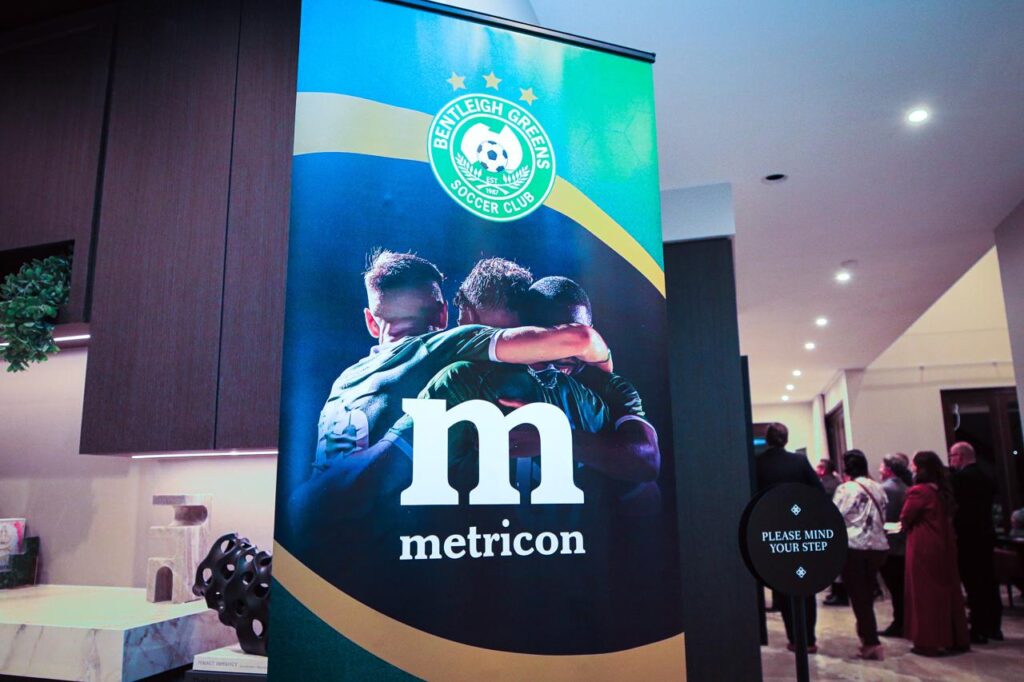
Held inside one of Metricon’s display homes, the Bentleigh Greens Business Networking Night welcomed around 60 local business owners, club partners and community leaders for an evening focused on connection, collaboration and knowledge sharing.

Rather than a traditional function space, Metricon opened the doors of one of its display homes, creating a unique networking environment that highlighted how the space could be transformed into a premium venue while providing guests with a relaxed setting to build professional relationships.

The event reflects a growing trend across community football, where clubs are increasingly positioning themselves as platforms for business engagement and local economic development, alongside their role in delivering participation opportunities on the pitch.

Guests also heard from strategic futurist Marcus Barber, who delivered a presentation examining the growing influence of artificial intelligence on modern business. His insights encouraged attendees to consider how emerging technologies are reshaping industries and the importance of preparing for future change.


Creating value beyond sponsorship

While commercial outcomes were never the primary objective, the evening was designed to create long-term value by fostering meaningful relationships between businesses connected to the Bentleigh Greens community.

Early feedback has been overwhelmingly positive, with several attendees already establishing new contacts and beginning discussions around potential collaborations.

The initiative also highlights Metricon’s broader commitment to supporting local communities beyond residential construction. By partnering with Bentleigh Greens and providing the venue, the company helped facilitate an event that encouraged learning, networking and stronger community connections.


Football clubs as community business hubs

For community football clubs, initiatives such as these demonstrate how partnerships can extend beyond traditional sponsorship models. By creating opportunities for local businesses to engage with one another, clubs can strengthen their commercial networks while delivering tangible value to sponsors and the wider community.

As football clubs continue to explore new ways of engaging stakeholders off the field, events like the Bentleigh Greens Business Networking Night illustrate how sport can serve as a catalyst for meaningful business relationships and long-term community growth.

Most Popular Topics

Editor Picks

Send this to a friend