


Off the Pitch Podcast: The Art of Meditation in Sports with Chris Shen

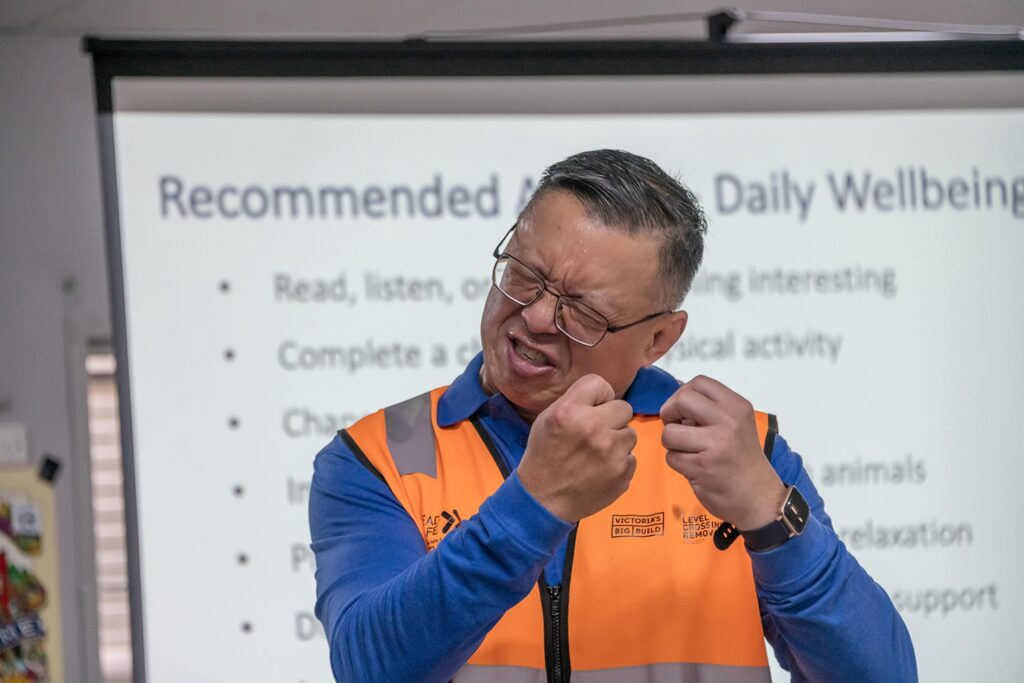
On Episode 14 of Soccerscene’s Off the Pitch Podcast, sports psychologist and martial arts master Chris Shen explored the topics of mental health in athletes, his long martial arts journey and the psychology behind returning from injuries or a mistake in a particular match.

In the fun but detailed discussion, meditation before a game was one of the many topics that Shen explored, with a focus on its effectiveness and the best time to do it.

“I absolutely love this practice. I recognise that everybody is different, so not all athletes or sports people will enjoy the same particular mental habit,” he said.

“Regardless of the actual sport, when I’m working with a team in a competition, I will run a group mindfulness session in the pregame for 5 to 6 minutes.

“I always prefer athletes doing it pregame before any coaches address or individual preparation.”

Shen expanded on the importance of staying calm and in control before playing a sport.

“Mindfulness is just an attention oriented form of meditation based on centuries old practices that enables people to interrupt the chaos of the real world. Also enables them to calm themselves, focus, and then be able to prepare and listen to the coaches and so forth.” he said.

“Any way of creating calm and relaxation, which enables you to focus, can be very powerful.”

Sports psychology plays a crucial role in football, particularly at the semi-professional and professional levels, where the mental side of the game can often determine performance.

Understanding how athletes think, focus, and recover mentally is just as important as physical preparation in achieving success on the pitch.

Click hear the full interview with Chris Shen, on Episode 14 of Soccerscene’s Off the Pitch Podcast – available on all major podcasting platforms.

Previous ArticleNext Article

Tottenham Hotspur deliver player development workshop for Football NSW

The workshop focused on sharing knowledge and insights regarding player development, bringing together more than 120 coaches from across NSW with those from Tottenham Hotspur.


Experience, insight and education

Valentine Sports Park hosted the Continuing Professional Development (CPD) workshop, uniting Football NSW coaches and members of Tottenham Hotspur’s coaching staff to encourage discussion and learning opportunities about player development.

Tottenham’s player development pathway – from the academy to the first team – has produced some of the most respected names in Premier League history, including Harry Kane and Ledley King.

Under the leadership and guidance of Tottenham Hotspur Player & Coach Pathway Co-ordinator (and UEFA A Licence Coach), Jimmy Martin, as well as members of Tottenham’s coaching staff, Shannon Maloney, Kevin Moffatt and Tyler Blackwood, the workshop was a unique opportunity to learn from some of the most experienced coaches in the game.

“Coach education is a vital part of developing football across NSW, and having more than 120 coaches attend this workshop highlights the appetite within our football community to continue learning and improving,” explained Football NSW Head of Football, Edward Ferguson.

Ferguson continued to outline the value of learning from an organisation like Tottenham Hotspur, a team who have helped grow some of the game’s most exceptional talents. The lessons taken will consequently help to inform future approaches to coaching in NSW.

“The focus remains on creating better learning environments for players, encouraging decision-making, creativity and long-term development.”

What the workshop involved

The workshop encouraged coaches to dive into all aspects of player development: the technical, tactical, physical and mental aspects which contribute to the English academy setup.

Furthermore, Maloney, Moffatt and Blackwood – all of whom helped deliver a practical session for attendees – showed how a club’s playing identity can work alongside challenging training environments for players.

Game understanding, creative problem-solving and technical proficiency underpinned the main themes driving the workshop. In an age where individual expression on the pitch appears a dying art, Tottenham Hotspur coaches remain committed to encouraging players to feel confident adapating to a range of in-game scenarios.

Football NSW coaches were also able to attend a Q&A session with King, who spoke about his playing experiences for both club and country.


Final thoughts

As Australia continues to nurture the current and upcming generations of talented footballers, workshops such as this are a vital, fundamental part of the journey.

The fastest way to be among the best is to learn from them. The aim now is for Football NSW coaches to take the lessons learned, and apply them to football development in their own academies and teams across the state.

More than 220 coaches attend Football South Australia’s second NOVA Youth Club Championship workshop

Football South Australia drew more than 220 coaches to its second NOVA Youth Club Championship Coaches Workshop in late May, underlining the scale of engagement clubs are generating through the state’s restructured youth competition framework.

The online session was facilitated by Football SA Technical Director Michael Cooper, who also serves as Junior Matildas Head Coach. Cooper shared observations from the AFC U17 Women’s Asian Cup and Australia’s qualification for the FIFA U17 Women’s World Cup, giving club-level coaches a window into the demands and standards of elite international football.

The presenter line-up extended that international lens further. Lachlan Tosh and Cristiano Dos Santos spoke to their experiences in national tournament environments, while legendary Australian coach Tom Sermanni addressed the fundamentals of youth coaching. Colin Sanctuary from the University of Newcastle examined coaching language and its direct influence on player learning.

Themes running across the session included the primacy of long-term player development over short-term results, with presenters consistently emphasising technique, ball mastery, individual improvement, and decision-making under pressure. Coaches were encouraged to expose players to varied styles of play, facilitate practice outside organised training, and help young players retain possession longer in match conditions.

Post-session feedback pointed to strong practical value, with coaches singling out clear communication, relationship-building, and age-appropriate feedback as key takeaways.

The workshop series sits within the broader transition from the Youth Premier League to the Club Championship model, which ties coaching participation to championship points for clubs and CPD credits toward individual coaching diplomas. Six workshops are scheduled across the season, with four still to come.

Most Popular Topics

Editor Picks

Send this to a friend